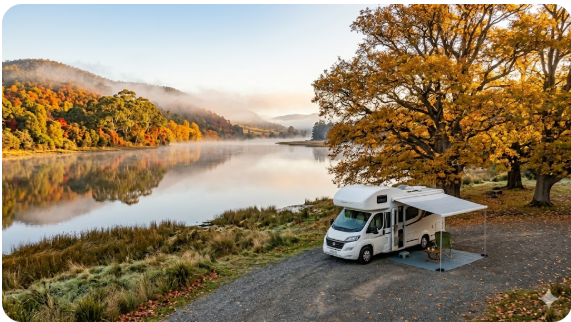
Free Camping Near Hobart: Best Free & Low-Cost Sites for Campervans and RVs
Hobart is one of the most expensive cities in Australia for overnight stays — but the surrounding region has a surprising number of free and low-cost camps that most travellers drive straight past. This guide covers verified GPS, real facilities, safety notes, dump points and honest arrival conditions for senior grey nomads camping near Hobart in 2026.
📅 Last reviewed: May 2026 | Free Camping Near Hobart, Tasmania | Free / Low-Cost — Self-contained rules apply at most sites
Most grey nomads arrive near Hobart after days on the East Coast run and assume they will simply pay whatever the nearest caravan park charges — which in 2026 is often $60 to $90 a night for a powered site. What they do not know is that within 30 kilometres of the Hobart CBD there are verified free and low-cost overnight options on the Derwent River foreshore, in the Huon and Channel highway corridors, and on the fringe of the Southern Outlet. Free camping near Hobart is genuinely possible for self-contained campervans and RVs — but the rules are strict, the spots fill fast on weekends, and some of the most-shared GPS coordinates online are outdated by two or more years. This guide is written from the ground up with current information so you arrive at the right spot, not an empty paddock with a no-camping sign.
- Most genuine free camps within 30km of Hobart require a self-contained certificate — Tasmania enforces this more consistently than many mainland states
- The Derwent Valley free camps (New Norfolk area) are the closest verified free options, roughly 38km northwest of the CBD via the Lyell Highway
- Foreshores and reserves managed by Hobart City Council do not permit overnight camping — this includes the Bellerive foreshore and Long Beach at Sandy Bay
- Bowen Bridge rest area north of Hobart allows short rest stops but is not an overnight camping area — do not confuse it with a free camp
- Brighton Council rest area on the Midland Highway is a genuine 24-hour stopping point with toilets — approximately 26km north of the CBD
- The Huon Valley free camps to the south (Huonville surrounds) are a better option than trying to park in Hobart itself — quieter, safer, and more RV-friendly
- Telstra is the most reliable carrier in this region — Optus coverage drops significantly south of Kingston and west of the Brooker Highway corridor
- Tasmania Fire Service total fire ban information is at fire.tas.gov.au — check before any open fire at any site
What You Will Find in This Guide
- Location, Address and GPS
- Can You Stay Overnight?
- Facilities — Toilets, Water and Dump Point
- Mobile Coverage and Wi-Fi
- Fuel — Finding the Cheapest Nearby
- How to Get There
- What to Expect on Arrival
- Safety for Senior Grey Nomads
- Medical and Emergency Contacts
- Dump Points, Water and Supplies Nearby
- Things to Do for Seniors
- Best Time of Year to Stop Here
- Fires, Generators and Overnight Etiquette
- Packing Checklist for Seniors
- GPS Coordinates and Postcodes
- Frequently Asked Questions
- Quick Verdict
1. Location, Address and GPS
There is no single “free camping Hobart” location — the city itself has no legal free overnight camping. What exists is a ring of options in the surrounding municipalities. This guide focuses on the three most consistently verified and legally permissible options for self-contained grey nomads in May 2026: Brighton Rest Area (Midland Highway), New Norfolk foreshore area (Derwent Valley), and the Huon Highway corridor south of Kingston. The hub page for the full Tasmania circuit — Free Camping Tasmania: The Complete Grey Nomad Circuit Guide — has the broader context for where Hobart fits into your route.
| Detail | Brighton Rest Area | New Norfolk Foreshore Area |
|---|---|---|
| Address | Midland Highway, Brighton TAS 7030 | Esplanade, New Norfolk TAS 7140 |
| Postcode | 7030 | 7140 |
| Highway | Midland Highway (A1) | Lyell Highway (A10) |
| Distance from Hobart CBD | Approx 26km north | Approx 38km northwest |
| Nearest Town | Brighton | New Norfolk |
| Managing Authority | Brighton Council / DIER | Derwent Valley Council |
📍 GPS — Brighton Rest Area (Primary Reference Point)
-42.7285, 147.2413
This coordinate places you at the Brighton Rest Area on the Midland Highway, approximately 50 metres from the main parking bay. Verify against signage on arrival.
New Norfolk Esplanade area (secondary): -42.7810, 147.0585 — confirm on arrival as council signage governs overnight permissions.
2. Can You Stay Overnight?
Yes — but only with a valid self-contained certificate, and only at specific sites outside the Hobart City Council boundary. This is the most misunderstood aspect of camping near Hobart and it catches travellers out regularly. Within the Hobart City Council area, overnight camping in a van or campervan on public land is not permitted. The surrounding councils — Brighton, Derwent Valley and Huon Valley — each have different rules and some do permit self-contained overnight stays in designated areas.
- Brighton Rest Area (Midland Highway): 24-hour rest stop — self-contained vehicles may rest overnight but this is not a designated free camp. Do not treat it as a multi-night option.
- New Norfolk Esplanade: Some self-contained overnight stays have been reported as tolerated, but Derwent Valley Council rules can change without notice. Check WikiCamps Australia for the most current community-verified status before committing to this spot.
- Huon Valley camps south of Kingston: Covered in detail in the next post on this circuit — see Huon Valley Free Camping for verified sites with proper facilities.
- Self-contained certificate required: Tasmania’s self-containment standard requires a fixed toilet and grey water holding — not just a portable toilet. Know your vehicle’s certification status before claiming self-containment.
- If a site is full: Do not park on the verge or in a lay-by and assume it is equivalent. Move on to the next verified site rather than risk a fine.
3. Facilities — Toilets, Water and Dump Point
| Facility | What Is Available | What Seniors Should Know |
|---|---|---|
| Toilets | Brighton Rest Area — public toilets on site. New Norfolk Esplanade — public toilets nearby in town centre. | Brighton toilets are 24-hour accessible. New Norfolk town toilets are within 200m walk of the esplanade area — manageable for most. |
| Potable Water | Brighton Rest Area — tap water available. New Norfolk — town water access at public facilities nearby. | Do not rely solely on rest area taps. Carry a minimum 20L reserve when departing any site near Hobart. |
| Dump Point | No dump point at Brighton Rest Area. Nearest verified dump point is at New Norfolk Caravan Park or Glenorchy area north of Hobart. | Plan your dump point stop before arriving — do not assume one exists at or near your overnight spot. |
| Showers | None at free sites near Hobart. | Use a paid caravan park for showers if needed — many Hobart-area parks allow day-use shower access for a small fee. |
| Bins | Brighton Rest Area — yes. New Norfolk Esplanade — yes, in town. | Pack out any excess rubbish. Do not overfill rest area bins — they are emptied on a schedule, not on demand. |
| Power | No powered sites at any free camp near Hobart. | CPAP users must have a battery or inverter solution. The nearest powered free camp does not exist — budget for a powered park night every three to four days minimum. |
| Shade | Partial shade at New Norfolk Esplanade (river gums). Brighton Rest Area — minimal shade. | In summer, position your van to maximise morning shade. Hobart’s summer sun is deceptive — UV is high even on mild days. |
- Site suitable for: Motorhomes, campervans — caravans with tow vehicle are manageable at Brighton; New Norfolk esplanade suits vans and motorhomes better than long rigs
- Road access: Sealed to both primary locations — 2WD suitable
- Site surface: Bitumen (Brighton Rest Area); gravel and grass mix (New Norfolk esplanade area)
- Camping permitted: Self-contained only at tolerated sites — not formally designated free camps
- Maximum overnight stay: 24 hours (Brighton); verify current rules at New Norfolk before committing
- Boat ramp: Yes — New Norfolk has a Derwent River boat ramp nearby
- Picnic tables: Yes at both locations
- Potable water: Yes at Brighton Rest Area tap; town supply available in New Norfolk
- Mobile coverage: Good Telstra at Brighton; reasonable Telstra at New Norfolk — Optus patchy at New Norfolk
- TV reception: Yes at both locations — free-to-air digital
- Rubbish bins: Yes at both — do not overfill
- Open fires: No open fires at either site — fire restrictions apply year-round in peri-urban areas
- Generator use: Not appropriate at Brighton Rest Area — it is a public road rest stop. Use discretion at New Norfolk — quiet hours apply from 9pm
- Number of sites: Brighton — 8 to 12 bays. New Norfolk esplanade — informal, space for 5 to 8 vehicles comfortably
4. Mobile Coverage and Wi-Fi
The greater Hobart region has reasonable mobile coverage along the major highway corridors but drops off sharply once you move into the Derwent Valley or south of Kingston toward the Channel Highway. Here is the honest picture for each carrier as of May 2026:
- Telstra: Strongest and most consistent across the Hobart region. Brighton Rest Area — strong 4G. New Norfolk — 4G available in town, may drop to 3G on the esplanade depending on your position. Reliable for CPAP remote monitoring apps and video calls.
- Optus: Good within the Hobart CBD and inner suburbs. Coverage becomes patchy north of Bridgewater and drops significantly in the Derwent Valley. Do not rely on Optus at New Norfolk.
- Vodafone / TPG: Reliable within Hobart city limits. Coverage is limited outside the metropolitan boundary — treat it as Hobart-only for practical purposes.
- Wi-Fi: No public Wi-Fi at free camps. New Norfolk has public library Wi-Fi during opening hours — useful for a quick upload or download. Hobart CBD has some free public Wi-Fi zones.
5. Fuel — Finding the Cheapest Nearby
Fuel prices in Hobart fluctuate significantly and the cheapest bowsers are rarely the most obvious ones. In 2026, the best value fuel in the greater Hobart area is typically found at the big-box retailers in Glenorchy and Moonah on the northern outskirts — not in the CBD or southern suburbs where prices run 15 to 20 cents per litre higher.
- Glenorchy (approx 8km north of CBD): Multiple servo options on Main Road — consistently among the cheapest in the Hobart region. Diesel available at all major outlets.
- Brighton (at or near the rest area): Fuel available in Brighton township approximately 2km from the rest area. Prices are generally mid-range — cheaper than the CBD, slightly more than Glenorchy.
- New Norfolk: One or two servo options in town. Prices are typically 5 to 10 cents per litre more than Glenorchy — accept it or backtrack.
- Heading west toward Queenstown: Fill up completely in New Norfolk or Hobart. The Lyell Highway has very limited fuel stops — Ouse (approx 90km from Hobart) and Queenstown (approx 180km) are the main options. Diesel is available at Ouse but supply can be limited.
- LPG: Available in Glenorchy and Moonah — not reliably available in New Norfolk or along the Lyell Highway west of Hobart.
6. How to Get There
Brighton Rest Area — From Hobart CBD (Heading North)
From the Hobart CBD, take the Brooker Highway (A3) north through Glenorchy and Bridgewater. Cross the Bridgewater Bridge and continue north on the Midland Highway (A1). The Brighton Rest Area is on the left (westbound side) approximately 3km north of Bridgewater — look for the rest area signs before the Brighton township turnoff. Total distance from Hobart CBD: approximately 26km. Allow 30 minutes in normal traffic — the Bridgewater Bridge interchange can be congested during morning and afternoon peak hours.
New Norfolk Esplanade — From Hobart CBD (Heading Northwest)
From the Hobart CBD, take the Brooker Highway (A3) north then turn left onto the Lyell Highway (A10) at the Granton interchange. Follow the Lyell Highway northwest through Boyer and into New Norfolk. The esplanade area is on the Derwent River side as you enter New Norfolk township — look for the river foreshore on your left. Total distance: approximately 38km. Allow 40 to 50 minutes. The Lyell Highway through the Derwent Valley is a good sealed two-lane road with some narrow sections through the river gorge — manageable for caravans and motorhomes but take it slowly.
From the East Coast (Arriving from Bicheno / Swansea via Hobart)
Travelling south on the East Coast, you will arrive in Hobart via the Tasman Highway (A3) through the eastern suburbs. From the CBD, follow directions above to your chosen camp. For Brighton, exit the city north on the Brooker Highway. For New Norfolk, cross to the western side of the city via the Brooker Highway and pick up the Lyell Highway at Granton.
Driving Notes for Seniors Towing Vans
- The Bridgewater Bridge on the Midland Highway has a weight limit and lower clearance on the old bridge sections — use the marked heavy vehicle lanes and follow overhead clearance signs for your rig
- The Brooker Highway through northern Hobart has multiple sets of traffic lights and merging lanes — take your time and do not let city traffic pressure you into rushed lane changes
- The Lyell Highway through the Derwent Gorge section (between Granton and New Norfolk) has some tight corners — wide rigs should take outside lines carefully and watch for oncoming trucks
- School zones operate on the Main Road through Glenorchy and Brighton township — 40km/h in the morning and afternoon school periods
- Fuel up before tackling the Lyell Highway if heading beyond New Norfolk — services thin out rapidly after this point
- Overnight parking on the Brooker Highway itself is not permitted — do not mistake highway lay-bys for rest areas
7. What to Expect on Arrival
Arriving at free and low-cost camps near Hobart is a different experience from arriving at a remote bush camp. These are peri-urban stops — they come with road noise, other travellers, and the energy of a city nearby. Here is the honest picture:
- Brighton Rest Area: A well-maintained sealed rest stop with clear line markings, public toilets and rubbish bins. It sits directly alongside the Midland Highway — expect significant truck and highway traffic noise through the night. Light sleepers will want ear plugs. It is clean and well-lit, which makes it feel safe, but it is unambiguously a road stop, not a peaceful bush camp.
- New Norfolk Esplanade: A far more pleasant setting — river views, old English elms and river gum trees, and the Derwent River flowing quietly nearby. The town itself has a distinctive heritage character. Expect a handful of other travellers on weeknights and a full esplanade on weekends.
- Weekends fill fast: Both locations — and any informal camp near Hobart — fill significantly on Friday and Saturday nights, particularly during school holidays and the summer festival season (December to February). Arrive by 3pm at the latest on a Friday if you want a good spot.
- Hobart CBD day trips work well from both camps: Both Brighton and New Norfolk are within practical day-trip distance of central Hobart by car. You do not need to stay in the city to enjoy it.
- Temperature surprise: Even in summer, Hobart nights are cool — often dropping to 8 to 12°C in January, the warmest month. In autumn (May) expect nighttime temps of 4 to 8°C and occasional frosts by June. Do not arrive assuming you can rely on natural warmth — you cannot.
8. Safety for Senior Grey Nomads
Personal Safety
- Brighton Rest Area is well-lit and positioned on a major highway — it feels secure and has regular traffic passing. Do not leave valuables visible inside your vehicle even so.
- New Norfolk township has a small-town character but like all Tasmanian towns it has pockets of antisocial activity after dark. Park in the main esplanade area where other travellers gather, not in isolated spots further along the river.
- Lock up properly every night — caravan and motorhome theft in Australia is increasingly sophisticated and Hobart is not immune.
- Solo travellers should use the check-in system — tell someone your planned camp location and check in by a set time each evening. If there is no mobile coverage, arrange a check-in protocol before you lose signal.
- The Emergency Plus app uses your phone’s GPS to give emergency services your exact coordinates even without mobile signal — download it before you leave any major town.
Trip Safety
- Driver fatigue is a serious risk on the approaches to Hobart — particularly on the Midland Highway after long East Coast drives. The Brighton Rest Area exists specifically to serve this purpose. Use it.
- Hobart’s mountain roads — particularly the Huon Highway south and the Lyell Highway west — have tight corners and gradient sections that require reduced speed with a caravan. Tasmania’s rural roads are narrower than many mainland travellers expect.
- Always read the Grey Nomad Road Safety Checklist before heading into the Tasmanian highlands.
- Daylight hours in Hobart are shorter in autumn and winter than most mainland destinations — it gets dark earlier than you expect. Have your camp set up before 4pm from April onwards.
9. Medical and Emergency Contacts
| Service | Address | GPS (approx) | Phone |
|---|---|---|---|
| Royal Hobart Hospital (Emergency) | 48 Liverpool Street, Hobart TAS 7000 | -42.8829, 147.3272 | (03) 6166 8308 |
| New Norfolk District Hospital | Burnett Street, New Norfolk TAS 7140 | -42.7802, 147.0590 | (03) 6261 5333 |
| Emergency (Police, Fire, Ambulance) | Tasmania-wide | — | 000 |
| Healthdirect (Medical Advice Line) | Australia-wide — 24hr nurse-on-call | — | 1800 022 222 |
| Tasmania Ambulance (Non-Emergency) | Tasmania-wide | — | (03) 6233 2211 |
10. Dump Points, Water and Supplies Nearby
| Need | Best Nearby Option | Notes |
|---|---|---|
| Dump Point | New Norfolk Caravan Park — approx 500m from esplanade. Glenorchy area — multiple options north of Hobart. | Find nearest dump point at CamperMate Dump Point Finder. Verify current availability before relying on any specific location. |
| Fresh Water | Brighton Rest Area tap. New Norfolk town facilities. Glenorchy caravan parks. | Always carry 20L reserve. Rest area taps can go offline without notice. |
| Groceries | New Norfolk — IGA supermarket in town centre. Brighton — local shops. Hobart — full range including Woolworths, Coles, IGA. | Stock up in Hobart or Glenorchy before heading west — New Norfolk IGA is adequate for basics but not a full resupply for west coast travel. |
| Fuel | Brighton township (2km from rest area). New Norfolk town centre. Glenorchy (cheapest near Hobart). | Fill to full before heading west on Lyell Highway. See fuel section for detail. |
| Pharmacy | New Norfolk — pharmacy in town centre. Brighton — limited. Hobart CBD and Glenorchy — full range. | Prescription medications: stock at least a two-week supply before heading into remote western Tasmania. Rural Tasmanian pharmacies have limited stock of specialist medications. |
| Major Supplies / Hardware | Hobart CBD and Glenorchy — full range including Bunnings, BCF, and specialty RV supplies. | Glenorchy is your best stop for van maintenance supplies before heading west or south. Nothing equivalent exists between New Norfolk and Queenstown. |
11. Things to Do for Seniors Near Hobart
| Activity | Location | Why Seniors Like It |
|---|---|---|
| Salamanca Market | Salamanca Place, Hobart CBD — Saturdays 8:30am to 3pm | Flat foreshore precinct, accessible by foot from waterfront parking, outstanding local produce, craft and entertainment — no climbing required |
| MONA (Museum of Old and New Art) | 655 Main Road, Berriedale — 12km north of CBD | Provocative and genuinely extraordinary museum — accessible entry, ferry option from Hobart waterfront, world-class without being physically demanding |
| New Norfolk Heritage Walk | New Norfolk township, Derwent Valley | Self-guided flat walk through one of Tasmania’s oldest inland towns — colonial buildings, the Derwent River, excellent café stop at The Agrarian Kitchen nearby |
| Bonorong Wildlife Sanctuary | 593 Mt Pleasant Road, Brighton — 5km from Brighton Rest Area | Close encounters with Tasmanian devils, wombats and kangaroos — mostly flat paths, accessible for most mobility levels, genuinely one of the best wildlife experiences in Australia |
| Hobart Waterfront Walk | Sullivans Cove, Hobart CBD | Flat foreshore walk along Constitution Dock and the wharf precinct — cafés, fresh seafood, historic buildings and the always-interesting fishing fleet |
What Most Grey Nomad Guides Miss About Hobart
Almost every travel article about Hobart tells you to visit MONA and Salamanca Market — and yes, both are worth it. But what most guides skip entirely is the Derwent Valley hop farm heritage trail that runs through the New Norfolk district. The Derwent Valley was the hops capital of the Southern Hemisphere in the 19th century, and the distinctive oast houses — the circular hop-drying kilns — are still visible across the valley floor as you drive the river road. Most travellers blow through at highway speed without knowing what they are looking at. Pull over at the heritage markers between New Norfolk and Boyer and you will find one of the most quietly fascinating pieces of Tasmanian agricultural history on the island.
The second thing almost no guide mentions is the Cascade Brewery in South Hobart — Australia’s oldest operating brewery, established 1832, set against the dramatic face of Mount Wellington. The brewery itself is 500m from the CBD and you can walk from the Hobart waterfront to the brewery gates in under 30 minutes on a flat path. The heritage building is extraordinary even if you do not drink. The café and tour facilities are accessible, and the mountain backdrop makes it one of the most photogenic spots in the city. The grey nomad crowd has mostly not discovered this one yet.
Finally — Bonorong Wildlife Sanctuary at Brighton. It is five kilometres from the Brighton Rest Area. It is one of the finest wildlife encounters in Tasmania and you can be back at your camp in under three hours. If you camp at Brighton and do not visit Bonorong in the morning before you move on, you will regret it. The Tasmanian devil feeding sessions are at 11:30am daily — worth timing your departure around.
12. Best Time of Year to Stop Near Hobart
| Season | What It Is Like | Senior Verdict |
|---|---|---|
| Summer (Dec–Feb) | Hobart’s summer is mild by mainland standards — daytime temperatures of 18 to 25°C, nights cooling to 10 to 14°C. Long daylight hours. Festival season — Dark Mofo (June), but summer brings outdoor markets and events. Busy — camp spots fill fast. | Excellent for activity and sightseeing. Book paid sites in advance. Free camps fill by Friday afternoon. |
| Autumn (Mar–May) | The best kept secret. Temperatures 12 to 20°C, brilliant autumn colour in the Derwent Valley (New Norfolk is famous for its elm trees turning gold), far fewer tourists than summer. Nights cooling — 4 to 8°C by May. | Outstanding. Best balance of weather, colour and crowd levels. May 2026 is a particularly good time to be in the Hobart region. |
| Winter (Jun–Aug) | Hobart winters are cold and wet. Daytime temperatures 8 to 12°C. Overnight frosts possible — especially at New Norfolk. Snow on Mount Wellington occurs multiple times each winter. | Manageable for well-equipped rigs with heating. Not ideal for those with respiratory conditions — cold and damp combination is hard on lungs and joints. |
| Spring (Sep–Nov) | Warming temperatures, wildflowers, and the buildup to summer. 12 to 18°C days, cool nights. Tulip season in the Huon Valley and surrounds. | Very good — less crowded than summer, pleasant temperatures, excellent for drives through the valley. Some wind and rain — carry wet weather gear. |
13. Fires, Generators and Overnight Etiquette
- No open fires at Brighton Rest Area or on the New Norfolk esplanade — these are peri-urban locations where open fires are never appropriate regardless of season or fire danger rating
- Tasmania Fire Service manages fire bans across the state — check current fire danger ratings and total fire ban declarations at fire.tas.gov.au before any fire-related activity anywhere in Tasmania
- Generators: Not appropriate at Brighton Rest Area — it is a highway rest stop shared with other travellers and the public at all hours. Limit generator use at New Norfolk to daylight hours and stop by 8pm at the absolute latest
- Quiet hours: 9pm to 7am is the expected standard at all informal camps near Hobart — but the nature of a rest area means noise can occur at any hour from passing traffic. Manage your own noise to the same standard you would expect from others
- Grey water: Do not dump grey water on the ground at either location. Use your grey water tank and empty at a proper dump point. Dumping grey water on public land is illegal in Tasmania and is the single fastest way to get informal camping banned at a site
- Rubbish: Pack out what you cannot fit in the bins. Overfull rest area bins attract wildlife, create mess and damage the reputation of the grey nomad community
14. Packing Checklist for Seniors Camping Near Hobart
| Item | Why It Matters Near Hobart | ☐ |
|---|---|---|
| Quality sleeping bag rated to -5°C or van heating system | Hobart nights are cold — particularly at New Norfolk which sits in a river valley and traps cold air overnight | ☐ |
| CPAP battery backup / DC converter | No powered sites at free camps near Hobart — must be self-sufficient for power | ☐ |
| 20L minimum water reserve | Rest area taps can fail — carry enough water for 24+ hours without a fresh source | ☐ |
| Full grey water tank management | No dump points at the free camps — must carry grey water to a proper facility | ☐ |
| Offline maps downloaded (Tasmania) | Coverage gaps on Lyell Highway west — download before leaving Hobart | ☐ |
| Warm layers and waterproof jacket | Hobart weather changes rapidly — even a sunny autumn day can turn cold and wet by afternoon | ☐ |
| Two weeks of prescription medications | Limited pharmacy options west of New Norfolk — stock up in Hobart or Glenorchy | ☐ |
| Full fuel tank before Lyell Highway | 180km+ between fuel stops on the west coast run | ☐ |
| Ear plugs | Brighton Rest Area has significant road and truck noise — essential for light sleepers | ☐ |
| Blood pressure log and morning readings kit | Cold temperatures elevate blood pressure — monitor more carefully in Hobart’s cool conditions | ☐ |
| Grey Nomad Packing Checklist (full version) | The complete senior van travel checklist at retiretovanlife.com/grey-nomad-packing-checklist/ | ☐ |
COPY PROMPT ➔ ASK AI ➔ SAVE TO FORM ➔ ADD SPOT PIN ➔ GET DIRECTIONS
📍 Interactive map — find free camps, rest areas and overnight stops. Enable location for best results.
15. GPS Coordinates and Postcodes
| Location | Address and Postcode | GPS (approx within 50m) | Notes |
|---|---|---|---|
| Brighton Rest Area | Midland Highway, Brighton TAS 7030 | -42.7285, 147.2413 | Primary overnight rest stop reference. Confirm on arrival. |
| New Norfolk Esplanade | Esplanade, New Norfolk TAS 7140 | -42.7810, 147.0585 | Secondary reference — confirm council permission status on arrival via CamperMate |
| Hobart CBD (nearest major city) | Elizabeth Street, Hobart TAS 7000 | -42.8821, 147.3272 | 26km from Brighton, 38km from New Norfolk |
| Royal Hobart Hospital | 48 Liverpool Street, Hobart TAS 7000 | -42.8829, 147.3272 | Major emergency hospital — nearest trauma centre for both camp locations |
| New Norfolk District Hospital | Burnett Street, New Norfolk TAS 7140 | -42.7802, 147.0590 | Nearest hospital to New Norfolk esplanade camp — basic emergency care |
16. Frequently Asked Questions
Is free camping near Hobart actually possible?
Yes — but with important qualifications. The city of Hobart itself does not permit overnight camping on public land. The surrounding councils — Brighton, Derwent Valley and Huon Valley — have sites where self-contained overnight stays are possible or tolerated. The Brighton Rest Area on the Midland Highway is the most consistently accessible option for a single night’s rest. The New Norfolk esplanade area has been reported as tolerated for self-contained vehicles but verify current status on CamperMate before committing. Genuinely free and legally clear camping is more reliable in the Huon Valley south of Hobart than in the immediate peri-urban area.
Can caravans and motorhomes stay overnight near Hobart?
Both caravans and motorhomes can use Brighton Rest Area for a 24-hour rest stop. The site is sealed, accessible to most rig sizes and has public toilets. The New Norfolk esplanade area better suits motorhomes and campervans than long caravan rigs — the approach roads and parking area are manageable but tight for very long combinations. Any self-contained vehicle with a valid certificate can use verified sites in the surrounding councils.
What is the GPS for the Brighton Rest Area near Hobart?
The GPS coordinate for Brighton Rest Area is approximately -42.7285, 147.2413 — within 50 metres of the main parking bay on the Midland Highway. This coordinate is navigation guidance only. Always confirm your position against signage on arrival. Do not rely on GPS alone when pulling off a busy highway.
Are there toilets at the free camps near Hobart?
Yes — Brighton Rest Area has 24-hour public toilets that are generally well maintained. New Norfolk has public toilets in the town centre within 200 metres of the esplanade parking area. There are no on-site shower facilities at either location. If you need showers, the nearest option is a paid caravan park — New Norfolk Caravan Park or parks in the Glenorchy area north of Hobart.
Is there a dump point near Hobart free camps?
No dump point exists at Brighton Rest Area. New Norfolk Caravan Park has a dump point accessible to non-guests (fee may apply — confirm on arrival). Additional dump points are available in the Glenorchy area. Use the CamperMate dump point finder to locate your nearest current option — the database is community-updated and generally accurate for the Hobart region.
Can you get potable water near the Hobart free camps?
Brighton Rest Area has a tap that has been reported as potable — however tap availability is subject to maintenance and is not guaranteed. Carry a minimum 20L water reserve and treat rest area taps as a top-up source, not a primary supply. New Norfolk town has town water access. Always carry sufficient water for 24 hours of self-sufficiency when camping in the peri-urban Hobart region.
Is camping near Hobart safe for solo senior travellers?
Brighton Rest Area is considered safe — it is a well-lit highway stop with regular traffic. New Norfolk esplanade is safe in the main parking area near other travellers but exercise the same common sense you would use in any town. Lock up properly, do not leave valuables visible, and use a travel check-in system with family or friends. For detailed guidance on personal safety as a solo senior traveller, see Grey Nomad Safety Tips.
What is the nearest hospital to the Hobart free camps?
From Brighton Rest Area, the nearest major hospital is Royal Hobart Hospital at 48 Liverpool Street, Hobart — approximately 26km south, phone (03) 6166 8308. From New Norfolk, the nearest basic emergency facility is New Norfolk District Hospital on Burnett Street, phone (03) 6261 5333 — approximately 2km from the esplanade. For serious emergencies from New Norfolk, expect transfer to Royal Hobart Hospital approximately 38km away. In any emergency call 000 immediately.
Can you see the Tasmanian Devil near the Hobart free camps?
Yes — and this is the question most grey nomad guides completely miss about camping near Brighton. Bonorong Wildlife Sanctuary at 593 Mt Pleasant Road, Brighton is approximately 5km from the Brighton Rest Area. It is one of the best wildlife sanctuaries in Tasmania and offers close encounters with Tasmanian devils, wombats, echidnas and native birds in an accessible, flat-path setting. The daily Tasmanian devil feeding session is at 11:30am. If you camp at Brighton overnight, you can visit Bonorong in the morning before continuing your circuit — it is genuinely one of the most rewarding half-days available anywhere on the Tasmania grey nomad route.
17. Quick Verdict
Free camping near Hobart is genuinely possible but requires realistic expectations. This is not wilderness camping — the best options are a highway rest stop and a river esplanade in a small town, neither of which offers the peace and quiet of Tasmania’s more remote camps. What they do offer is proximity to one of Australia’s most interesting cities, a practical staging point for either the Huon Valley run south or the Lyell Highway west, and — specifically at Brighton — immediate access to Bonorong Wildlife Sanctuary, which alone makes the stop worthwhile. The New Norfolk option is the more pleasant setting by far, with river views, heritage character and the Derwent Valley backdrop that makes this part of Tasmania quietly beautiful in a way the tourist brochures underplay.
The genuine weakness of camping near Hobart is the absence of a proper free camp with facilities — no dump point, no powered sites, no showers. The Hobart peri-urban zone is one of the few sections of the full Tasmania grey nomad circuit where you will likely need to budget at least one night in a paid caravan park to manage dump, power and shower needs. Do not fight this — Hobart has excellent caravan parks in Glenorchy and the waterfront area that are worth one night’s cost for the access they provide to the city. Use the free options for arrival or departure nights and spend the city night in a park with facilities.

As an affiliate, I earn from qualifying purchases at no extra cost to you.
Exclusive Offer: Get 5% OFF all StarterStopper immobiliser products with promo code: RTV5
Visit StarterStopper.com to see our data-backed security solutions
As an affiliate, I earn from qualifying purchases at no extra cost to you.