Vanlife Australia After 50 — The Practical Guide Built for Senior Grey Nomads
Vanlife in Australia is not just for twenty-somethings with a camera and a hashtag. It is one of the smartest, most rewarding lifestyle decisions a person over 50 can make — and on this site, you will find everything the glossy Instagram accounts leave out. The budget reality. The medical planning. The right van for a bad back. The free camps with flushing toilets. The campgrounds with pools and powered sites. The routes grey nomads actually drive. The stuff that determines whether your first year on the road is the best of your life or a very expensive mistake.
This site is written by and for Australian senior travellers aged 50–80 who are doing vanlife in a campervan, motorhome, or caravan — either full time or for extended seasons. Every guide here is built around the real concerns that matter to senior travellers: powered sites for CPAP machines, nearest hospitals, drive-through sites for big rigs, pet-friendly parks, phone coverage, and whether the toilets are actually worth stopping for. No vague inspiration. No lifestyle photography without substance. Just the honest practical information you need before you leave the driveway.
📵 Before You Set Up Camp: Can 000 Find You Here?
Most rest areas don’t have a street address. If something goes wrong overnight, “I’m at a rest stop somewhere past the servo” wastes precious minutes. Before you unhitch, open Emergency+ and check it can pin your GPS location or generate a what3words address right where you’re parked — it works offline, so no signal doesn’t mean no location. Get it free — iPhone (App Store) or Android (Google Play).
The habit that matters: do this the moment you arrive, not if you need it. Signal drops in and out at bush camps — testing it early means you already know it works before an emergency makes that the wrong time to find out.
Bonus use: while you’re in the app, grab the GPS coordinates it shows you and save them to your own Van Life Savings Spots pin — a good stop is worth remembering for next time, and now you’ve already got the exact coordinates in hand.
What Vanlife After 50 in Australia Actually Costs — The Numbers Nobody Publishes
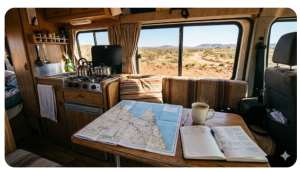
The biggest question every senior asks before committing to vanlife is the budget question. Not “can I afford it in theory” but “what will I actually spend each month when I am living it.” Here is the honest breakdown based on real senior travellers living vanlife full time in Australia in 2026.
| Expense Category | Budget Vanlife (Free Camps + Cooking) | Comfortable Vanlife (Mix of Parks + Dining) | Premium Vanlife (Powered + Cabins) |
|---|---|---|---|
| Accommodation | $0–$200/month (free camps + occasional powered) | $300–$600/month (mix of free and paid sites) | $700–$1,500/month (nightly powered sites) |
| Fuel | $300–$500/month (slow travel) | $500–$900/month (moderate km) | $800–$1,400/month (higher km) |
| Food and groceries | $400–$600/month (cook every meal) | $600–$900/month (occasional dining) | $800–$1,200/month (regular dining out) |
| Van maintenance and repairs | $100–$300/month average (budget $3,500/year) | $150–$400/month average | $200–$500/month average |
| Insurance (vehicle + travel + health) | $150–$250/month | $200–$350/month | $250–$450/month |
| Phone, internet, streaming | $60–$120/month | $80–$150/month | $100–$180/month |
| Total monthly estimate | $1,010 – $1,970/month | $1,630 – $3,300/month | $2,650 – $5,230/month |
The good news is that senior vanlife in Australia is almost always cheaper than maintaining a fixed home once you factor in mortgage or rent, rates, utilities, and maintenance. A couple living comfortably on vanlife at $2,500/month is paying less than most suburban rentals in any capital city — and they are waking up to a different view every week.
Choosing a Vanlife Vehicle After 50 — What the Dealer Won’t Tell You
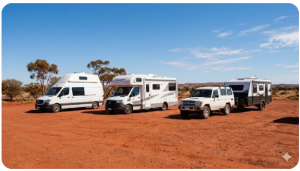
The vanlife vehicle market is full of beautiful builds and very persuasive sellers. Here is the senior-specific guide to what actually matters when you are choosing a vehicle to live in, not just holiday in.
| Vehicle Type | Best For | Senior Consideration | Budget Range (2026) |
|---|---|---|---|
| Converted campervan (hi-top) | Solo travellers, urban vanlife, shorter trips | Stand-up height essential if you have back issues. Narrow access can be difficult with hip or knee problems. Easy to park anywhere. | $25,000–$80,000 converted |
| Motorhome (Class C) | Couples, full-time vanlife, comfort priority | Steps into the vehicle can be steep. A motorhome with low entry steps or a grab handle is essential for seniors with limited mobility. Bathroom on board is a major senior advantage. | $60,000–$250,000+ |
| Caravan and tow vehicle | Couples, longer stays, maximum living space | Reversing and unhitching can be genuinely difficult for seniors with shoulder or back problems. A reversing camera and electric jockey wheel are not luxuries — they are senior essentials. | $30,000–$120,000 caravan + $30,000–$80,000 tow vehicle |
| Fifth-wheeler | Maximum space, extended full-time vanlife | Requires a dual-cab ute with a fifth-wheel hitch. The most spacious option but the most complex to manage. Only for confident towiers with towing experience. | $60,000–$200,000+ combined |
| Camper trailer | Active senior travellers, off-road access | Setup and pack-down requires physical effort. Not ideal for seniors with significant mobility issues. Excellent for off-road access that caravans cannot manage. | $15,000–$60,000 |
- Fixed bed that does not require nightly conversion. Converting a lounge into a bed every night sounds fine in a showroom. After three weeks on the road with a bad back at 10pm after a long drive, it is a different conversation entirely.
- 240V shore power connection with a minimum 20A inlet. If you use a CPAP machine, a powered site is not optional — it is a health requirement. Your vehicle must have a proper 240V shore power system installed, not a portable solution that requires reconfiguring every night.
- Hot water system on board. Cold outdoor camp showers become genuinely miserable in remote Australia in June. An onboard hot water system is a senior quality-of-life essential, not a luxury upgrade.
Vanlife Campground Guides for Grey Nomads — Our Best Reviews
Every campground guide on this site is written specifically for senior vanlifers. That means powered sites are always assessed, the nearest hospital is always included with GPS, toilet distances and accessibility are noted, CPAP and generator rules are covered, and there is always an honest verdict — not just a description. These are the questions Google cannot answer and the park websites do not address. We answer them before you leave home.
| Campground Guide | State | Senior Highlight |
|---|---|---|
| Whyalla Caravan and Tourist Park | SA | Powered sites, pool, walking distance to Spencer Gulf. Hospital in town. |
| Free Camping Shark Bay Western Australia | WA | World Heritage Area. Full guide to free and low-cost camps. Honest senior verdicts. |
| Gladstone Bay Campground | WA | $10 pension rate, artesian shower, dump point. Stonefish and no-power warnings included. |
| Adelaide River Showgrounds Caravan Park | NT | $32 powered, 7th night free, pool, best camp host in the NT. Litchfield 45 min away. |
Every guide includes the full GPS coordinates for the campground, the nearest hospital with phone number and GPS, and a complete facilities comparison table. Save them to your device before you leave Wi-Fi — they work offline when you need them most. Use our van life savings spots directory to find free and low-cost camps across every state and territory.
Vanlife Health and Safety for Seniors — The Guide No One Else Publishes
📵 Can 000 Find You at a Rest Area With No Street Address?
Most free camps and rest areas don’t have a street address to give an operator. The Emergency+ app pins your GPS location or generates a what3words address wherever you’re parked — and it works offline, so no signal doesn’t mean no location. Get it free — iPhone (App Store) or Android (Google Play).
The habit that matters: open it the moment you arrive at a new camp, not if you need it. Testing it early means you already know it works before an emergency makes that the wrong time to find out.
Bonus use: grab the GPS coordinates it shows you and save them to your own Van Life Savings Spots pin — a good stop is worth remembering for next time.
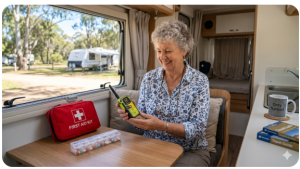
Health planning is the part of vanlife preparation that most guides skip entirely because it is not photogenic. It is also the part that determines whether a medical issue on the road becomes an inconvenience or a catastrophe. These are the four essentials every senior vanlife traveller must address before leaving home.
1. Travel Insurance with Medical Evacuation Cover
Standard home-and-contents insurance does not cover a medical evacuation from a remote campsite. Standard health insurance does not cover a helicopter ambulance flight. Travel insurance with medical evacuation cover is not optional for senior vanlife — it is foundational. The Royal Flying Doctor Service operates across remote Australia and their fees for uninsured evacuations are substantial. Before you leave home, confirm your policy explicitly covers: remote medical evacuation, pre-existing conditions you are managing, and the full duration of your intended trip.
2. PLB Registration — The One Device That Saves Lives in Remote Australia
A Personal Locator Beacon (PLB) is the single most important safety device for senior vanlifers who travel beyond reliable mobile coverage. Unlike a phone or satellite communicator, a registered PLB sends a distress signal directly to the Australian Maritime Safety Authority (AMSA) at no cost. Registration is free at beacons.amsa.gov.au. The PLB must be registered to your name, and you must carry it on your person — not in the van. If you are ever injured and cannot reach your vehicle, the PLB is what saves you.
3. CPAP Power Solutions for Vanlife
If you use a CPAP machine, your power setup is a medical requirement, not a convenience. Your options for vanlife are: powered caravan park sites (240V mains), a lithium battery system of 100Ah or more with solar recharging, or a generator. Each has trade-offs. Mains power is the most reliable but limits where you can camp. Lithium battery and solar is the most flexible but requires proper sizing and installation by a qualified auto-electrician. Generators are loud and not welcome at all campgrounds. The right answer depends on your travel style — slow and camp-based suits solar, highway travel suits mains-powered parks. Our campground guides always tell you whether powered sites are available, how many, and whether generators are permitted.
4. Medication Management on the Road
Remote Australian towns have limited pharmacy stock. If you manage a chronic condition requiring specialty medication, you cannot assume the next town has what you need. The protocol for senior vanlife medication management is: carry a two-week minimum supply beyond your expected travel needs, carry a printed medication list in a waterproof pouch in your glovebox, and use your GP’s telehealth options for prescription renewals — most major providers now offer remote renewals with delivery to a nominated address or PO Box. Before any remote trip, research where the nearest hospital is. Every campground guide on this site includes this information with GPS coordinates.
- Emergency: 000
- RFDS (Royal Flying Doctor Service): 1300 669 569
- Healthdirect (24/7 nurse line): 1800 022 222
- AMSA PLB registration and emergency: 1800 641 792
- Poison Information Centre: 13 11 26
- Your nearest hospital: Check the campground guide for wherever you are camping tonight — GPS and phone included in every guide on this site.
COPY PROMPT ➔ ASK AI ➔ SAVE TO FORM ➔ ADD SPOT PIN ➔ GET DIRECTIONS
📍 Interactive map — find free camps, rest areas and overnight stops. Enable location for best results.
Vanlife Routes in Australia for Grey Nomads — The Laps That Actually Work After 50
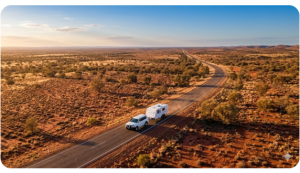
There is no single right way to do a lap of Australia, but there are routes that work significantly better for senior vanlifers than the standard tourist circuit. The differences come down to hospital access, campground quality, heat timing, and the density of worthwhile stops relative to driving distance. Here is the senior vanlife lens on Australia’s most-travelled routes.
| Route | Best Season for Seniors | Senior Advantage | Senior Warning |
|---|---|---|---|
| Coastal WA — Perth to Exmouth (North West Coastal Hwy) | April to September | World-class campgrounds, stunning coastline, Shark Bay World Heritage Area, Ningaloo Reef. Hospital access in Carnarvon and Exmouth. | October to March heat is extreme. Not suitable for seniors without air conditioning. |
| NT Top End — Darwin to Katherine | May to September (dry season only) | Litchfield, Kakadu, Katherine Gorge. Royal Darwin Hospital and Katherine Hospital for medical access. One of the most spectacular routes in Australia. | Never attempt in wet season (November to April). Crocodile warnings are non-negotiable — never swim in waterways not explicitly designated as safe. |
| Great Ocean Road and SA Coorong | October to April (avoid peak summer) | Hospital access throughout. Excellent sealed roads. Wide range of campground quality and price. Short driving days possible — ideal for senior pace. | Summer school holiday period makes this route very crowded. Book caravan parks months ahead in December and January. |
| Queensland — Cairns to the Gold Coast (Bruce Hwy) | May to September | Highest density of caravan parks and campgrounds in Australia. Hospital access in every major town. Warmer winter temperatures suit seniors who feel the cold. | The Bruce Highway is heavily trafficked and tiring. Break into maximum 300km driving days. Summer heat and humidity north of Cairns is not manageable without air conditioning. |
| Nullarbor Crossing — WA to SA | April to October | One of Australia’s iconic vanlife experiences. The roadhouses are spaced to suit caravan travel. The views across the Bight are genuinely unforgettable. | Medical facilities are minimal between Norseman (WA) and Ceduna (SA). Carry a full two-week medication supply and a registered PLB. This is the route where preparation matters most. |
For the complete senior grey nomad route guide with campground recommendations, hospital access points, and seasonal timing advice, read our full article on the best routes to drive around Australia as a grey nomad.
Vanlife Security — What Grey Nomads Need to Know Before Parking Up
Van and caravan theft in Australia is more common than most vanlife guides acknowledge. Opportunistic theft at campgrounds, highway rest stops, and free camps costs Australian travellers millions of dollars every year. For senior vanlifers — who are often carrying everything they own in a vehicle — the financial and emotional consequences of a theft can be devastating. Read our full guide to how caravan theft happens and how grey nomads can prevent it before your first trip.
- Leaving the vehicle unlocked while walking the dog or doing laundry. Most opportunistic theft happens when the owner is 50 metres away, not when they are gone for hours.
- Leaving valuables visible through windows. Laptops, cameras, wallets, and medication bags left on seats are an advertisement to opportunistic thieves at highway rest stops.
- Relying on standard door locks as the only security. Factory door locks on most vans and caravans can be defeated in under 60 seconds by an experienced thief. An immobiliser, deadlock, or secondary alarm is the real deterrent.
- No GPS tracker on the vehicle. A hidden GPS tracker is the difference between a theft report and a recovery. Combined with a vehicle immobiliser it is the most effective two-product security combination available.
- Not documenting contents before departure. If a theft does occur, insurance claims require a contents list with estimated values. Photograph everything before you leave home and store the images in cloud storage.
Frequently Asked Questions — Vanlife Australia for Grey Nomads and Senior Travellers
What is vanlife, and is it suitable for Australians over 50?
Vanlife is a style of travel and living in which your vehicle — a converted van, motorhome, campervan, or caravan — is also your home, either full time or for extended travel periods. In Australia it is strongly suited to people over 50. Retirees and semi-retirees have the time flexibility vanlife requires, the financial stability to budget it properly, and the life experience to appreciate what they are seeing. Australia’s vast campground network, reliable sealed highways, and accessible national parks make it one of the world’s best countries for senior vanlife. The key is proper preparation — which is exactly what this site provides.
How much does vanlife cost per month in Australia in 2026?
A realistic monthly budget for senior vanlife in Australia ranges from $1,500 to $3,500 per month for a couple, depending on your travel pace, campground choices, and spending style. Budget travellers using mostly free camps and cooking all meals can live comfortably under $2,000/month. Couples who prefer powered caravan park sites nightly, dine out regularly, and travel significant distances should budget $2,500–$3,500/month. Always maintain a separate $5,000 emergency repair fund that is not part of your monthly travel budget — van repairs in remote areas can be costly and unavoidable.
Can I do vanlife on the Age Pension in Australia?
Yes — many Australian grey nomads live full-time vanlife on the Age Pension, particularly if they have sold their home and have some savings for the setup. A single Age Pension in 2026 is approximately $1,116/fortnight ($2,232/month). A couple receives approximately $1,682/fortnight ($3,364/month) combined. On the budget vanlife model — mostly free camps, cooking all meals, and slow travel — a single person can manage comfortably on the pension. Couples have more flexibility. The critical factors are: no mortgage or rent to service, a van that is already set up and paid for, and a discipline around free camp use. Our van life savings spots guide is specifically designed for budget-conscious senior travellers.
Do I need a special licence to drive a motorhome or tow a caravan in Australia?
A standard Australian car licence (Class C) covers most vanlife vehicles including motorhomes up to 4.5 tonne GVM and vehicles towing trailers up to 9 metres in length under most state rules. Specific rules vary by state. Vehicles over 4.5 tonne GVM require an LR (Light Rigid) licence or higher. Fifth-wheelers and large triple combinations may have additional licensing requirements. Check the licensing rules for your specific state before purchasing your vehicle — requirements changed in several states between 2022 and 2025. When in doubt, contact your state road authority directly.
How do I manage health care and CPAP machines while doing vanlife in Australia?
CPAP management on the road requires either powered caravan park sites (240V mains power), a lithium battery system sized to run your specific machine for your required duration, or a generator. Telehealth has made GP access straightforward from anywhere with mobile coverage — most major providers offer script renewals and consultations remotely. Carry a two-week minimum medication supply beyond your expected needs. Research hospital locations before remote travel — every campground guide on this site includes the nearest hospital with GPS coordinates and phone number. Register a PLB with AMSA (free at beacons.amsa.gov.au) before any remote travel.
What is the best time of year to start vanlife in Australia for seniors?
April and May are the ideal starting months for most Australian senior vanlifers. The summer heat has passed in southern Australia, the NT dry season is beginning (perfect timing for a northern trip), Queensland is cooling into its best season, and the national campground network is less crowded than in winter peak. Starting in autumn also means you have the entire winter — Australia’s best vanlife season — ahead of you. Avoid starting in December or January, which combines the worst heat with the busiest campgrounds and most expensive site rates of the year.
Is vanlife safe for solo senior women in Australia?
Yes — solo female senior vanlife in Australia is well-established and thousands of women travel alone safely every year. The keys are: staying in established campgrounds with a host or other campers present (not isolated free camps) for the first few trips, using apps like WikiCamps and CamperMate to read recent reviews that specifically mention solo-woman safety, keeping a PLB registered and accessible, maintaining Telstra coverage where possible, and trusting your instincts. The grey nomad community is overwhelmingly welcoming and community-minded. Campgrounds that specifically rate well for solo women are flagged in our reviews. Read our full guide to safe and extended stays at Australian caravan parks for more practical detail.
What apps do grey nomads use for vanlife in Australia?
The essential app stack for senior vanlife in Australia in 2026 is: WikiCamps Australia (the most comprehensive campground database, includes user reviews and dump point locations), CamperMate (free camps and points of interest with recent visitor updates), Hema Explorer (offline 4WD and outback maps — essential before areas without signal), FuelMap Australia (cheapest fuel along your route), and GasBuddy (cross-check fuel pricing). Download offline maps for any region before you leave reliable internet coverage. Our van life savings spots guide covers additional tools for finding free overnight camping legally and safely.
About Retire to Vanlife — Who Writes This and Why It Is Different
Retire to Vanlife exists because the vanlife content that dominates Australian Google search results is written for twenty-somethings doing a gap year in a Kombi, not for 65-year-olds with a CPAP machine, a bad knee, a 23-foot caravan, and a dog named Keith. The lifestyle photography is beautiful. The practical information is missing entirely.
Every article on this site is built around the real concerns of Australian senior travellers: is there a hospital within a reasonable distance, will the powered sites run a CPAP machine, is there a dump point or will I be making a detour, are the toilets clean, can my 8-metre rig fit in the park, and is the access road going to shake my fillings loose. These are the questions that determine whether a campground is actually good for a senior grey nomad — not whether it is photogenic on a Tuesday morning in golden-hour light.
The campground reviews are built from verified information, GPS coordinates are confirmed before publication, phone numbers are live-tested, and the senior verdicts are honest. If a campground has a problem for seniors, we say so. If it is outstanding, we say exactly why. No sponsored fluff. No vague descriptions. Just the information you need to make a good decision before you leave home.
- The complete retire-to-vanlife guide — planning, budgets, health, and choosing a vehicle
- Van life savings spots — free and low-cost camps rated honestly for seniors
- Best grey nomad routes around Australia — timing, hospital access, and campground quality
- How caravan theft happens and what grey nomads must do to prevent it
- Living in a camper full time after 50 — the honest reality
Retire to Vanlife — Practical vanlife planning for Australian senior travellers aged 50 and over. All campground information is verified at time of publication and updated in 2026. Rates, facilities, and park rules change without notice — always confirm directly with the campground before travel. This site contains affiliate links. As an affiliate I earn from qualifying purchases at no extra cost to you.
If powered sites are full or you need a warm bed before collecting your van, search options below to find accommodation along any Australian route.
Accommodation search powered by Expedia. Booking through this search supports this website at no extra cost to you. As an affiliate, I earn from qualifying purchases at no extra cost to you.

As an affiliate, I earn from qualifying purchases at no extra cost to you.
As an affiliate, I earn from qualifying purchases at no extra cost to you.
“>