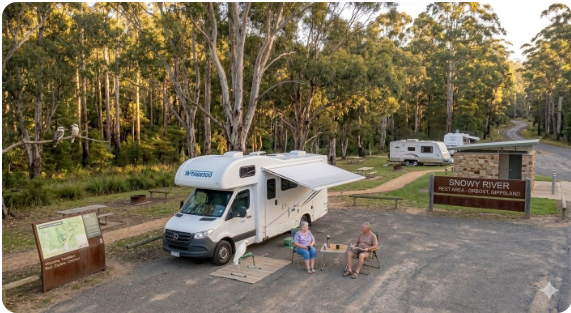
Rest Areas South Australia 2026 — Complete Senior Grey Nomad Guide
GPS-verified rest areas, overnight rules, highway overviews, safety information, free camping notes and honest real-world advice for senior grey nomads travelling every major South Australian highway — May 2026.
🗓️ Last reviewed: May 2026 — Facilities, overnight rules and GPS data are subject to change. Always verify on arrival against current signage.
📋 Table of Contents
- Why South Australia Is a Great Grey Nomad Destination
- Quick Facts — Rest Areas South Australia 2026
- Why SA Is Great for Senior Grey Nomads
- SA Highway Overview — All Major Chains
- SA Rest Area Rules — What Grey Nomads Must Know
- Medical and Safety Overview — Hospitals, RFDS and Mobile Coverage
- Best Time of Year to Travel South Australia
- Packing Checklist for South Australia
- SA Free Camping Overview
- Frequently Asked Questions
- Closing — Browse the SA Highway Chain Guides
South Australia — One of Australia’s Great Grey Nomad Destinations
If you are planning a grey nomad journey through South Australia, you are about to experience one of the most rewarding drives this country offers. Rest areas South Australia span some of the most dramatic and varied landscapes on the continent — from the red desert plateaus of the Stuart Highway north of Port Augusta, to the vine-laden Murray River flats of the Sturt Highway, to the wild coastal emptiness of the Eyre Highway across the Nullarbor Plain.
South Australia is not a state you rush through. The Flinders Ranges rise from the outback floor with a grandeur that stops you in your tracks. The Murray River winds through history, farmland and river red gum forests before crossing into SA near Renmark. The Stuart Highway climbs through the outback toward Coober Pedy and eventually the Northern Territory border — one of the great inland drives in the world. And the Nullarbor, long a rite of passage for Australian travellers, remains one of the most astonishing stretches of road on earth.
This guide is your complete starting point. Whether you are arriving from Victoria via the Dukes Highway, crossing from Western Australia on the Eyre Highway, or heading north from Adelaide on the Stuart, this hub post covers every major SA highway, the rest areas along them, the rules that govern overnight stays, the hospitals you need to know about, and the seasonal windows that make SA travel comfortable and safe for senior travellers.
Bookmark this page. It is the hub you come back to as you plan each leg of your SA journey. Individual highway chain guides are published as linked posts below — and more are added regularly as this site grows.
Quick Facts — Rest Areas South Australia 2026
| Fact | Detail |
|---|---|
| Major highways covered in this hub | Dukes Highway, Sturt Highway, Stuart Highway, Yorke Peninsula, Eyre Highway |
| Estimated rest areas across SA | 200+ formal rest areas and informal stops — including DPTI-managed highway rest areas, council-managed stops and national park designated camps |
| Free camping available in SA | Yes — extensive. SA has some of the most generous free camping options of any Australian state, particularly in outback and national park regions |
| Dump points available in SA | Yes — in most major towns. Remote areas have very limited dump point access — plan accordingly |
| Self-contained vehicle rules | SA does not have a universal self-containment certification requirement, but many free camps and rest areas specifically require self-contained vehicles — check each location |
| Best season for senior grey nomads | April to October — avoid December to February in the outback and north SA (extreme heat). April–June and August–October are the sweet spots |
| RFDS coverage | Yes — Royal Flying Doctor Service covers all of remote SA. Carry an EPIRB or PLB for any travel north of Port Augusta |
| Telstra coverage remote SA | Best available network — but drops to no coverage on long outback stretches. Satellite communication strongly recommended north of Pimba on the Stuart Highway |
| Speed limits — outback highways | 110 km/h on most SA outback highways — reduce to 80–90 when towing in crosswinds or on rough sections |
| Road trains | Common on Stuart Highway, Eyre Highway and Sturt Highway — allow 150+ metres clearance before overtaking |
Why South Australia Is Great for Senior Grey Nomads
South Australia rewards patient, curious travellers — which describes most grey nomads perfectly. Here is why SA consistently ranks as one of the top destinations for senior travellers on the road:
- Enormous variety in a single state. You can drive from lush Murray River farmland to ochre desert to coastal cliff-tops within a single journey — SA offers more landscape diversity per kilometre than almost any other state.
- Genuinely uncrowded. Outside of the Adelaide Hills and Barossa Valley in peak tourist season, SA’s highways and rest areas are far less congested than those in Victoria, Queensland or NSW. You will find space, quiet and solitude — the things most grey nomads are actually looking for.
- Excellent free camping culture. SA has a long tradition of welcoming travellers at roadside rest areas, station stays and outback camps. The DPTI manages rest areas with traveller fatigue as a genuine priority — not just a regulatory box to tick.
- The Nullarbor is more manageable than its reputation suggests. With modern vehicles, good planning, fuel monitoring and a Telstra SIM, the Nullarbor crossing is a genuinely rewarding experience for fit and prepared senior travellers. It is not a journey for the unprepared — but it is not the ordeal some retirees fear either.
- Flinders Ranges accessibility. Wilpena Pound and the Flinders Ranges are accessible on sealed roads for most of the way — genuinely spectacular country that does not require a 4WD.
- The Murray River runs through SA’s heart. The Sturt Highway and the Murray River region offer beautiful, flat, well-serviced driving with excellent rest areas, heritage towns and some of Australia’s best river camping.
- Affordable travel. SA has lower fuel prices than WA or NT on comparable routes, and free camping options reduce accommodation costs significantly for self-sufficient travellers.
- Senior-friendly medical infrastructure in the south. Adelaide has world-class medical facilities. Port Augusta, Whyalla, Renmark and Murray Bridge all have regional hospitals within reach of major highway corridors.
SA Highway Overview — All Major Chains Covered on This Site
This site covers South Australia highway by highway — each corridor gets its own dedicated chain of rest area guides. Below is the full SA highway overview with a brief description of each route and links to individual chain guides as they are published.
🛣️ Western Highway / Dukes Highway — Bordertown → Keith → Murray Bridge → Adelaide
The Dukes Highway is the main artery connecting Victoria to Adelaide and is the most travelled entry point into SA for grey nomads arriving from Melbourne and eastern Australia. The highway runs through agricultural land, wheat-belt towns and the gentle hills approaching Adelaide. Rest areas along this corridor are well-spaced and DPTI-managed, with basic facilities at most stops. Keith and Tailem Bend are the key service towns.
🛣️ Sturt Highway — Renmark → Berri → Loxton → Mannum → Adelaide
The Sturt Highway follows the Murray River from the NSW border through SA’s Riverland region before heading southwest toward Adelaide. This is one of the most enjoyable drives in SA — flat, scenic, historically rich, and packed with free camping spots beside the Murray. Renmark, Berri, Barmera, Loxton and Mannum are the key towns, each with river access, caravan parks and often free overnight areas.
🛣️ Stuart Highway — Port Augusta → Pimba → Coober Pedy → NT Border
The Stuart Highway is the iconic spine of outback Australia — running from Port Augusta in SA’s mid-north all the way to Darwin. For grey nomads, the SA section from Port Augusta to Coober Pedy (850 km) is the defining outback drive. Fuel planning, water carrying and satellite communication are not optional on this route — they are essential. Pimba (near Woomera) is the first reliable fuel stop after Port Augusta heading north. Coober Pedy is the major service hub before the NT border.
🛣️ Yorke Peninsula — Kadina → Moonta → Wallaroo → Maitland → Minlaton
The Yorke Peninsula is one of South Australia’s most underrated grey nomad destinations. It is a three-pronged peninsula west of Adelaide, offering coastal camping, historic copper-mining towns, excellent fishing and a relaxed pace that suits senior travellers perfectly. The peninsula is entirely on sealed roads and well within reach of Adelaide for medical emergencies. The Innes National Park at the southern tip is a highlight.
🛣️ Eyre Highway — Ceduna → Nullarbor → WA Border (Eucla)
The Eyre Highway across the Nullarbor Plain is one of the great Australian road journeys. It is 1,675 km from Port Augusta to the WA border at Eucla — with Ceduna being the last major service centre before the long Nullarbor crossing. Rest areas on the Nullarbor are managed by DPTI and roadhouses, and overnight camping at designated areas is permitted. This is remote travel in its truest form — plan carefully, carry extra of everything, and leave your schedule loose enough to enjoy the experience rather than race through it.
SA Rest Area Rules — What Grey Nomads Need to Know
Understanding the rules that govern overnight stops in South Australia is essential before you leave home. SA has a relatively generous framework for grey nomads — but the rules vary significantly between road types, land managers and regions.
DPTI Rest Areas — The Highway Standard
The Department for Infrastructure and Transport (DPTI) manages roadside rest areas on SA’s major highways. These are designed primarily as fatigue-management stops — not free camping sites. The standard rules are:
- Rest areas are for short-duration breaks — typically 2 to 4 hours maximum unless otherwise signed
- Some DPTI rest areas explicitly permit overnight stays — these are signed as “overnight rest areas” or similar
- Where overnight use is not explicitly permitted, it is not permitted — regardless of how quiet or empty the area appears
- Facilities at DPTI rest areas typically include toilets, picnic tables and bins — potable water is not always available
- Fire lighting at DPTI rest areas is generally prohibited unless specific signage indicates otherwise
Self-Contained Vehicle Rules in SA
South Australia does not operate a mandatory self-containment certification scheme equivalent to the NZ Warrant of Fitness system. However, many free camps and council-managed overnight areas in SA specify “self-contained vehicles only.” In practical terms, this means:
- Your vehicle must have its own toilet and grey water holding capacity — you should not be dependent on the rest area’s facilities for waste management
- Grey water must be held on board and disposed of at a designated dump point — never on the ground or into waterways
- If an area is signed “self-contained vehicles only” and your vehicle does not meet this standard, you should move on to a caravan park or managed campsite
24-Hour vs 48-Hour Stay Limits
Time limits at SA rest areas and free camps vary by location and land manager:
- DPTI highway rest areas: Short rest only (typically 2–4 hours) unless signed as overnight areas
- Council-managed free camps: Typically 24 to 48 hours — always read the sign at the entry
- National Park camping: Permit required, stay limits apply — book through SA National Parks
- Station and outback free camps: Rules set by the land owner — always ask before assuming
Difference Between Rest Areas and Free Camps in SA
| Type | Managed By | Overnight Permitted? | Facilities |
|---|---|---|---|
| DPTI Highway Rest Area | SA Government — DPTI | Generally no — unless signed as overnight area | Toilets, tables, bins — no power, no water guarantee |
| Council Free Camp | Local Council | Yes — typically 24–48 hours. Check signs | Varies — often toilets and bins, sometimes dump point |
| National Park Camp | SA Department for Environment and Water (DEW) | Yes — with permit. Book in advance in peak season | Basic to developed — check individual park |
| Station Stay / Outback Camp | Private landholder | Yes — with landowner permission | Very basic — self-sufficient travel essential |
| Roadhouse Rest Area | Private business | Often yes — particularly on the Nullarbor. Ask on arrival | Fuel, basic meals, toilets, sometimes showers |
Fire Ban Seasons in SA
Read our Grey Nomad Safety Tips guide for a full rundown on fire safety, heat management and emergency planning before any SA trip.
Medical and Safety Overview — Hospitals, RFDS and Mobile Coverage
For senior grey nomads, medical planning is not optional — it is part of the itinerary. South Australia has excellent medical facilities in the south and along the major highways, but the further north and west you travel, the more isolated you become. Know where the hospitals are before you leave each town.
Major Hospitals Along SA Highway Corridors
| Hospital | Highway | Address | GPS (within 50m) | Phone |
|---|---|---|---|---|
| Royal Adelaide Hospital | All — Adelaide Hub | Port Road, Adelaide SA 5000 | -34.9224, 138.5878 | (08) 7074 0000 |
| Bordertown Memorial Hospital | Dukes Highway | 43 Coulta Street, Bordertown SA 5268 | -36.3108, 140.7680 | (08) 8752 1911 |
| Keith and District Hospital | Dukes Highway | 9 Hanson Street, Keith SA 5267 | -36.0988, 140.3540 | (08) 8755 1011 |
| Murray Bridge Hospital | Dukes Highway / Sturt Highway | 2 Jervois Road, Murray Bridge SA 5253 | -35.1175, 139.2748 | (08) 8535 6777 |
| Renmark Paringa District Hospital | Sturt Highway | Renmark Avenue, Renmark SA 5341 | -34.1741, 140.7482 | (08) 8580 2200 |
| Berri Hospital | Sturt Highway | Riverview Drive, Berri SA 5343 | -34.2836, 140.5985 | (08) 8582 9100 |
| Port Augusta Hospital | Stuart Highway / Eyre Highway | Hospital Road, Port Augusta SA 5700 | -32.4966, 137.7644 | (08) 8648 5500 |
| Coober Pedy Hospital | Stuart Highway | Hospital Road, Coober Pedy SA 5723 | -29.0136, 134.7544 | (08) 8672 5009 |
| Ceduna District Health Services | Eyre Highway | 12 McKenzie Street, Ceduna SA 5690 | -32.1299, 133.6617 | (08) 8626 2086 |
| Kadina Community Hospital | Yorke Peninsula | Port Road, Kadina SA 5554 | -33.9681, 137.7154 | (08) 8821 0200 |
Royal Flying Doctor Service (RFDS) Coverage in SA
The RFDS covers all of remote South Australia and is a genuine lifeline for travellers in outback regions. If you are travelling north of Port Augusta, the RFDS is your primary emergency medical evacuation service. Key points for senior travellers:
- RFDS responds to 000 calls in remote areas where road ambulance is not practical
- A PLB (Personal Locator Beacon) or EPIRB registered with AMSA (Australian Maritime Safety Authority) is the most reliable way to trigger RFDS response in areas with no mobile coverage
- The RFDS Port Augusta base covers the Stuart Highway corridor north of Port Augusta and the Nullarbor section of the Eyre Highway
- Carry a printed copy of your medical summary, current medications list, blood type, allergies and GP contact details — RFDS staff will need this information
- If you have a cardiac condition, complex respiratory needs or recent surgery, discuss your specific remote travel plan with your GP before departing Port Augusta heading north
Mobile Coverage Notes — Remote SA
| Region | Telstra | Optus | Vodafone / TPG | Senior Recommendation |
|---|---|---|---|---|
| Adelaide and surrounds | Excellent 4G/5G | Good 4G | Good 4G | Any network suitable |
| Dukes Highway (Bordertown–Murray Bridge) | Good — some gaps between towns | Patchy between towns | Limited outside towns | Telstra recommended |
| Sturt Highway (Renmark–Murray Bridge) | Good in towns — gaps on rural sections | Town coverage only | Limited | Telstra recommended |
| Stuart Highway (Port Augusta–Coober Pedy) | Coverage in towns and some stretches — long gaps in outback sections | Towns only — significant gaps | Not reliable outside Port Augusta | Telstra + satellite device essential |
| Eyre Highway / Nullarbor | Roadhouses and some stretches only — long no-coverage sections | Very limited — roadhouses only | Essentially no coverage | Satellite communicator mandatory for this route |
| Yorke Peninsula | Good in towns — patchy on peninsula tips | Patchy | Limited | Telstra recommended |
Best Time of Year to Travel South Australia as a Grey Nomad
Getting the season right for SA travel — particularly in the outback and north — is one of the most important decisions you will make. South Australia has dramatic seasonal extremes that go well beyond what most eastern-states travellers are used to.
| Season | Conditions | Outback SA | Murray River / Riverland | Eyre Highway / Nullarbor | Senior Verdict |
|---|---|---|---|---|---|
| Summer (Dec–Feb) | Extreme heat — 40–50°C in outback. Very long days. Bushfire risk severe. | ❌ Dangerous — avoid without full air conditioning and extreme planning | ⚠️ Hot but manageable with AC — not ideal for seniors without climate control | ⚠️ Hot but sea breezes moderate temperatures slightly — still challenging | ⚠️ Not recommended for senior travellers without robust air conditioning and heat management |
| Autumn (Mar–May) | Cooling rapidly from March. April–May ideal. Wildflowers in some regions from August. | ✅ Excellent from April — comfortable days, cool nights, clear skies | ✅ Outstanding — Murray at its most beautiful, comfortable temperatures | ✅ Very good — ideal crossing window before winter cold sets in at night | ✅ Highly recommended — the classic grey nomad departure window for SA |
| Winter (Jun–Aug) | Cold nights in south (near 0°C in Adelaide Hills). Mild days in outback. Occasional flooding in flood-plain areas. | ✅ Good — outback is at its most comfortable. Cold nights require good heating. | ⚠️ Can be cold and foggy — excellent if you have good heating. River beautiful in winter light. | ✅ Good — Nullarbor crossing very comfortable in winter. Cold nights but manageable. | ✅ Good overall — particularly for outback travel. Ensure your heating system is tested before departure. |
| Spring (Sep–Nov) | Warming through October. Wildflower season spectacular in Flinders Ranges and Yorke Peninsula. School holidays in September. | ✅ Excellent September–October. Becomes hot in November. | ✅ Beautiful — river flowing well, temperatures pleasant. | ✅ Good — complete the Nullarbor crossing before November heat builds. | ✅ Highly recommended — aim for September or October for the best balance of weather, wildflowers and crowd levels. |
Packing Checklist for South Australia — Senior Grey Nomad Focus
South Australia — particularly the outback sections — demands a higher level of self-sufficiency than most eastern-states travel. This checklist is focused on remote and semi-remote SA travel. For short Murray River stops, not every item is critical — but for anything north of Port Augusta or west of Ceduna, this list is not optional.
| Category | Item | Why It Matters in SA | Packed ☐ |
|---|---|---|---|
| Water | Minimum 40 litres stored drinking water | Rest areas on outback highways often have no potable water. Between Glendambo and Coober Pedy, no reliable water source exists for 254 km. | ☐ |
| Water | Water purification tablets or filter | Backup for emergencies — never a substitute for stored water in remote SA. | ☐ |
| Fuel | Minimum 20 litres jerry can | Fuel gaps on Stuart and Eyre Highways can exceed 200 km. Fill at every roadhouse regardless of tank level. | ☐ |
| Communication | PLB or satellite communicator (registered with AMSA) | No mobile coverage for long sections of Stuart and Eyre Highways. RFDS requires a reliable way to locate you. | ☐ |
| Communication | Telstra SIM card | Best available network for SA. Download offline maps before leaving mobile coverage areas. | ☐ |
| Medical | 72-hour+ prescription medication buffer | Pharmacies are rare beyond major towns. Coober Pedy has limited pharmaceutical stock — do not rely on resupply in the outback. | ☐ |
| Medical | Printed medical summary card | RFDS and remote hospital staff need your medical history, medications, blood type and GP contact immediately in an emergency. | ☐ |
| Medical | First aid kit — comprehensive | Minor injuries in remote SA can become serious without basic wound care supplies. Nearest clinic may be hours away. | ☐ |
| Sun and Heat | SPF 50+ sunscreen, wide-brim hat, UV-protective clothing | UV index in outback SA regularly exceeds 12 (extreme). Skin cancer risk is real and cumulative for senior travellers spending extended time outdoors. | ☐ |
| Sun and Heat | Reflective windscreen cover and van shading | Interior van temperatures can reach 60–70°C in parked vehicles during summer. Critical for medication storage and pet safety. | ☐ |
| Power | Solar panels — minimum 200W for remote travel | No powered sites at most SA outback rest areas. Solar is the primary power source for CPAP, refrigeration and device charging. | ☐ |
| Power | Battery bank — lithium preferred for heat tolerance | Lead-acid batteries struggle in extreme heat. Lithium batteries perform better in high-temperature SA conditions. | ☐ |
| Navigation | Hema outback maps (paper and/or digital) | GPS app maps lose detail in remote SA. Hema Explorer is the gold standard for outback navigation in Australia. | ☐ |
| Vehicle | Spare tyre (full-size — not space-saver) | Tyre damage on outback gravel roads is common. A space-saver spare is not adequate for remote SA travel — carry a full-size spare as minimum, two if possible. | ☐ |
| Vehicle | Basic tool kit and tow rope | Roadside assistance response times in remote SA can be many hours. Basic mechanical capability is a genuine asset. | ☐ |
| Waste | Full grey water tank and dump hose | Grey water must not be released on the ground at remote rest areas. Hold it and dump at the next designated dump point. | ☐ |
| Insects | DEET-based insect repellent and mesh screens | Outback SA flies are legendary — and Murray River mosquitoes are no less serious. Both require active management. | ☐ |
For a complete senior-specific packing list for any Australian grey nomad journey, read our full Grey Nomad Packing Checklist and Grey Nomad Road Safety Checklist.
SA Free Camping Overview — What Senior Grey Nomads Need to Know
South Australia has some of the most generous free camping opportunities of any Australian state — but the landscape of free camping in SA is varied and requires research for each region. Here is the honest overview:
Where Free Camping Works Well in SA
- Murray River and Riverland region: Multiple free and low-cost camping spots along the Murray in SA — many council-managed, some on Crown land beside the river. The Sturt Highway corridor has excellent options in Renmark, Berri, Barmera and Loxton.
- Outback rest areas on the Stuart Highway: Several designated overnight rest areas exist between Port Augusta and the NT border. Some are DPTI-signed for overnight use. All are basic — bring everything you need.
- Eyre Highway / Nullarbor: Designated overnight rest areas and roadhouse areas permit overnight stays. The Great Australian Bight rest areas are spectacular and free — some of the most dramatic free camp locations in Australia.
- Yorke Peninsula: Several foreshore and coastal reserves permit free camping — particularly at the southern end of the peninsula near Innes National Park (permit required for national park sites).
- Flinders Ranges — outside national parks: Crown land and designated free camp sites exist around the Flinders Ranges — research through the SA Government’s recreation and camping portal before arriving.
Where Free Camping Is Limited or Prohibited
- Adelaide metropolitan area: Very limited free overnight options — caravan parks are the practical choice for Adelaide stays.
- National Park boundaries: Free camping inside national parks requires a permit booked through SA National Parks. Do not assume Crown land adjacent to a national park is available without checking the boundary.
- Private farmland: Never assume permission to camp on unfenced outback land — it is almost always privately held. Ask at the nearest station homestead before camping on what appears to be open land.
In the meantime, our Vanlife Savings Spots guide covers verified overnight stops across Australia and is updated regularly. It is a practical starting point for finding free and low-cost camps while the SA-specific guide is being completed.
COPY PROMPT ➔ ASK AI ➔ SAVE TO FORM ➔ ADD SPOT PIN ➔ GET DIRECTIONS
📍 Interactive map — find free camps, rest areas and overnight stops across South Australia and beyond. Enable location for best results.
Frequently Asked Questions — Rest Areas South Australia
Is there free camping in South Australia?
Yes — South Australia has extensive free camping options for grey nomads. Free and low-cost overnight stops are available along the Murray River / Riverland corridor, at designated rest areas on the Stuart and Eyre Highways, at numerous coastal and foreshore reserves on the Yorke Peninsula and at outback locations across the state. Council-managed free camps typically have a 24 to 48-hour stay limit. National park camping requires a permit booked through SA National Parks. Always read signage on arrival — rules vary by location and can change without notice.
What are the rest area rules in South Australia?
DPTI-managed rest areas on SA’s major highways are primarily fatigue-management stops — short rest breaks of 2 to 4 hours unless explicitly signed as overnight areas. Council-managed free camps typically permit 24 to 48-hour stays for self-contained vehicles. National park camping requires an advance permit. Fire lighting is prohibited at most DPTI rest areas. Grey water must be held on board and disposed of at designated dump points — never on the ground. During declared Total Fire Ban days, no open fire of any kind is permitted anywhere in the affected fire district. Always check current signage on arrival — it takes legal precedence over any website including this one.
Is South Australia good for grey nomads?
Absolutely — South Australia is one of the most rewarding grey nomad destinations in Australia. The diversity of landscape (Murray River, Flinders Ranges, Nullarbor, Yorke Peninsula), the generous free camping culture, the relatively uncrowded highways outside Adelaide, and the iconic status of the Stuart Highway and Nullarbor crossing make SA a must-visit state for any serious grey nomad. Medical infrastructure is strong in the south and along major corridor towns. The key planning requirement is seasonal timing — avoiding the outback in summer and preparing thoroughly for remote travel north of Port Augusta and west of Ceduna.
What is the best highway to drive in South Australia as a grey nomad?
For first-time SA grey nomads, the Sturt Highway from the NSW/VIC border through Renmark and Berri to Adelaide is arguably the most enjoyable introduction — flat, scenic, historically rich, and well-serviced with free camps along the Murray River. For experienced travellers seeking the iconic experience, the Stuart Highway north through Port Augusta to Coober Pedy and the Flinders Ranges detour is unmissable. The Eyre Highway across the Nullarbor is the great rite-of-passage drive — best tackled after the traveller has some remote SA experience and a well-prepared, self-sufficient van setup.
Is the Nullarbor safe for senior travellers?
Yes — with proper preparation. The Nullarbor has a fearsome reputation that is somewhat overstated for travellers in modern, well-maintained vehicles. The road is entirely sealed, clearly signed and well-maintained. The practical requirements are: fill fuel at every roadhouse without exception, carry a minimum 40 litres of drinking water, carry a satellite communicator or registered PLB, have your vehicle and tyres in good condition before Ceduna, and travel in cooler months (April to October). Solo senior travellers should inform a contact of their planned roadhouse stops and check in at each one. With these preparations in place, the Nullarbor is a genuinely extraordinary and manageable experience for senior grey nomads.
What is the nearest hospital on the Dukes Highway in SA?
The Dukes Highway in SA is served by three key hospitals: Bordertown Memorial Hospital (43 Coulta Street, Bordertown SA 5268, GPS: -36.3108, 140.7680, phone: (08) 8752 1911) near the Victorian border; Keith and District Hospital (9 Hanson Street, Keith SA 5267, GPS: -36.0988, 140.3540, phone: (08) 8755 1011) in the mid-section; and Murray Bridge Hospital (2 Jervois Road, Murray Bridge SA 5253, GPS: -35.1175, 139.2748, phone: (08) 8535 6777) near the eastern approach to Adelaide. GPS coordinates are placed within 50 metres of each hospital’s primary access point. In an emergency, always call 000.
Can I travel South Australia in a campervan?
Yes — a campervan is an excellent vehicle for SA travel, particularly on the sealed highway corridors. For the Murray River region, Dukes Highway, Stuart Highway (to Coober Pedy) and Yorke Peninsula, a standard campervan is perfectly suitable. For off-road tracks into the Flinders Ranges or remote outback areas, a 4WD camper is preferable — but the vast majority of SA’s grey nomad highlights are accessible on sealed or well-maintained gravel roads in a standard campervan. Ensure your campervan has adequate water storage, grey water holding capacity and solar power for rest areas without facilities. Read our Best Routes for Grey Nomads guide for route planning specific to campervan travel.
What is the best time of year to travel South Australia as a grey nomad?
April to October is the broadly recommended window for senior grey nomad travel in SA. The sweet spots are April to June (cooling from summer, wildflowers in some regions, uncrowded) and August to October (warming from winter, spectacular wildflowers in the Flinders Ranges, good outback conditions). Avoid December to February in the outback and north SA — extreme heat is dangerous for seniors without robust climate control. July and August are excellent for the Nullarbor and Stuart Highway but require good heating for cold nights. Spring in the Flinders Ranges (September–October) is widely regarded as the finest seasonal window in SA for grey nomad travel.
Browse the SA Highway Chain Guides — Your Complete SA Rest Area Resource
South Australia is a state that rewards preparation and patience in equal measure. The grey nomads who get the most from SA are the ones who have done their planning at home — who know where the hospitals are, how far it is to the next fuel, where to dump their tanks, and which rest areas allow overnight stays before they leave their driveway.
This hub page is your starting point. As individual highway chain guides are published for each SA corridor, they will be linked below — each one covering GPS coordinates within 50 metres, overnight rules, facilities, medical contacts, mobile coverage and honest senior-specific advice. Bookmark this page and return to it as you plan each leg of your SA journey.
South Australia is genuinely one of the great grey nomad destinations. Plan your season carefully, prepare your van thoroughly for the level of remoteness you are heading into, carry more water and fuel than you think you need, and give yourself enough time to stop when the landscape demands it — which in SA, is often. The Nullarbor, the Flinders Ranges, the Murray River and the Stuart Highway are all extraordinary. None of them reward being rushed.
Safe travels. The road is worth every kilometre.
🗺️ SA Highway Chain Guides — Published and Coming Soon
- Melbourne to South Australia — Complete Senior Grey Nomad Rest Area Guide 2026
- Dukes Highway SA — Bordertown to Adelaide Rest Areas 2026 (coming soon)
- Sturt Highway SA — Renmark to Murray Bridge Rest Areas 2026 (coming soon)
- Stuart Highway SA — Port Augusta to Coober Pedy Rest Areas 2026 (coming soon)
- Eyre Highway SA — Ceduna to Nullarbor Rest Areas 2026 (coming soon)
- Yorke Peninsula SA — Kadina to Innes National Park Rest Areas 2026 (coming soon)
- Free Camping South Australia 2026 (coming soon)
📚 Essential Senior Grey Nomad Reading
- Free Camping Victoria 2026
- Rest Areas Victoria 2026
- Grey Nomad Safety Tips
- Grey Nomad Packing Checklist
- Grey Nomad Road Safety Checklist
- Living in Retirement on the Road
- Vanlife Savings Spots
- Best Routes for Grey Nomads
Whether you are crossing into SA for the first time via the Dukes Highway from Victoria, or you are a seasoned grey nomad planning your Nullarbor crossing, this page is the hub you come back to. Every SA highway chain guide published on this site links back here — and every guide is written with the same commitment: GPS-verified, honestly assessed, and written specifically for senior travellers who deserve accurate information before they leave home.
The road through South Australia is waiting. Plan well, travel safely, and enjoy every stop along the way.
Free camps and powered sites fill fast in peak season across South Australia. If your preferred stop is taken, search remaining accommodation options below.
Accommodation search powered by Expedia. Booking through this search supports this website at no extra cost to you. As an affiliate, I earn from qualifying purchases.

As an affiliate, I earn from qualifying purchases at no extra cost to you.
Exclusive Offer: Get 5% OFF all StarterStopper immobiliser products with promo code: RTV5
Visit StarterStopper.com — data-backed caravan security solutions
As an affiliate, I earn from qualifying purchases at no extra cost to you.