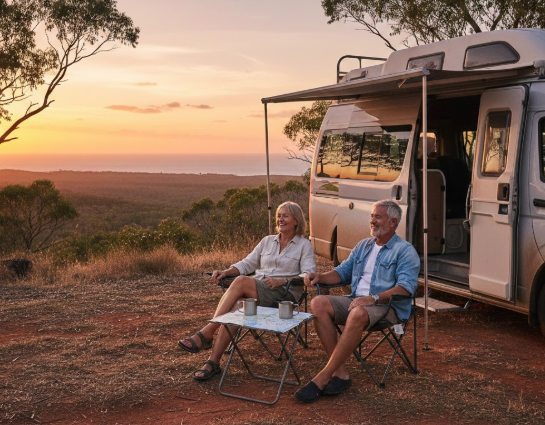
Is Vanlife Actually Cheaper Than Living in a House? — Senior Grey Nomad Guide 2026
A brutally honest, number-by-number cost breakdown comparing full-time vanlife against renting or owning a home in Australia — written specifically for retirees and grey nomads weighing up the big lifestyle switch in 2026.
Last reviewed: May 2026 — Costs and figures reflect current Australian conditions for retirees considering full-time vanlife.
If you’ve been scrolling through vanlife Instagram accounts thinking it all looks suspiciously affordable — or suspiciously expensive — you’re not alone. The honest truth is that full-time vanlife can be significantly cheaper than living in a house, but only if you go in with clear eyes, a realistic budget, and an understanding of where the hidden costs lurk. This guide strips away the lifestyle branding and gives you the real numbers, side by side, so you can make the decision that’s right for your retirement.
- Full monthly cost breakdown: vanlife vs renting vs owning
- One-off setup costs most guides forget to mention
- How the Age Pension interacts with vanlife living
- Hidden costs that blow vanlife budgets in year one
- When vanlife is NOT cheaper — and what to do about it
- Real-world numbers from Australian grey nomad communities
- A side-by-side comparison table you can print and keep
📋 Table of Contents
- The core question: what are we actually comparing?
- Monthly vanlife costs — the full honest breakdown
- Monthly house costs — rent and ownership compared
- Side-by-side comparison table
- The one-off setup costs that change everything
- Fuel costs — the number everyone underestimates
- Food and groceries on the road vs at home
- Healthcare costs for vanlife retirees
- How the Age Pension interacts with vanlife
- Hidden costs that blow vanlife budgets
- When vanlife is NOT cheaper — be honest with yourself
- Strategies that genuinely cut vanlife costs
- The break-even point — how long until you’re ahead?
- What real grey nomads actually spend
- Frequently asked questions
- Final verdict — is vanlife cheaper for retirees?
1. The Core Question: What Are We Actually Comparing?
Before we put a single dollar figure on the table, it’s worth being precise about what we’re comparing. “Vanlife” is not one thing. A couple in a 2022 Toyota HiAce with solar panels and a fixed bed is living a very different financial life from someone sleeping in a 1998 Mitsubishi Express with a camp stove and a folding chair.
Similarly, “living in a house” covers everything from a paid-off family home in a regional town to a $2,800-a-month rental in coastal Queensland. The range is enormous, and the numbers only make sense when you’re comparing like with like.
For this guide, we’re using three realistic comparison profiles that reflect where most Australian retirees actually sit in 2026:
| Profile | Vanlife Version | House Version |
|---|---|---|
| Budget | Older van, free camping focused, self-sufficient | Renting a modest unit in a regional town |
| Comfortable | Modern campervan or caravan, mix of free and paid sites | Renting a 2-bed house in a mid-size regional city |
| Premium | Late-model motorhome, caravan parks, full hookups | Owning a paid-off home, rates + maintenance only |
Throughout this guide, when we refer to the “comfortable” comparison, we’re talking about a retired couple — the most common grey nomad unit — living on a combination of Age Pension and modest savings. That’s the scenario where the numbers are most instructive.
2. Monthly Vanlife Costs — The Full Honest Breakdown
Most vanlife content either glosses over costs entirely or presents a suspiciously tidy “$800 a month” figure with no explanation of how that’s achieved. Here is every legitimate cost category for a retired couple living full-time in a van or campervan in Australia in 2026.
Accommodation / Camping Fees
This is the category where vanlife can genuinely save you the most money — but only if you’re willing to free camp regularly. The spectrum runs from $0 (bush camping, rest areas, free sites) to $50+ per night at premium caravan parks with full hookups.
- Free camping only: $0/month — requires self-sufficiency (solar, water tank, composting toilet)
- Mix of free and budget sites: $150–$350/month — 2–3 paid nights per week at $15–$30/night
- Caravan parks most nights: $900–$1,500/month — $30–$50/night average across Australia
Fuel
We’ve dedicated a full section to fuel (Section 6) because it deserves it. For now: budget $400–$900/month for a couple covering moderate distances of 1,500–3,000 km per month in a diesel van or motorhome.
Vehicle Registration and Insurance
- Registration: ~$80–$130/month (varies by state, annualised)
- Comprehensive vehicle insurance: ~$120–$200/month for a motorhome or late-model campervan
- Travel/contents insurance: ~$50–$90/month
Vehicle Maintenance and Repairs
Budget 1–2% of your van’s value per year in maintenance. For a $60,000 campervan, that’s $600–$1,200/year or $50–$100/month in normal conditions. Add a separate emergency repair fund of at least $3,000 — tyres alone can cost $1,200 to $1,800 for a full set on a heavier vehicle.
Food and Groceries
Broadly similar to home — covered in detail in Section 7. Budget $600–$950/month for a couple.
Communications
- Mobile phone plans (two people): $60–$120/month
- Mobile data/hotspot (Telstra or Starlink for remote travel): $50–$160/month
- Starlink Roam (if travelling remote): ~$165/month — increasingly popular among grey nomads
LPG / Power
- LPG for cooking: $20–$40/month
- Power (if not fully solar): $0–$60/month for generator fuel or powered sites
Health and Medical
Covered in full in Section 8. Budget $150–$350/month depending on medication needs and frequency of specialist visits.
Entertainment, Activities and Dining Out
Highly variable. Many grey nomads find they spend less on paid entertainment because nature is free. Budget $150–$400/month as a reasonable range.
Storage (if applicable)
If you keep a storage unit for household items, add $80–$180/month. Many full-timers sell everything and eliminate this cost entirely.
| Cost Category | Budget Vanlife | Comfortable Vanlife | Premium Vanlife |
|---|---|---|---|
| Accommodation/Camping | $0–$150 | $200–$450 | $900–$1,500 |
| Fuel | $300–$500 | $450–$750 | $700–$1,100 |
| Registration + Insurance | $150–$220 | $220–$350 | $300–$450 |
| Maintenance (monthly avg) | $50–$100 | $80–$150 | $120–$250 |
| Food + Groceries | $500–$700 | $650–$900 | $700–$1,100 |
| Communications | $60–$100 | $100–$200 | $150–$280 |
| LPG + Power | $20–$40 | $30–$60 | $40–$80 |
| Health + Medical | $100–$200 | $150–$300 | $200–$400 |
| Entertainment + Dining | $100–$200 | $150–$350 | $300–$600 |
| Storage | $0 | $0–$120 | $100–$180 |
| MONTHLY TOTAL | $1,280–$2,210 | $2,030–$3,630 | $3,510–$5,940 |
3. Monthly House Costs — Rent and Ownership Compared
To make the comparison honest, we need to apply the same level of scrutiny to house living costs. Most people drastically underestimate what their home actually costs them, particularly homeowners who focus only on the mortgage and forget rates, insurance, maintenance, and utilities.
Renting a Home in Regional Australia (2026)
The rental market has eased slightly from its 2023–2024 peak but remains expensive by historical standards. As of mid-2026, typical rents for a 2-bedroom property in regional areas:
- Regional NSW/VIC (smaller towns): $1,400–$1,900/month
- Regional QLD coastal areas: $1,800–$2,600/month
- Regional WA (Geraldton, Albany, Bunbury): $1,500–$2,100/month
- Regional SA/TAS: $1,200–$1,700/month
Add utilities, contents insurance, and phone/internet, and the true monthly cost of renting rises significantly:
| Cost Category | Renting (Regional Modest) | Renting (Coastal/Popular) | Owning (Paid-Off Home) |
|---|---|---|---|
| Rent / Mortgage | $1,400–$1,900 | $1,900–$2,700 | $0 (paid off) |
| Council Rates | $0 (included in rent) | $0 (included in rent) | $150–$280/month |
| Electricity | $180–$320 | $200–$360 | $160–$300 |
| Gas | $40–$80 | $40–$90 | $40–$80 |
| Water | $0–$60 (often included) | $0–$70 | $60–$120 |
| Internet + Phone | $90–$160 | $90–$160 | $90–$160 |
| Contents/Home Insurance | $60–$100 | $70–$120 | $120–$220 |
| Maintenance + Repairs | $0–$50 (landlord responsibility) | $0–$50 | $200–$500 |
| Transport (car costs) | $400–$700 | $400–$700 | $400–$700 |
| Food + Groceries | $650–$950 | $650–$950 | $650–$950 |
| Health + Medical | $150–$300 | $150–$300 | $150–$300 |
| Entertainment | $150–$350 | $200–$400 | $200–$400 |
| MONTHLY TOTAL | $3,120–$4,970 | $3,700–$5,900 | $2,220–$4,010 |
4. Side-by-Side Comparison Table
Here is the direct comparison you came for. These figures represent a retired couple in 2026, living comfortably but not extravagantly.
| Living Situation | Monthly Low Est. | Monthly High Est. | Annual Low | Annual High |
|---|---|---|---|---|
| Budget Vanlife (free camping, self-sufficient) | $1,280 | $2,210 | $15,360 | $26,520 |
| Comfortable Vanlife (mix of free + paid sites) | $2,030 | $3,630 | $24,360 | $43,560 |
| Premium Vanlife (mostly caravan parks) | $3,510 | $5,940 | $42,120 | $71,280 |
| Renting (regional modest) | $3,120 | $4,970 | $37,440 | $59,640 |
| Renting (coastal/popular) | $3,700 | $5,900 | $44,400 | $70,800 |
| Owning (paid-off home) | $2,220 | $4,010 | $26,640 | $48,120 |
The headline answer is: yes, vanlife is cheaper than renting for most grey nomads who commit to a mix of free camping and modest paid sites. It is not automatically cheaper than owning a paid-off home, particularly once you factor in vehicle depreciation and setup costs.
5. The One-Off Setup Costs That Change Everything
Here is where many vanlife cost comparisons mislead people. They present the monthly living cost but ignore the massive upfront investment required to get on the road. These setup costs must be factored into your true break-even calculation.
Vehicle Purchase
| Vehicle Type | Age/Condition | Typical 2026 Price | Notes |
|---|---|---|---|
| Basic van (converted) | 10–15 years old | $18,000–$35,000 | Higher maintenance risk |
| Campervan (purpose-built) | 5–10 years old | $45,000–$85,000 | Most popular grey nomad choice |
| Motorhome (Class B/C) | 5–10 years old | $70,000–$150,000 | More comfort, higher fuel use |
| Caravan + tow vehicle | Various | $65,000–$160,000 combined | Tow vehicle costs often underestimated |
Conversion and Fit-Out Costs (if buying a base van)
If you purchase a base van and convert it yourself or through a specialist:
- DIY basic conversion (bed, storage, basic electrics): $3,000–$8,000
- Professional basic conversion: $12,000–$25,000
- Full professional build (solar, water, fixed bed, kitchenette): $25,000–$55,000
Essential Equipment and Additions
- Solar panels + battery system (if not included): $2,500–$8,000
- Fresh and grey water system: $800–$2,500
- Portable or composting toilet: $350–$1,200
- Camp kitchen, outdoor furniture: $500–$1,500
- Communication (satellite phone, PLB, CB radio): $500–$1,800
- Recovery gear (for remote travel): $400–$1,200
- First aid and medical supplies: $200–$500
The Cost of What You’re Leaving Behind
Don’t forget the financial decisions attached to leaving a home:
- Renters: Breaking a lease may cost 4–6 weeks rent ($1,500–$4,000)
- Homeowners who rent it out: Property management fees, maintenance while away
- Homeowners who sell: Agent fees (2–2.5% of sale price), moving and storage costs
- Storage unit for belongings: $80–$180/month ongoing
Fuel Costs — The Number Everyone Underestimates
Fuel is the great equaliser of vanlife economics. It’s the cost that most pre-departure budgets understate by 30–50%, and it’s the reason many grey nomads find their monthly spend higher than expected in the first year.
How Much Do Grey Nomads Actually Drive?
Based on conversations and data from Australian grey nomad communities, typical distances break down roughly like this:
- Active travellers: 2,500–4,000 km/month — covering new territory regularly
- Moderate pace: 1,500–2,500 km/month — moving every few days, spending time in each place
- Slow travellers / house-sitters: 500–1,500 km/month — staying in areas for weeks at a time
Fuel Consumption and Cost (Diesel, May 2026)
Diesel prices across Australia in mid-2026 average $2.05–$2.35 per litre depending on location. Remote areas (outback Queensland, WA) regularly exceed $2.60/litre.
| Vehicle Type | Consumption | 1,500 km/month | 2,500 km/month | 4,000 km/month |
|---|---|---|---|---|
| Small campervan (HiAce, Transit) | 9–12L/100km | $277–$424 | $461–$706 | $738–$1,128 |
| Medium motorhome | 13–17L/100km | $400–$600 | $667–$1,000 | $1,066–$1,600 |
| 4WD + caravan | 18–24L/100km | $555–$848 | $924–$1,413 | $1,478–$2,261 |
Reducing Fuel Costs — Practical Strategies
- Slow down: Dropping from 100 km/h to 90 km/h typically reduces fuel consumption by 12–18%
- Stay longer: A month in one region costs far less than moving every two days
- Use GasBuddy / PetrolSpy: Apps that show cheapest fuel within your route
- Avoid remote roadhouses where possible: Fill up in larger towns before heading outback
- Consider carrying a jerry can: 20L extra capacity can save $30–$50 on a single remote leg
Food and Groceries on the Road vs at Home
One of the most common questions from people considering vanlife is: “Will I spend more or less on food?” The honest answer is: roughly the same, but the way you spend it changes completely.
What Changes About Food in a Van
- Smaller fridge/freezer: You shop more frequently but in smaller quantities — this can increase costs if you’re not at a supermarket regularly
- Less food waste: Smaller storage means you buy what you need — most van dwellers report significant reduction in waste
- More fresh markets and farm stalls: Many grey nomads find they eat better quality produce by buying direct
- Dining out increases initially: Convenience when tired of cooking in a small space pushes café and restaurant spending up in year one
- Bulk buying becomes harder: Storage limitations prevent the bulk-buy savings you might achieve at home
Realistic Monthly Food Budget (Couple, 2026)
| Approach | Monthly Grocery Cost | Monthly Dining Out | Total |
|---|---|---|---|
| Disciplined, mostly self-catering | $550–$700 | $80–$150 | $630–$850 |
| Balanced — cook most nights, café for lunch | $600–$800 | $200–$350 | $800–$1,150 |
| Relaxed — dining out often, convenience foods | $550–$750 | $400–$700 | $950–$1,450 |
Money-Saving Food Tips for Van Life
- Keep a 12V portable fridge — it’s worth every dollar versus a cooler with ice costs
- Shop at independent grocers in small towns — often cheaper than major chains for fruit and veg
- Join Ozbargain Camping Food communities — they share genuine bulk deals
- Pressure cookers work brilliantly on LPG and cook cheap cuts of meat quickly
- Freeze bread when you buy it to avoid waste in a warm van
Healthcare Costs for Vanlife Retirees
For many retirees, healthcare is the single most important cost variable — and it’s the one most often underrepresented in vanlife cost guides. Healthcare in Australia is good, but navigating it as a full-time traveller requires planning.
Medicare and Bulk Billing on the Road
Bulk billing availability varies enormously across regional Australia in 2026. Many rural and remote areas have limited or no bulk billing GPs. You may find yourself paying gap fees of $30–$80 per GP visit when you’re in areas without bulk billing. Budget for this — don’t assume Medicare covers everything.
Prescriptions and Regular Medications
The Pharmaceutical Benefits Scheme (PBS) applies across Australia, so medication costs are consistent. However:
- You need a GP to renew prescriptions — plan ahead in remote areas
- Telehealth has improved enormously and many GPs now offer telehealth consultations for prescription renewals
- Carry at least 3 months supply of essential medications when heading remote
- PBS Safety Net thresholds: once reached, medications become free or very low cost for the remainder of the year
Specialist Access
This is the healthcare challenge that causes the most disruption for vanlife retirees. If you have ongoing specialist care requirements — cardiologist, oncologist, ophthalmologist — you need to decide how you’ll manage this on the road. Options include:
- Maintaining a home base and returning for specialist appointments
- Building appointments into your travel route seasonally
- Telehealth where specialists offer it — expanding but not universal in 2026
Travel and Health Insurance
Standard Australian travel insurance may not cover full-time nomadic living. Look for policies specifically designed for extended travel or “nomadic” coverage. Companies offering this in 2026 include:
- Nib Travel — offers extended travel policies
- Cover-More — has long-stay options
- Some grey nomad Facebook groups have compiled current recommendations — check for posts from 2025–2026
| Health Cost Category | Monthly Budget Range | Notes |
|---|---|---|
| GP visits + gap fees | $30–$120 | Allow more if outside bulk billing areas |
| Prescriptions (PBS) | $20–$80 | Concession card lowers this significantly |
| Dental | $30–$80 (annualised) | Plan check-ups before leaving town |
| Optical | $15–$40 (annualised) | Update glasses before long trips |
| Health/travel insurance | $60–$180 | Essential for full-time travellers |
| Private health insurance | $120–$260 | Depends on cover level — many drop to basic hospital |
| Total Monthly Health Estimate | $275–$760 | Higher end for those with chronic conditions |
How the Age Pension Interacts with Vanlife
This section matters enormously for retirees who are on or approaching the Age Pension — and it’s genuinely underreported in vanlife content. The way you live in a van has direct financial and legal implications for your pension entitlements.
The “Principal Home” Exemption
Under Centrelink’s assets test, your principal home is exempt from the assets test. If you own your van and it is your sole residence, the rules become interesting:
- If your van is your only home, it may be treated as your primary residence — meaning it could be asset-test exempt up to a value threshold
- However, Centrelink’s treatment of “itinerant” living has been inconsistent — always confirm your specific situation with a Centrelink Financial Information Service (FIS) officer
- Declaring yourself “no fixed address” triggers different payment processing procedures but does not, by itself, disqualify you from the Age Pension
Rent Assistance — Can Vanlifers Claim It?
Rent Assistance is payable to Age Pension recipients who pay rent. The key question is whether camping fees qualify as “rent.” As of 2026, Centrelink’s position is:
- Caravan park fees can qualify for Rent Assistance if you are in a registered caravan park and paying regular site fees
- Informal camping fees and free camping do not qualify
- Maximum Rent Assistance for a couple (2026): approximately $182.84 per fortnight — worth around $354/month if you qualify
Income Test Considerations for Part-Pensioners
If you have investment income or superannuation drawdowns, the income test applies regardless of where you live. Vanlife does not change your income test position. What it can change is your expenses — which is where the benefit lies for many retirees who free up rental costs and redirect pension payments toward travel.
Maintaining Your Centrelink Address
You must maintain a current address with Centrelink at all times. Options for full-time travellers include:
- Using a family member’s address (with their agreement)
- Using a mail redirection service or a post office box
- Some commercial mail services specifically designed for grey nomads — search current offerings as this is an evolving market
Hidden Costs That Blow Vanlife Budgets
This is the section most guides skip because it makes vanlife sound less romantic. We’re including it because the grey nomads who thrive financially are the ones who planned for these costs before they hit.
1. The First-Year Learning Tax
Almost every first-year van dweller makes expensive mistakes. Common ones include: buying the wrong vehicle, upgrading the bed or kitchen after six months on the road, replacing gear that wasn’t fit for purpose, and paying for caravan park nights because you weren’t yet confident free camping. Budget $3,000–$8,000 for the first-year learning curve.
2. Tyre Costs
A full set of tyres for a motorhome or larger campervan costs $1,200–$2,200. On rough outback roads, tyre life shortens significantly. Many grey nomads need a full tyre replacement in year two of serious remote travel. That’s $150–$200/month amortised.
3. Mechanical Repairs
Older vans break down. Even newer ones have issues. A single major repair — clutch, transmission, water pump, brake overhaul — can cost $1,500–$5,000. Budget $100–$200/month into a dedicated repair fund from day one.
4. Roadside Assistance
Membership in NRMA, RACQ, RAA, RAC, or RACT is essential. For remote areas, consider upgrading to extended roadside coverage. Cost: $180–$350/year ($15–$30/month). This is non-negotiable.
5. National Parks and Camping Fees
Entry fees to national parks are often underestimated. Some states offer annual passes that represent great value if you’re a serious traveller:
- NSW National Parks annual pass (couple): ~$290
- Queensland National Parks annual pass: ~$145
- Western Australia National Parks annual pass: ~$44
- South Australia — free entry to most national parks
6. The “We Deserve It” Factor
After weeks of disciplined free camping, many couples reward themselves with a nice dinner, a resort stay, a scenic flight, or an expensive guided tour. These discretionary costs are not problems in themselves — but they’re invisible in most budget projections. Allow $100–$300/month as a genuine “treat” line item so it’s planned, not a budget blowout.
7. Vehicle Depreciation
Your van is losing value every kilometre you drive. A campervan that costs $65,000 and sells for $45,000 five years later has cost you $4,000/year in depreciation — or $333/month — before you’ve paid a cent in fuel or insurance. This is a real cost that most vanlife budgets invisibilise.
When Vanlife Is NOT Cheaper — Be Honest With Yourself
We’ve made the case that vanlife can be cheaper. Now here is the honest other side of that equation. Vanlife will likely cost you more than your current situation if:
You Stay Mostly in Caravan Parks
If you prefer the comfort, facilities, and social environment of caravan parks — which is a completely valid preference — your accommodation costs will be $900–$1,500/month. Combined with fuel, this makes full-time caravan park living more expensive than renting in many regional areas.
You Drive Frequently and Long Distances
A couple covering 3,500 km/month in a 16L/100km motorhome is spending $1,200–$1,500/month on fuel alone. Add accommodation, and you’re approaching $2,500–$3,000/month before food or healthcare.
You Have a High Maintenance Older Vehicle
A 15-year-old motorhome that needs a $3,000 repair every eight months is not cheap transport. Older vehicles have lower purchase prices but higher ongoing costs — sometimes dramatically so. The cheapest purchase price is rarely the cheapest long-term option.
You Still Maintain a Home
Some grey nomads go on extended trips but keep their home — renting it out or leaving it empty. If you’re paying $1,800/month in mortgage or rent on a home plus $2,500/month in vanlife costs, you’re spending $4,300/month total. That is not cheaper than anything.
You’re a Full-Time Two-Van Solo Couple
Costs do not scale linearly for couples who prefer individual vehicles or separate sleeping arrangements. Two vehicles means two lots of registration, insurance, fuel, and maintenance.
You Frequently Need Urban Healthcare
If you’re making monthly trips to the city for specialist appointments, add the fuel, accommodation, and parking costs of those trips to your vanlife budget. A single city visit can cost $200–$500 in fuel, accommodation, and incidentals.
Strategies That Genuinely Cut Vanlife Costs
If you’re committed to making vanlife financially work, here are the approaches that actually make a measurable difference — not tips but genuine structural decisions.
1. Master Free Camping
The single most powerful cost lever in vanlife is replacing paid accommodation with free camping. If a couple spends 20 nights per month free camping instead of at $35/night caravan parks, they save $700/month — $8,400/year. That’s the break-even point accelerated by years.
Essential free camping resources for Australia:
- WikiCamps Australia — the most comprehensive app for free and budget sites
- Campermate — good for community reviews and current conditions
- GeoScape / Hema Explorer — offline maps with campsite data for remote areas
- State government websites — State Forests, Crown Land, and roadside rest areas listed by region
2. Invest Properly in Your Solar and Battery System
A properly sized solar and lithium battery system (400W+ solar, 200Ah+ lithium) costs $4,000–$8,000 but allows indefinite off-grid camping. The payback period at $35/night caravan park fees is roughly 115–230 park nights — or less than a year of regular travel.
3. Travel at 90 km/h, Not 100 km/h
At the risk of repeating ourselves: speed kills your fuel budget. Driving at 90 km/h instead of 110 km/h can save 20–25% on fuel. On a $700/month fuel budget, that’s saving $140–$175/month — $1,680–$2,100/year — from one simple behaviour change.
4. Stay in Each Place for at Least a Week
The move-every-day approach is expensive. A week in one spot means one tank of fuel instead of seven, usually access to a free or very cheap site, and time to find local supermarkets and farmers markets rather than expensive roadhouse food.
5. Buy the Right Vehicle the First Time
The biggest financial mistake in vanlife is buying a cheap vehicle that turns out to be wrong — wrong size, wrong features, wrong reliability — and replacing it 18 months later at a loss. Spend more time researching, join grey nomad forums, do a van inspection with a mechanic, and buy a vehicle you can genuinely see yourself in for five years.
6. House-Sit Between Trips
House-sitting services (Trusted Housesitters, Mindahome, MindMyHouse) allow you to live rent-free in a real home while the owners travel. For grey nomads, this is an excellent way to:
- Get a break from van living without paying rent
- Access proper laundry, kitchen, and internet
- Save $0 in accommodation for weeks at a time
- Give your van a rest from high-kilometre travel
7. Claim Every Concession You’re Entitled To
As a retiree, you’re entitled to significant concessions that many people don’t claim simply because they don’t know they exist:
- Seniors Card — discounts at many caravan parks, attractions, and services
- National park passes — annual passes pay for themselves quickly for regular travellers
- PBS Safety Net — free or near-free medications once threshold is reached
- State-based utility concessions — relevant if you maintain a property
- Commonwealth Seniors Health Card — even for self-funded retirees who don’t receive the pension
The Break-Even Point — How Long Until You’re Ahead?
This is the calculation most vanlife guides avoid because it requires making assumptions and doing actual maths. Here it is, honestly worked through for a typical grey nomad couple.
Scenario: Couple Moving from Regional Rental to Comfortable Vanlife
| Item | Amount | Notes |
|---|---|---|
| Van/motorhome purchase | $70,000 | Quality 5-year-old campervan |
| Fit-out additions (solar, water, gear) | $8,000 | If not included in purchase |
| Lease break / moving costs | $2,500 | Average lease break cost |
| Storage for remaining belongings | $0 | Sold or gave away all belongings |
| Total one-off cost | $80,500 | |
| Previous monthly rent + utilities total | $3,800 | 2-bed regional rental + all utilities |
| New monthly vanlife cost | $2,800 | Comfortable vanlife, mix of sites |
| Monthly saving | $1,000 | |
| Vehicle depreciation (monthly) | -$300 | $18,000 over 5 years = $300/month |
| True net monthly saving | $700 | |
| Break-even point | ~9.6 years | $80,500 ÷ $700/month |
That break-even calculation of nearly 10 years is sobering — and it’s why vanlife is not a financial slam dunk when you factor in setup costs. But here’s the thing: that analysis only counts the financial break-even. It does not account for:
- The rental money saved that is instead invested and earning returns
- The quality of life, freedom, and experiences gained
- The resale value of the van at the end of the period
- Rising rent costs over those 10 years (rents have risen faster than inflation in recent years)
Faster Break-Even Scenarios
The break-even accelerates dramatically if:
- You were paying higher rent ($2,500+/month) — break-even can drop to 4–5 years
- You invest the monthly savings rather than spending them
- You choose a slightly cheaper, well-maintained van at $50,000 rather than $70,000
- You genuinely free camp 60%+ of nights and bring your monthly vanlife cost below $2,200
What Real Grey Nomads Actually Spend
Numbers from forum threads, Facebook groups, and grey nomad community discussions (aggregated and anonymised) give us a much more realistic picture than any theoretical budget. Here is what actual Australian grey nomad couples reported spending in 2025–2026:
Reported Monthly Totals — Couple, Full-Time Vanlife
| Couple Profile | Monthly Spend | Key Notes |
|---|---|---|
| Budget-focused, mostly free camping, older van | $1,400–$1,900 | Disciplined, self-sufficient, low-distance months |
| Comfortable, 50/50 free and paid camping | $2,400–$3,200 | Most common range reported in grey nomad communities |
| Comfortable but active — lots of driving and exploring | $3,000–$4,200 | High fuel, some tourist activities, mix of accommodation |
| Comfort-focused, mostly caravan parks | $4,000–$5,500 | Higher accommodation and fuel, dining out regularly |
| Premium — late model motorhome, facilities-first | $5,000–$7,500 | Resort parks, tours, expensive dietary preferences |
The Key Takeaway From Real Spending Data
The most commonly reported figure in grey nomad communities for a comfortable couple doing a mix of free and paid camping is $2,500–$3,500 per month. This is consistently lower than the cost of renting in popular coastal or regional areas — and comparable to the cost of owning a paid-off home in a regional town.
The outliers in both directions are real: some couples genuinely live on $1,500/month with extreme discipline and self-sufficiency, while others spend $6,000/month by prioritising every comfort. Know which type you are before you commit.
Frequently Asked Questions
Is vanlife cheaper than renting in Australia?
For most grey nomad couples doing a mix of free and paid camping, yes — vanlife is typically $800–$1,500/month cheaper than renting a 2-bedroom property in regional Australia in 2026. However, this assumes you’ve already paid for your vehicle and setup costs. Before those are recovered, the net saving is lower.
Can you live on the Age Pension alone in a van?
The full Age Pension for a couple is approximately $1,682 per fortnight ($3,364/month) as of mid-2026. This is achievable as a vanlife budget only with free camping and very disciplined spending. Most couples on the pension alone do find it tight and benefit from supplementing with even modest savings income. It is possible but requires careful planning and predominantly free camping.
What is the minimum budget for full-time vanlife in Australia?
Realistic minimum for a couple: approximately $1,400–$1,600/month, achievable through free camping, a well-equipped van, slow travel (low fuel use), and disciplined food spending. Going below $1,400/month is very difficult without compromising health, safety, or vehicle maintenance.
Do I have to sell my house to go vanlife?
No. Many grey nomads rent their home out while travelling, which provides rental income to offset vanlife costs. Others sell and invest the proceeds. Some keep their home unoccupied during shorter trips. Each approach has different financial, tax, and Age Pension implications — get independent financial advice before making this decision.
How much does it cost to set up a van for grey nomad travel?
All-up setup costs for a quality used campervan or motorhome with proper solar, water, bedding, kitchen, and communications: $55,000–$110,000 for most couples in 2026. This is the realistic range once you include vehicle purchase, fit-out additions, and initial equipment. Budget builds starting from $25,000 are possible with significant DIY, older vehicles, and accepting more risk.
Is it cheaper to buy a caravan or a campervan for grey nomad travel?
Caravans typically offer more space and comfort per dollar than motorhomes, but you need a suitable tow vehicle. If you already own a capable 4WD, a caravan can be cheaper overall. If you need to purchase both a tow vehicle and caravan, costs are comparable to a motorhome — around $80,000–$160,000 combined for a quality setup. Motorhomes offer the convenience of a single vehicle with no unhitching.
Will Centrelink treat my van as an asset for the pension means test?
Yes — your van is generally treated as a personal asset for Centrelink’s assets test. However, if it is your sole residence, it may be assessed differently. This is a complex area that depends on your specific circumstances. Always speak directly with a Centrelink Financial Information Service officer or an accredited financial counsellor before making decisions based on pension entitlements.
What are the biggest mistakes people make with vanlife budgets?
The top five: (1) underestimating fuel costs, (2) underestimating the first-year setup and learning costs, (3) not accounting for vehicle depreciation, (4) drifting toward caravan parks without tracking accommodation spend, and (5) not maintaining a mechanical repair fund, leaving them financially exposed to unexpected breakdowns.
Final Verdict — Is Vanlife Cheaper for Retirees?
Vanlife is cheaper than renting for most Australian grey nomad couples who commit to a genuine mix of free and paid camping — typically saving $700–$1,500 per month compared to renting a 2-bedroom property in regional Australia. It is not automatically cheaper than owning a paid-off home, particularly once vehicle depreciation and setup costs are accounted for.
The financial benefits of vanlife are real but require planning, discipline, and the right vehicle. The lifestyle benefits — freedom, flexibility, community, connection with nature — are the real reason most grey nomads choose this life. The money just helps it make sense.
The Three Questions That Decide It
Before you make the leap, honestly answer these three questions:
- Am I genuinely comfortable free camping for the majority of nights? If yes, vanlife is very likely cheaper for you. If not, run the caravan park numbers carefully.
- Can I absorb $60,000–$100,000 in setup costs without compromising my retirement security? If yes, the monthly savings can eventually recover this. If not, consider starting with shorter trips in a used budget vehicle before committing fully.
- Does the lifestyle genuinely appeal to me, independent of the cost savings? The people who thrive in vanlife are not those who went primarily to save money. They’re the ones who wanted the life, and the financial benefits made it achievable.
Who Should Definitely Consider Vanlife
- Retirees renting in expensive coastal or popular regional areas who love outdoor living
- Couples with paid-off homes who can rent them out and largely fund their travel through rental income
- Active adventurers who genuinely want to explore Australia and would spend on travel anyway
- People with flexible healthcare needs who can plan medical appointments into their travel route
Who Should Think Very Carefully First
- Those with frequent specialist healthcare needs that require regular city access
- Couples where one partner is genuinely not comfortable with vanlife living conditions
- Retirees with very limited savings who cannot absorb an unexpected $5,000 repair bill
- Anyone who primarily wants caravan park living — the maths are much tighter at that level
Vanlife in 2026 is more accessible, better resourced, and more socially supported than ever. The grey nomad community across Australia is thriving, generous with knowledge, and full of people who made the jump and never looked back. If the numbers stack up for your situation and the lifestyle speaks to you — there has never been a better time to find out for yourself.