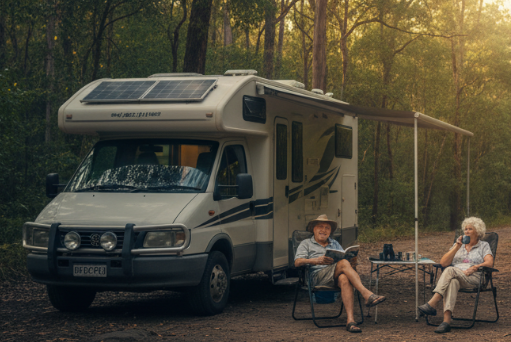
Free Camping Cairns (Retiree-Friendly Guide) QLD
You have driven the length of the Bruce Highway to reach Cairns — and now you need to know where you can actually park without paying through the nose or getting moved on at midnight. This is the honest, senior-focused guide to free and low-cost overnight stops in and around Cairns QLD, written from the traveller’s point of view, not the tourist board’s.
📅 Last reviewed: June 2026 | Cairns QLD 4870 | Crocodile risk applies to ALL waterways in this region — read Section 7 before setting up camp near any water
Here is what the tourism websites will not tell you: free camping in Cairns itself is harder to find than it used to be. Council enforcement has increased, informal foreshore spots that were open five years ago are now signed and patrolled, and the peak season crowds mean the few good spots that remain fill before noon in July. That is not a reason to give up — it is a reason to read this guide before you arrive. The Cairns region, when you know where to look, offers a genuinely rewarding mix of free stops, Tablelands cool-air alternatives, and coastal pull-offs that most grey nomad guides simply do not cover. This page tells you exactly what is there, what condition it is in, whether it suits your rig, and what you need to know as a senior traveller in the tropics.
- Town: Cairns, Queensland 4870
- Region: Far North Queensland — tropical
- Primary free stop: Ellis Beach informal area, Captain Cook Highway
- Secondary stops: Gordonvale & Babinda rest areas (south), Rex Range pull-off (north), Atherton Tablelands options
- Toilets: At highway rest areas — not guaranteed at beach or informal sites
- Dump point: NOT at free stops — Cairns Showgrounds and Cairns Caravan Park in town
- Potable water: NOT at free stops — fill before you leave town
- Power: None — no powered free camping anywhere near Cairns
- Crocodile risk: ALL waterways, estuaries, creeks — without exception
- Signal: Telstra reliable in CBD and northern beaches; patchy inland on Gillies Highway
- Nearest hospital: Cairns Hospital, 165 The Esplanade — (07) 4226 0000
- Best season: June through August — dry, warm, ideal grey nomad weather
Table of Contents
- Where exactly can you camp? Every Cairns region stop mapped with GPS
- Can you legally stay overnight near Cairns? The honest answer
- Toilets, water, bins and dump points — facility by facility
- Wi-Fi, mobile signal and staying connected near Cairns
- Getting there — driving notes specifically for seniors towing
- What arrival really looks like — managing expectations
- Crocodile safety and personal security for seniors
- Medical contacts — Cairns Hospital and emergency services
- Dump points, water, groceries and supplies close by
- Things to do around Cairns that actually suit retirees
- When to come — and when to stay well away
- Fire rules, generator hours and campsite etiquette
- Senior packing checklist — Far North QLD specific
- Master GPS and postcode table — save before you leave signal
- Frequently asked questions about free camping Cairns
- Final verdict — is free camping Cairns worth it for retirees?
Section 1 — Where Exactly Can You Camp? Every Cairns Region Stop Mapped with GPS
The Cairns region is not a single campsite — it is a 150-kilometre corridor from the sugarcane flats of Gordonvale in the south to the rainforest fringe near Mossman in the north, with the Atherton Tablelands rising sharply inland. The free camping opportunities are distributed across this entire corridor rather than sitting conveniently in one spot near the Esplanade. Understanding the geography first is what separates the grey nomads who find a good spot from the ones who spend three hours driving in circles before paying for a caravan park out of desperation.
Below is the complete picture of what is available, honestly assessed for senior grey nomads with caravans and motorhomes.
📍 Complete GPS Reference — Cairns Region Free Camping Stops
Stop 1 — Ellis Beach Informal Area (northern beaches, most popular grey nomad stop):
-16.7285, 145.6572
Captain Cook Highway, Ellis Beach QLD 4879. Flat gravel and grass surface. Most rig sizes. Fills early in peak season. No formal facilities on-site — public amenities at nearby Ellis Beach caravan park day-use area. Crocodile risk applies to all waterways in this zone.
Stop 2 — Rex Range Lookout Rest Area (Captain Cook Hwy, north of Palm Cove):
-16.6891, 145.6044
Small sealed pull-off. Space for two to three vehicles maximum. Spectacular coastal views. Not suitable for rigs over approximately 8 metres. No facilities. Good for a solo motorhome or small campervan — not for large caravans.
Stop 3 — Gordonvale Rest Area (Bruce Highway, south approach):
-17.0947, 145.7841
Standard Queensland Transport and Main Roads highway rest area. Toilets reported. 20-hour stay limit. Truck traffic audible through the night on the highway side. Reliable and predictable — the best staging stop south of Cairns.
Stop 4 — Babinda Rest Area (Bruce Highway, further south):
-17.3432, 145.9234
Highway rest area in sugar cane country south of Cairns. Toilets. 20-hour limit. Closer to Innisfail than to Cairns — useful as a staged approach stop rather than a Cairns-area camp per se.
Stop 5 — Mareeba Rest Area (Kennedy Highway, Atherton Tablelands):
-17.0015, 145.4260
Flat, accessible rest area in Mareeba township corridor. Cooler temperatures than the coast. Woolworths and pharmacy within 3km. Good Telstra signal. Suitable for most rig sizes.
Stop 6 — Atherton Showgrounds (Atherton, Tablelands — informal overnight):
-17.2657, 145.4779
Large flat area. Historically tolerated grey nomad overnight stops. Not formally managed as a campground for travellers year-round — call ahead to Atherton Showground committee to confirm current availability before driving up the Gillies Highway.
Stop 7 — Lake Tinaroo Foreshore (Atherton Tablelands, crater lake):
-17.1392, 145.5467
Tablelands Tourism managed area. Some sections permit self-contained camping. Scenic and cool. Check current permit requirements with Tablelands Regional Council before arrival — rules have changed in recent years.
Stop 8 — Cairns Esplanade Street Parking (CBD area):
-16.9186, 145.7781
Time-limited street parking — NOT genuine free camping. Suitable for motorhomes and small campervans only. Time limits vary by bay — read every sign individually. Useful for a daytime Esplanade visit and lagoon swim, not for overnight stays in most bays.
| Stop | Location | GPS | Rig size | Toilets | Stay limit |
|---|---|---|---|---|---|
| Ellis Beach informal | Captain Cook Hwy, Ellis Beach QLD 4879 | -16.7285, 145.6572 | Most sizes | Nearby — not guaranteed | Informal — 1 night typical |
| Rex Range pull-off | Captain Cook Hwy, north Palm Cove QLD 4879 | -16.6891, 145.6044 | Up to ~8m | None | Informal — 1 night |
| Gordonvale Rest Area | Bruce Hwy, Gordonvale QLD 4865 | -17.0947, 145.7841 | Most sizes | Yes — pit/flush | 20 hours |
| Babinda Rest Area | Bruce Hwy, Babinda QLD 4861 | -17.3432, 145.9234 | Most sizes | Yes | 20 hours |
| Mareeba Rest Area | Kennedy Hwy, Mareeba QLD 4880 | -17.0015, 145.4260 | Most sizes | Reported | 20 hours |
| Atherton Showgrounds | Herberton Rd, Atherton QLD 4883 | -17.2657, 145.4779 | Most sizes | Reported — call ahead | Informal — call ahead |
| Lake Tinaroo Foreshore | Tinaroo QLD 4872 | -17.1392, 145.5467 | Most sizes | At managed areas | Verify with council |
Section 2 — Can You Legally Stay Overnight Near Cairns? The Honest Answer
Yes — but the answer is more nuanced in Cairns than almost anywhere else on the Bruce Highway corridor. Let’s go through what is actually happening at each category of site.
What is genuinely open and legal
The Bruce Highway rest areas at Gordonvale and Babinda are gazetted Queensland Transport and Main Roads rest stops. They are legal overnight stays for up to 20 hours — that is the purpose they exist for. No grey area. Read the sign on arrival to confirm the current limit.
The Mareeba Rest Area on the Kennedy Highway and the Atherton Showgrounds option are similarly in the “broadly permitted” category — with the caveat that the Showgrounds access depends on what is happening locally and requires a phone call before you drive up the mountain.
What is informal but generally tolerated
Ellis Beach informal area is in a grey zone of tolerance. Cairns Regional Council has not formally gazetted it as a campsite, but it has historically tolerated overnight stays by self-contained grey nomads who are not creating nuisance. This situation can change. If a sign says no camping when you arrive, it means no camping — regardless of what you have read anywhere online. The Rex Range pull-off is in the same category: tolerated but informal.
What is not legal for overnight stays
The Cairns Esplanade street parking bays have enforced time limits. Sleeping in a vehicle parked in a time-limited zone overnight is not legal. Rangers do patrol the Esplanade area, particularly during tourist peak periods. Motorhomes that overstay time limits have received notices. Do not plan overnight stays at the Esplanade unless you have positively identified a bay that explicitly permits overnight parking — and read the sign yourself, not someone else’s report of what the sign says.
- Formal rest areas (Gordonvale, Babinda, Mareeba): legal, up to 20 hours
- Ellis Beach informal and Rex Range pull-off: tolerated, informal — check signage on arrival
- Atherton Showgrounds: tolerated when available — call ahead, do not assume
- Lake Tinaroo: some sections permitted — verify current rules with Tablelands Regional Council
- Cairns Esplanade: time-limited parking only — NOT overnight camping
Section 3 — Toilets, Water, Bins and Dump Points: Facility by Facility
Far North Queensland free camping does not come with the infrastructure many grey nomads take for granted further south. Here is the honest facility picture for every stop in this guide.
| Facility | What is actually available | What seniors specifically need to know |
|---|---|---|
| Toilets | Gordonvale and Babinda rest areas: pit or flush toilets — condition variable. Ellis Beach: public amenities at the nearby caravan park — not always accessible to informal campers after hours. Rex Range pull-off: none. Mareeba rest area: reported. Atherton Showgrounds: typically available when open. | In tropical heat, functioning toilet facilities matter more than in cooler climates. Pit toilets become unpleasant quickly in 30°C+ heat. Carry your own supply of toilet paper, antibacterial wipes, and hand sanitiser at every stop regardless of what facilities may be listed. If you depend on accessible amenities due to mobility limitations, confirm before driving to any informal stop. |
| Potable water | Not reliably available at any free camping site in the Cairns region. Gordonvale rest area reportedly has tap access — this is not guaranteed to be functioning or potable on any given day. | This is the single most important facility note in this entire guide. In Far North Queensland, even in winter, dehydration risk for seniors is real and serious. Twenty litres per person is a daily minimum in the tropics — not a maximum. Fill tanks at a Cairns service station, Coles on Mulgrave Road, or Woolworths before departing for any free stop. Senior travellers on diuretics, ACE inhibitors, or diabetes medications have heightened dehydration risk — plan accordingly and monitor fluid intake actively. |
| Dump point | No dump point at any free camping site in the Cairns region. Period. Nearest confirmed options: Cairns Showgrounds (Cannon Street, Cairns CBD area); Cairns Caravan Park (Little Street, Cairns). A fee may apply at both. | Do not arrive at Ellis Beach or any other Cairns free stop with a full black water tank and hope to find a dump point. You will be disappointed and you will have a hygiene problem. Locate the dump point before you leave your previous overnight stop. Call the Cairns Visitor Information Centre on (07) 4051 3588 if you are unsure of the current location and fee structure. |
| Showers | No showers at any free camping site in the Cairns region. Tobruk Memorial Baths (Esplanade, Cairns CBD) and Smithfield Aquatic Centre (Sibley Street, Smithfield) offer showers with pool entry. | In tropical heat and humidity, not showering for multiple days is not just uncomfortable — it can contribute to skin infections, particularly for seniors with compromised circulation or diabetes. Budget at least a $5 pool entry every second day if free camping for an extended Cairns stay, or alternate with paid sites that have shower facilities. |
| Bins | Present at Gordonvale and Babinda rest areas. Not reliably present at Ellis Beach informal area or Rex Range pull-off. | Pack a sealed rubbish bag in your van. In tropical conditions, food waste left unsecured in a rubbish bag outside a van attracts wildlife within minutes — including wildlife that is dangerous. Dispose of food waste in town at a service station or supermarket bin rather than leaving it at an informal site overnight. |
| Power | No powered free camping exists anywhere near Cairns. | CPAP users: you need either a solar-plus-lithium setup with sufficient capacity (minimum 200W solar, 100Ah lithium battery recommended for tropical conditions where cloudy days occur), or a budget line item for a powered site every two to three nights. Do not rely on generator use alone — generator hours are limited by etiquette rules, and running a generator in a populated informal camping area creates genuine social friction during peak season. |
Section 4 — Wi-Fi, Mobile Signal and Staying Connected Near Cairns
Connectivity in the Cairns region is better than many grey nomads expect on the coast, and worse than many expect once you leave it. Here is the real picture.
By provider
- Telstra: The only network worth relying on for the full Cairns region including Ellis Beach, northern beaches, and the Captain Cook Highway corridor north to Mossman. Good 4G in Cairns CBD, Smithfield, Palm Cove, and along the coastal highway. Signal weakens significantly on the Gillies Highway descent and on minor Tablelands roads. Still the best single provider for this region by a clear margin.
- Optus: Reliable in Cairns CBD and main shopping precincts. Drops off noticeably north of Palm Cove. Not reliable at Ellis Beach informal area during the author’s most recent visit. Do not rely on Optus for navigation on the Captain Cook Highway beyond Palm Cove.
- Vodafone: Cairns CBD only. Not suitable as a primary connection for any travel beyond the immediate city area. Not recommended for grey nomads in Far North Queensland.
- Starlink: Excellent across the Cairns region including the Tablelands where terrestrial coverage drops. If you have a Starlink subscription, it is particularly valuable for the Gillies Highway and Palmerston Highway corridors. Ideal for telehealth appointments, which are increasingly important for senior travellers managing chronic conditions remotely.
Free public Wi-Fi near Cairns
- Cairns City Library — 151 Abbott Street, Cairns CBD. Free Wi-Fi during opening hours. Good download speeds. Suitable for downloading offline maps, making video calls to family, or telehealth consultations in an air-conditioned environment.
- Cairns Central Shopping Centre — McLeod Street, Cairns. Free Wi-Fi in food court. Useful for downloading maps and streaming updates while doing shopping.
- McDonald’s Cairns — Sheridan Street, Cairns. Free Wi-Fi without time limit. Useful as an early-morning connectivity stop before departing north.
- Atherton Library — Main Street, Atherton. Free Wi-Fi for Tablelands travellers. Check local council opening hours before relying on it.
- Mareeba Library — Byrnes Street, Mareeba. Free Wi-Fi. Particularly useful for Tablelands travellers who want to download maps for the Daintree corridor before heading north.
Section 5 — Getting There: Driving Notes Specifically for Seniors Towing
Cairns is at the end of a long road. Most grey nomads arriving from the south have been driving the Bruce Highway for weeks or months before they get here. The fatigue factor is real — and it affects decision-making, reaction time, and the tendency to push on past the point where you should stop. The notes below are written specifically for senior drivers towing caravans or driving motorhomes, not for solo car travellers.
From Townsville (346km south — the most common approach): Allow two days minimum from Townsville. Day one: Townsville to Cardwell or Tully (200km) — rest overnight. Day two: Cardwell or Tully to Cairns (150km) — arrive before noon in cool of the morning. Do not try to do Townsville to Cairns in one push when towing — it is a long, hot, monotonous stretch of road and the accumulated fatigue of months of travel makes it more dangerous than it looks on a map.
From Innisfail (90km south — the final leg): The Bruce Highway from Innisfail to Gordonvale is wide, well-maintained, and passes through sugar cane country with occasional flooding risk in wet season. The Gordonvale rest area is a useful final stop before the Cairns city boundary if you want to arrive in town rested and ready to navigate.
From the south via the Palmerston Highway (inland alternative): The Palmerston Highway from Innisfail connects to the Atherton Tablelands via a winding mountain road through World Heritage rainforest. It is sealed and navigable for most caravan configurations but is not a casual drive when towing — tight corners, narrow sections in places, and no services for an extended stretch. Use this route only in daylight and only if your rig is within the road’s width limitations.
Captain Cook Highway (north of Cairns to Ellis Beach and beyond): The coastal route north of Cairns from the city to Ellis Beach is approximately 30km. The road hugs the coast with cliff edges, sharp bends, and sections where the ocean is visible immediately to your left. It is a spectacular drive but requires full attention when towing. Speed limits drop to 60km/h in several sections. Watch for cyclists, motorcyclists, and tourist vehicles stopping suddenly for photographs.
Driving Notes for Seniors Towing Vans — Captain Cook Highway Specific
- The stretch between Palm Cove and Ellis Beach has no overtaking lanes — if you are holding up traffic behind you, find a safe pull-off and let vehicles past before continuing
- The Rex Range pull-off is on a left-hand bend — approach from the south and it is easy to miss at highway speed. Reduce to 60km/h or below approximately 500 metres before your expected GPS position and look for the gravel entry on the left
- Fuel at Smithfield (northern Cairns) or Palm Cove before proceeding north — there is no fuel between Palm Cove and Mossman/Port Douglas. If your tank is below half, fill before leaving Palm Cove.
- The Gillies Highway descent from the Tablelands to the coast has 263 corners. If towing, use a low gear for the full descent. Check brake temperature by briefly pressing the pedal firmly at the first available straight section — if there is a burning smell or spongy feel, stop and allow brakes to cool before continuing.
- Cassowaries cross the roads in this region — particularly the Gillies Highway and Kennedy Highway corridors. They are large, unpredictable, and can cause serious damage to a vehicle. Reduce speed in all posted cassowary zones.
- Rain can arrive suddenly and intensely in Far North Queensland even in the dry season — keep windscreen wipers functional and slow down immediately when rain begins on mountain roads
Section 6 — What Arrival Really Looks Like: Managing Expectations
Here is what you will actually find when you arrive at the main Cairns region free camping stops — written from the perspective of someone who has been there in peak season and knows what the reality looks like versus what the forum posts describe.
Ellis Beach Informal Area — the real arrival experience
If you arrive before 11am in July, you will almost certainly find space — the area accommodates perhaps eight to twelve grey nomad rigs before it starts feeling genuinely crowded. If you arrive after 2pm on a popular day, you may find it completely full, with latecomers parked in progressively less suitable spots. The ground is generally flat and the surface manageable for most rigs in dry conditions. In the wet season, the informal area can become soft and muddy after rain — approach on wet days with caution. The view of the Coral Sea to your right and the rainforest-covered mountains behind you is genuinely spectacular in clear weather. The road noise from the Captain Cook Highway is more audible than many travellers expect — the site is not as tranquil as the setting photographs suggest.
Gordonvale and Babinda Rest Areas — the real arrival experience
Functional, predictable, and occasionally grim. These are highway rest areas in sugar cane country. The surrounding landscape is flat and agricultural. Heavy transport trucks use these routes around the clock, and if you park on the truck rest bay side, diesel exhaust fumes can be a significant issue through the night. That said, they do what they are designed to do: they give you a flat surface, a toilet block (condition variable), and a safe place to sleep off driving fatigue. For a single night’s staged approach to Cairns, they are perfectly adequate. For two nights, they become oppressive.
Atherton Tablelands options — the real arrival experience
The Tablelands is where the experienced grey nomads who have been to Cairns before end up spending their time. Temperatures are 6–10°C cooler than the coast at altitude. The landscape — volcanic lakes, waterfalls, dairy farms, rainforest — is genuinely beautiful. The Atherton Showgrounds is spacious and flat with far more room than any coastal informal site. The tradeoff is the drive to get there (the Gillies Highway is not for everyone when towing) and the fact that access is not guaranteed year-round. Call ahead. If the Showgrounds are available, the Tablelands experience is arguably better than the coast for a two- to four-night Cairns region stay.
Section 7 — Crocodile Safety and Personal Security for Seniors
Crocodile Safety — This Is the Section You Cannot Skip
Saltwater crocodiles are real, they are present in every waterway in the Cairns region without exception, and they are responsible for deaths in Queensland including deaths of people who thought they were being careful. This section is not here to frighten — it is here to give you the specific, actionable information that keeps grey nomads safe in Far North Queensland.
The practical rules for grey nomads camping in the Cairns region:
- Never set up your camp chair, cooking area, or daily living space within five metres of any waterway — this includes what appears to be a small, harmless-looking drainage ditch
- Never wash dishes, rinse equipment, or dispose of food scraps at a waterway edge — food and food smells attract crocodiles to the bank
- Never walk along riverbanks, creek edges, or tidal mudflats — particularly at dawn, dusk, and after dark, which are peak crocodile activity periods
- Never allow pets near any waterway in this region under any circumstances
- If you see a “Crocodile Warning” sign, take it literally and do not approach the water at any point in that area
- If you see a crocodile — do not approach, do not photograph from the bank, do not throw objects at it. Report it to Queensland Parks and Wildlife on 1300 130 372
- At Ellis Beach, the beach itself on the open ocean side has lower risk than the tidal creek areas at either end of the beach — but “lower risk” is not “no risk.” Read the posted signs at the beach access point and follow them.
For the complete guide to camping safely in crocodile country across Queensland, read our dedicated resource: Camping Near Crocodiles Queensland — Seniors Safety Guide.
Personal Safety
- Tell someone your planned overnight location and expected next check-in time every evening — a family member, a fellow grey nomad, or a campsite community group
- Lock all van doors and windows from inside before sleeping. In a tourist-heavy area like Cairns, opportunistic theft from unlocked vehicles is more common than in remote areas.
- Solo travellers: park alongside other grey nomads at Ellis Beach or the Gordonvale rest area rather than at isolated pull-offs. The informal grey nomad community that gathers at these spots creates genuine mutual safety.
- If you are a solo senior woman: the Ellis Beach community is generally very good — established grey nomad travellers who look out for each other. The beach area is open, visible, and socially active during the day. It is not an isolated or threatening environment in peak season.
- Carry a charged PLB (Personal Locator Beacon) at all times in Far North Queensland — even on the coast. In the event of a medical emergency at an informal camp, having a PLB as backup to mobile coverage could be the difference between a bad night and a fatal one.
Trip Safety — Cairns Region Specific
- Store all medications in temperature-stable containers — interior van temperatures in tropical sun can reach 55–60°C in parked vehicles, which exceeds the safe storage temperature for most medications including insulin, some cardiac drugs, and eye drops
- Know Cairns Hospital’s address (165 The Esplanade) and phone number ((07) 4226 0000) before you arrive at any free camping stop — save it in your phone now
- Carry at least two litres of drinking water in the vehicle cabin at all times — not just in the van’s water tank — so you have immediate access in the event of a roadside breakdown or stop
- If you develop any symptoms of heat illness — including unusual fatigue, headache, confusion, very dark urine, or muscle cramps — move to shade or an air-conditioned space immediately and call 000 if symptoms do not resolve with rest and hydration within 20 minutes
For strategies to protect your caravan and its contents at informal free camping stops, read our guide on how caravan theft happens in Australia.
Section 8 — Medical Contacts: Cairns Hospital and Emergency Services
| Service | Address | GPS | Phone |
|---|---|---|---|
| Cairns Hospital (major public — 24hr emergency) | 165 The Esplanade, Cairns QLD 4870 | -16.9227, 145.7746 | (07) 4226 0000 |
| Cairns Private Hospital | Lake Street, Cairns QLD 4870 | -16.9179, 145.7730 | (07) 4052 5200 |
| Atherton Hospital (Tablelands — limited specialist) | Mabel Street, Atherton QLD 4883 | -17.2670, 145.4760 | (07) 4091 8100 |
| Mareeba Hospital | Byrnes Street, Mareeba QLD 4880 | -17.0027, 145.4243 | (07) 4092 1233 |
| Emergency — Police, Fire, Ambulance | All locations | — | 000 |
| Healthdirect (nurse on call 24hr) | Phone service — Australia-wide | — | 1800 022 222 |
| Queensland Poison Information | Phone service | — | 13 11 26 |
| Queensland Parks — crocodile reports | Phone service | — | 1300 130 372 |
Section 9 — Dump Points, Water, Groceries and Supplies Close By
There is no dump point at any free camping location in the Cairns region. This is a non-negotiable planning reality — not a temporary situation or an oversight. Plan your waste disposal as a scheduled activity before your black water tank is full.
| Need | Best nearby option | Practical notes |
|---|---|---|
| Dump point | Cairns Showgrounds, Cannon Street, Cairns; Cairns Caravan Park, Little Street, Cairns; some paid caravan parks allow dump access for a fee | Call Cairns Showgrounds directly before travelling there — availability is not guaranteed year-round. The Queensland Government dump point finder is the most current online resource. Do not rely solely on camping app data for dump point locations in Cairns — some listed points have been relocated or closed. |
| Fresh water | BP Smithfield (northern Cairns); Coles Cairns on Mulgrave Road; Woolworths Cairns Central; petrol stations on Sheridan Street | Fill completely at Cairns before heading north to Ellis Beach or the Captain Cook Highway. There is no reliable potable water between Palm Cove and Mossman. Fill completely before the Gillies Highway ascent — the Tablelands towns have water but access points can be unclear. |
| Groceries and fuel | Coles Cairns (Mulgrave Road); Woolworths Cairns Central (McLeod Street); IGA locations at northern beaches including Palm Cove and Clifton Beach. Fuel: multiple BP, Puma, and United stations throughout Cairns and Smithfield. | Fuel is cheaper in Cairns than in the smaller towns north and inland. Fill at Smithfield or Cairns CBD before heading to Ellis Beach or the Tablelands. Woolworths and Coles are open until approximately 9pm most evenings and have extensive fresh produce — stock up for several days before any free camp stay. |
| Pharmacy and medications | Chemist Warehouse Cairns (multiple CBD and suburban locations); Day Night Chemist Cairns (extended hours); medical centres throughout Cairns CBD and suburbs | Cairns is the best place north of Townsville to stock three-month supplies of prescription medications. Bring your scripts, your Medicare card, and your pension healthcare card. Consider a GP telehealth appointment if you need a repeat prescription — Cairns telehealth providers can issue Queensland scripts that can be filled at Cairns Chemist Warehouse. |
| Alternative if Cairns sites full | Gordonvale (20km south) has a small IGA and service station. Mareeba (45km inland via Kennedy Highway) has Woolworths, pharmacy, and full services. Atherton (65km via Gillies Highway) has IGA, pharmacy, and hospital. | If you cannot get into any Cairns area free stop, the Mareeba corridor is your best alternative — good services, cooler temperatures, and a more relaxed free camping environment. The drive from Cairns to Mareeba via the Kennedy Highway is gentler than the Gillies Highway and more suitable for large rigs. |
For guidance on spacing your stays between free camps and paid sites to keep water, waste and power under control, read our guide to how long you can stay in a caravan park in Australia.
Section 10 — Things to Do Around Cairns That Actually Suit Retirees
Cairns is not just a city you drive to — it is genuinely one of the most experience-rich destinations in Australia, and many of its best offerings suit senior travellers particularly well. The reef, the rainforest, the Tablelands, and the Aboriginal cultural experiences in this region are world-class, and most of them are accessible to people who are not looking to kayak through rapids or hike for six hours.
| Activity | Location / Access | Why it suits senior grey nomads |
|---|---|---|
| Cairns Esplanade Lagoon swimming | The Esplanade, Cairns CBD — free entry | The only way to swim safely in the Cairns area without a stinger suit in the ocean. Fenced saltwater lagoon, flat path access, nearby shaded seating, toilets, and a cafe. Crocodile-free, jellyfish-free. Suitable for all mobility levels — shallow wading entry available. |
| Kuranda Scenic Railway | Cairns Central Station — book in advance | A genuine Australian heritage experience. The train climbs 328 metres through 15 tunnels and over 37 bridges in 34km of World Heritage rainforest. Fully seated comfort travel — no walking required. Accessible carriages available. One of Australia’s most celebrated train journeys and genuinely worth the ticket price. |
| Atherton Tablelands self-drive circuit | Via Kennedy Highway from Cairns — full day drive | Millaa Millaa Falls (drive-to access, five-minute flat walk), Lake Eacham (crater lake with flat foreshore circuit, no crocodiles confirmed — always check current signage), Malanda dairy country, Yungaburra village. Much of this experience is possible from inside a comfortable vehicle with short walking sections at each stop. |
| Skyrail Rainforest Cableway | Smithfield terminal — via Captain Cook Highway | Gondola cabins travel 7.5km over the World Heritage rainforest canopy to Kuranda. Fully seated, accessible gondola boarding at Smithfield. No walking required for the cable car experience itself. Spectacular canopy and mountain views. Can be combined with the Scenic Railway for a loop day trip. |
| Glass-bottom boat or semi-submersible reef viewing | Cairns Marlin Marina — multiple operators | Multiple operators run Great Barrier Reef day trips with glass-bottom boat or semi-submersible viewing options that allow reef viewing without snorkelling or diving. Accessible boarding at the marina. Specifically suited to seniors who want reef exposure without physical swimming. Book operators that explicitly advertise accessible boarding before committing. |
Best Senior-Friendly Daily Rhythm at Cairns
- 6:30–8:00am: Esplanade foreshore walk in the cool of the morning — flat path, ocean views, and often a pod of dolphins in the bay at sunrise. The best free thing to do in Cairns.
- 8:00–9:00am: Esplanade Lagoon swim before the day heats up — water is warm year-round, entry is free, and facilities are excellent
- 9:00am–12:00pm: Main activity of the day — Scenic Railway, Skyrail, reef trip, or Esplanade museum visits in air-conditioned comfort
- 12:00pm–3:00pm: Hottest part of the day — rest in van or find an air-conditioned café, library, or shopping centre. Do not attempt physical sightseeing in this window in summer.
- 3:00–6:00pm: Secondary activity — markets, foreshore, or short drives. The Cairns Night Markets (Abbott Street) open from late afternoon and are flat, covered, and interesting for a stroll.
- Evening: Early dinner, back to camp before dark. Do not walk near waterways after dusk.
If you are thinking about making Cairns or Far North Queensland a longer-term van life base, read our honest guide to living in a camper full-time before making any decisions about extended stays.
Section 11 — When to Come: And When to Stay Well Away
| Season | What Cairns is actually like | Senior grey nomad verdict |
|---|---|---|
| Summer — Dec through Feb | 38°C+ days with humidity regularly above 85%. Afternoon storms that can be severe. Active cyclone season — Cairns has taken direct cyclone hits. Intense rainfall makes roads, camping areas and any outdoor activity genuinely difficult. Stinger season at peak — box jellyfish and Irukandji make ocean swimming dangerous without a full stinger suit. Insects at maximum levels. Flooding of roads including the Gillies Highway is common. | Do not free camp in Cairns in summer. This is not a mild seasonal preference — it is a genuine safety recommendation for senior travellers. Heat illness risk at temperatures above 35°C with high humidity is serious and fast-moving in older adults. Cyclone sheltering in an unanchored caravan is dangerous. If you are in the region in summer by necessity, stay at a formal cyclone-rated caravan park and monitor the Bureau of Meteorology every single day. |
| Autumn — Mar through May | March is effectively still summer — wet, hot, and unpredictable. April brings the transition: humidity begins to fall, rain becomes less frequent, temperatures drop from 35°C toward 30°C. May is excellent — clear mornings, warm days (28–30°C), cool evenings (20–22°C), and minimal rain. The early-arriving grey nomads who reach Cairns in May have genuinely wonderful conditions and significantly fewer crowds than July. | May is the hidden gem of the Cairns calendar for grey nomads. Good weather, open free camping spots, lower caravan park prices, and a more relaxed city atmosphere than peak July. If your schedule allows, aim for May. March is too risky. April is a gamble that improves as the month progresses. |
| Winter — Jun through Aug | The dry season at its best. 26–30°C daytime, 18–22°C overnight. Zero cyclone risk. Low humidity. Clear blue skies. The Coral Sea is at its clearest and calmest. This is peak season for everything in Cairns — the city is busy, accommodation is expensive, free camping spots fill early, and the Bruce Highway north of Townsville has more grey nomad traffic than at any other time of year. | The best season by a decisive margin. The weather genuinely earns all of its reputation. Worth planning your entire migration around. June and July are the peak weeks — arrive at Ellis Beach before noon or you will not get a spot. August is slightly quieter as some travellers begin heading south. All three months are excellent for senior travellers. |
| Spring — Sep through Nov | September is still dry and comfortable — the tail of the best season. October sees temperatures rise quickly to 33–35°C and humidity begins to return from the north. November is the “buildup” — the most uncomfortable month of the Queensland year for many people, combining heat, humidity, and the threatening electrical storms that precede the wet season. Stingers appear in the water from late October. | September: excellent — almost as good as July. October: acceptable but hot — head south if you can. November: plan to be south of Rockhampton by mid-November. The buildup weather in Cairns is genuinely unpleasant and the stinger season begins to restrict beach swimming. Do not start north in November — you are going in the wrong direction for the season. |
Section 12 — Fire Rules, Generator Hours and Campsite Etiquette
The Cairns region sits within UNESCO World Heritage listed rainforest on one side and a fragile coral reef ecosystem on the other. The informal camping sites that remain open do so because most grey nomads treat them with respect. Every year, a small number of travellers who do not results in complaints, council inspections, and eventually formal closure notices. Take the rules in this section seriously — they directly affect whether these sites are available for the next traveller.
- Open fires are prohibited at all Cairns region free camping sites — year-round. This is not a seasonal ban or an advisory. It is a permanent restriction enforced by Cairns Regional Council and Queensland Parks and Wildlife. The combination of tropical vegetation, World Heritage proximity, and the fire risk that exists even in the dry season makes open fires at any informal site genuinely dangerous. Use gas only. Never light anything — including a fire pot with an open top — at any informal site in this region without explicit written permission from the land manager.
- Never cook or eat at the water’s edge. Food smells at waterway margins attract crocodiles. This is not a hygiene preference — it is a safety requirement. Cook and eat in your van or at least five metres from any waterway.
- Generator hours: 7am to 9pm maximum. At popular sites like Ellis Beach during peak season, the social environment is dense. Running a generator after 9pm or before 7am creates real conflict and has resulted in complaints to council that contribute to site closure decisions. If you need power after 9pm, use battery storage rather than the generator.
- Grey water must be fully contained. Discharging grey water, washing-up water, or detergent-contaminated water onto the ground at any Cairns region informal site is both illegal and environmentally damaging — the tropical soil and waterway system is directly connected to reef catchments. Full containment with a sealed grey water tank is non-negotiable.
- Do not feed any wildlife — including birds. The Cairns region has protected cassowaries, tree-kangaroos, Torres Strait pigeons, and multiple species of protected fish and marine life. Feeding any wildlife — including dropping food scraps near your camp — creates habituation that leads to dangerous animal behaviour and can result in the animal needing to be destroyed. It also results in fines.
- Leave every site in better condition than you found it. Pack out all rubbish, pack out anything left by previous travellers if you are able to, do not damage vegetation for firewood or shade, and do not dig or alter the ground surface at any informal site. This is the baseline of responsible free camping anywhere in Australia, but it matters more in the Cairns region than almost anywhere else because of the environmental sensitivity and the land management scrutiny that applies here.
Section 13 — Senior Packing Checklist: Far North Queensland Specific
| Item | Why it is specifically important at Cairns | ☐ |
|---|---|---|
| Minimum 20 litres fresh water per person | No potable water at any free camp. Tropical dehydration risk is real even in winter. Senior medication interactions with dehydration can be serious. | ☐ |
| DEET-based insect repellent (40% DEET minimum) | Tropical mosquitoes carry Dengue fever, Ross River virus, and Murray Valley encephalitis. Standard low-DEET repellents do not provide adequate protection in the tropics. | ☐ |
| Full medication supply — 72 hours above daily needs | Cairns has good pharmacies but Tablelands towns and informal camp areas do not. Never arrive at any free stop without a buffer supply. Temperature-stable storage required in tropical heat. | ☐ |
| 12V medical-grade cooler for heat-sensitive medications | Interior van temperatures in parked tropical vehicles reach 55–60°C in sun. Insulin, nitro-glycerine, some cardiac medications, and eye drops will be destroyed at these temperatures without active cooling. | ☐ |
| Fly screens and van door gap sealing | Tropical insects including sandflies, biting midges, and mosquitoes will enter any unscreened gap within minutes of dusk. A properly sealed van is essential for sleep quality and disease prevention in the tropics. | ☐ |
| Marine stinger suit (if visiting Oct–May) | Box jellyfish and Irukandji are present in Cairns coastal waters from approximately October through May. Without a stinger suit, ocean swimming is not safe in any unprotected area during this period. | ☐ |
| SPF 50+ sunscreen — large supply | Queensland UV index in Cairns regularly reaches Extreme (11+) in summer and Very High (8–10) in winter. Daily application is necessary even in June and July. Buy in bulk before leaving major cities — prices are high in tourist areas. | ☐ |
| Registered PLB or satellite communicator | Gillies Highway, Palmerston Highway, and all Tablelands inland roads have sections with no mobile coverage. Ellis Beach has gaps in Optus and Vodafone coverage. A PLB is not optional for senior solo travellers in this region. | ☐ |
| Written medical summary card — laminated | If you are transferred from any informal camp or Atherton Hospital to Cairns Hospital, a written summary of your conditions, medications, allergies, blood type, and emergency contacts dramatically speeds appropriate treatment. | ☐ |
| Offline maps downloaded — full Cairns region | Download the Cairns region, Atherton Tablelands, Captain Cook Highway corridor to Mossman, and the Gillies/Kennedy Highway routes before leaving any Cairns CBD Wi-Fi zone. These areas have coverage gaps that will leave you navigating blind without offline maps. | ☐ |
COPY PROMPT ➔ ASK AI ➔ SAVE TO FORM ➔ ADD SPOT PIN ➔ GET DIRECTIONS
📍 Interactive map — find free camps, rest areas and overnight stops near Cairns QLD. Enable location for best results.
Section 14 — Master GPS and Postcode Table: Save Before You Leave Signal
| Location | Address + Postcode | GPS | Notes |
|---|---|---|---|
| Ellis Beach informal (primary free camp) | Captain Cook Highway, Ellis Beach QLD 4879 | -16.7285, 145.6572 | Best informal grey nomad stop in the region. Fills before noon in peak season. Verify signage on arrival. |
| Gordonvale Rest Area | Bruce Highway, Gordonvale QLD 4865 | -17.0947, 145.7841 | Best reliable staged stop south of Cairns. Toilets. 20hr limit. |
| Mareeba Rest Area | Kennedy Highway, Mareeba QLD 4880 | -17.0015, 145.4260 | Best Tablelands entry stop — Woolworths 3km away. Cooler temperatures. |
| Cairns Hospital | 165 The Esplanade, Cairns QLD 4870 | -16.9227, 145.7746 | Major public hospital — 24hr emergency. (07) 4226 0000. Best medical facility north of Townsville. |
| Atherton Hospital | Mabel Street, Atherton QLD 4883 | -17.2670, 145.4760 | District hospital for Tablelands travellers. Limited specialist capacity. (07) 4091 8100. |
Save these coordinates to your navigation device and phone before leaving any area with reliable Telstra signal. For a complete searchable directory of free and low-cost stops across the full Far North Queensland corridor, visit Vanlife Savings Spots.
Section 15 — Frequently Asked Questions About Free Camping Cairns
Where is the best actual free camping near Cairns right now in 2026?
Based on current conditions in 2026, Ellis Beach informal area on the Captain Cook Highway (GPS: -16.7285, 145.6572) is the most consistently used and most practical free stop for grey nomads within reasonable distance of Cairns. For the Tablelands option, Mareeba rest area and Atherton Showgrounds (call ahead) offer a cooler, quieter alternative with Woolworths access in Mareeba. The Bruce Highway rest areas at Gordonvale and Babinda are the most legally straightforward options — gazetted rest stops with 20-hour limits. None of these is a high-quality campsite in the formal sense — all require self-containment, your own water, and realistic expectations.
Can I stay overnight in my van on the Cairns Esplanade?
No — not in the way grey nomads mean by “staying overnight.” The Cairns Esplanade has time-limited parking bays. Some bays have 2-hour limits, some 4-hour, some longer. None are formally designated overnight camping bays. Cairns Regional Council enforces these limits and has issued notices to grey nomads who overstayed. The Esplanade is a perfect daytime destination — park, walk, swim in the lagoon, have breakfast, and move on. Do not plan it as your overnight stop.
Are there really crocodiles at Ellis Beach?
The ocean beach at Ellis Beach faces open water and has lower active crocodile risk than estuary or river areas. However, there are tidal creek inlets at both ends of the Ellis Beach stretch, and these are potential crocodile habitat. The rule in this region is consistent regardless of specific location: never enter any unfenced waterway. On the beach itself, swim in the area between the flags if lifeguard-patrolled, or check with locals about current conditions. Do not enter any creek, tidal pool, or mangrove fringe area at any point along this coastline.
What is the GPS for the best free camp near Cairns?
Ellis Beach informal area: -16.7285, 145.6572 (Captain Cook Highway, Ellis Beach QLD 4879). Rex Range lookout pull-off: -16.6891, 145.6044. Gordonvale Rest Area: -17.0947, 145.7841. These are planning coordinates — confirm all on arrival against physical signage. Save them offline before leaving Cairns CBD as signal is not guaranteed at all sites.
Is there a dump point I can use near Cairns free camps?
There is no dump point at any free camping site in the Cairns region. The confirmed options are Cairns Showgrounds on Cannon Street and Cairns Caravan Park on Little Street — both within the Cairns city boundary. A fee may apply. Call ahead to confirm availability: Cairns Visitor Information Centre (07) 4051 3588. Use the Queensland Government dump point locator online for the most current listing. Do not rely on camping app dump point data alone — some listed Cairns points have been relocated or closed in the past 12 months.
What is the nearest hospital to Ellis Beach and the Cairns free camps?
Cairns Hospital at 165 The Esplanade, Cairns QLD 4870 is the nearest major facility to all sites listed in this guide. Phone (07) 4226 0000. It has 24-hour emergency services with cardiac, surgical, and intensive care capacity. From Ellis Beach, it is approximately 30–35 minutes south via the Captain Cook Highway. From Gordonvale Rest Area, it is approximately 20–25 minutes north. From the Atherton Tablelands, allow 45–60 minutes via the Gillies or Kennedy Highway depending on current road conditions.
Is free camping at Cairns good for couples travelling together?
Yes — particularly Ellis Beach in the dry season, which has a genuinely social atmosphere with fellow grey nomads that many couples find enjoyable. The Tablelands options offer more privacy and a slower pace. For a guide written specifically for couples, including the best stops from Cairns up to Port Douglas and the Daintree approach, see our dedicated post: Free Camping for Couples — Cairns and Port Douglas.
Can I bring my dog to free camping near Cairns?
This depends entirely on the specific site and the current rules in place. Generally, dogs are permitted at highway rest areas on a lead. Ellis Beach informal area does not have a formal rule against dogs. However, bringing a dog to any area with crocodile habitat requires exceptional vigilance — dogs have been taken by crocodiles in Far North Queensland. Never allow a dog near any waterway, creek, tidal area, or mangrove fringe in this region. For a full pet-specific guide to the Cairns region, read our dedicated post: Pet-Friendly Free Camping Cairns QLD.
When should I avoid Cairns for free camping?
November through March — the wet season and cyclone season — should be avoided for free camping in Cairns for most senior travellers. Specific concerns include: cyclone risk (active season November through April), extreme heat and humidity (35°C+ with 80%+ humidity), flooding of roads and camping areas, stinger season in the ocean, and insect levels that make outdoor living genuinely unpleasant. Even travellers who arrive in October may find conditions deteriorating faster than expected. The safest planning rule: be south of Townsville by early November and do not head north again until late April at the earliest.
Section 16 — Final Verdict: Is Free Camping Cairns Worth It for Retirees?
The honest answer is: it depends entirely on what you are measuring. If you are measuring the quality of the destination — the reef, the rainforest, the Tablelands, the Esplanade, the cultural experiences, the tropical winter days — then Cairns is worth travelling the entire length of the Bruce Highway to reach. It is genuinely one of the great grey nomad destinations and the experience of arriving there after weeks on the road is something many retirees describe as one of the highlights of their travelling life. If you are measuring the quality of the free camping itself — the sites, the facilities, the certainty of access — then Cairns is honestly below average for a major Queensland destination. The sites are informal, the facilities are minimal, the council enforcement is real, and the tropical environment creates challenges that do not exist in cooler and more forgiving places like Hervey Bay or the Whitsundays. The gap between the quality of the destination and the quality of the free camping is wider at Cairns than almost anywhere else in Queensland.
The grey nomads who have the best experience at Cairns are the ones who go in with a realistic budget that includes two to three nights at a paid powered site for every four to five nights of free camping — who use the paid nights to dump, fill water, shower properly, charge everything, and rest in a managed environment before returning to free stops for the scenery and savings. Ellis Beach in June and July, with a cloudless sky and the Coral Sea turning gold at sunset, is genuinely worth the effort of getting there. The Atherton Tablelands in July, with crisp mornings and waterfalls and complete quiet, is one of the best-kept secrets on the entire grey nomad migration route. Neither of these experiences requires spending a fortune — they just require planning that accounts for what Cairns actually is rather than what the travel blogs suggest it might be.
For the full Queensland free camping picture and links to every state-wide guide, visit our Free Camping Queensland Hub. For stop-by-stop planning across the entire Bruce Highway corridor, use Vanlife Savings Spots.
- Free Camping for Couples — Cairns and Port Douglas QLD
- Pet-Friendly Free Camping Cairns QLD — Retiree Guide
- Pet-Friendly Free Camping Port Douglas QLD
- Camping Near Crocodiles Queensland — Complete Seniors Safety Guide
- Free Camping with Toilets — Tully QLD (south approach to Cairns)
- Grey Nomad Free Camping Near Airlie Beach QLD
- Free Camping Queensland — Complete Hub Guide
- Queensland Rest Areas — State-Wide Guide
- Vanlife Savings Spots — Full Free Camping Directory
- Best Routes Around Australia for Grey Nomads
Peak season in Cairns (June–August) fills every decent free camping spot before noon. If Ellis Beach is packed and the rest areas feel grim, search remaining options below.
Accommodation search powered by Expedia. Booking through this link supports this site at no extra cost to you. As an affiliate, I earn from qualifying purchases.

As an affiliate, I earn from qualifying purchases at no extra cost to you.
Exclusive Offer: Get 5% OFF all StarterStopper immobiliser products with promo code: RTV5
Visit StarterStopper.com to see our data-backed security solutions
As an affiliate, I earn from qualifying purchases at no extra cost to you.