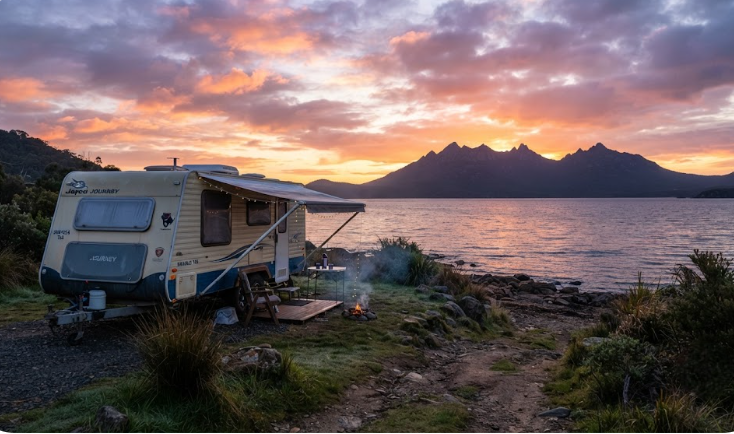
Free Camping Swansea Tasmania — East Coast Grey Nomad Guide
Great Oyster Bay at your doorstep. A real service town. The smartest first-night stop on Tasmania’s East Coast loop — and everything you need to know before you arrive.
📅 Written and reviewed for accuracy. Road conditions, facilities and fuel distances should be verified locally before departure — rural conditions change without notice.
📋 Table of Contents
- Where Is Swansea — Location and East Coast Context
- Emergency+ Safety — Do This Before You Unhitch
- Address, GPS and How to Get There
- Can You Stay Overnight — Rules and Self-Containment
- Your Two Main Options Side by Side
- Full Facilities Comparison Table
- Rates Table
- Free and Low-Cost Overnight Options In and Around Swansea
- Facilities Table — Honest Assessment
- Road Access, Fuel Distances and Flood Risk
- Rig Size Suitability
- The East Coast Circuit — Where Swansea Fits
- Stop Here Tonight or Push On to Coles Bay?
- Senior-Friendly Things to Do In and Around Swansea
- Accessibility for Seniors
- Wildlife and Nature — Great Oyster Bay and Surrounds
- Best Time to Visit — Honest Seasonal Guide
- Medical and Emergency Contacts
- Mobile Coverage by Carrier
- What Most Travel Guides Miss About Swansea
- GPS and Postcode Reference Table
- Senior Packing Checklist — Swansea-Specific
- Frequently Asked Questions
- Quick Verdict
- Quick-Reference Card
- Planning Checklist and Useful Links
- Disclaimer
📵 Before You Set Up Camp: Can 000 Find You Here?
Most rest areas and foreshore parks do not have a street address. If something goes wrong overnight — a fall, a cardiac event, a stroke — “I am parked near the water somewhere past the servo” wastes minutes that matter. Before you unhitch a single thing, open Emergency+ and check it can pin your GPS location or generate a what3words address right where you are parked. It works offline. No signal does not mean no location. Download it free — iPhone (App Store) or Android (Google Play).
The habit that matters: do this the moment you arrive — not if you need it. Signal drops in and out on the East Coast, especially away from the Tasman Highway corridor. Testing it early means you already know it works before an emergency makes that the wrong time to find out.
Why this matters more in winter: Winter days in Swansea end early. It is dark by 5:15pm. Temperatures drop fast. If you are parked at a remote foreshore or informal stop and something goes wrong after dark, a confirmed GPS pin in Emergency+ is the difference between a fast response and a long search. Do not skip this step.
Bonus use: while you are in the app, grab the GPS coordinates it shows and save them to your own Van Life Savings Spots pin — a good stop is worth remembering for next time, and now you have the exact coordinates already in hand.
Where Is Swansea — Location and East Coast Context
Swansea sits on the western shore of Great Oyster Bay on Tasmania’s East Coast. The Tasman Highway — designated Route A3 — runs directly through the town centre. It is the primary sealed highway linking Hobart to the East Coast and continuing north toward St Helens.
The town is approximately 135 kilometres by road from Hobart CBD. In comfortable travel time, that is around one hour and 45 minutes to two hours. Allow more if you stop at Orford, Triabunna or the Spiky Bridge lookout on the way in. Most grey nomads travelling the East Coast circuit should budget a full travel morning for this leg.
Swansea is a genuine service town. That distinction matters on the East Coast. Many smaller coastal communities between here and St Helens offer little beyond a toilet block and a sealed car park. Swansea has a fuel station, a small supermarket, a bakery, a pharmacy, a post office, a pub and a waterfront that faces directly across the bay toward the Freycinet Peninsula.
The resident population sits under 600 people. Outside of school holiday windows, the pace is genuinely slow and the foreshore is quiet.
Swansea is also the last well-serviced town before the Coles Bay Road turn-off to Freycinet National Park. That junction sits roughly 45 kilometres north on the Tasman Highway. Beyond Swansea, the highway narrows in places and services become infrequent. This is why Swansea works so well as a first-night stop — you arrive with fuel options still open, shops still trading and time to sort the rig before dark.
Address, GPS and How to Get There
📍 Swansea Town Centre — Navigation Reference Point
Town address reference: Franklin Street, Swansea TAS 7190
-42.1236, 148.0742
These coordinates place you near the Swansea town centre on the Tasman Highway. Use them as a general navigation reference. Specific overnight stop coordinates are listed in the GPS table further below.
⚠ GPS note: Coordinates are within 50 metres of the stated location and are provided as navigation guidance only. Always confirm on arrival against current signage.
Open in Google Maps ↗Getting There from Hobart — The Primary Route
From Hobart CBD, follow the Tasman Highway (A3) east through Sorell. The road is fully sealed and well-maintained for its entire length to Swansea. There are no gravel or dirt sections on this route.
From Sorell, the highway passes through Orford and Triabunna before following the coastline south of Swansea. The coastal section between Triabunna and Swansea is one of the most scenic stretches on the East Coast. Expect to slow down. The views across Spring Bay and the sheltered inlets are worth a slow approach speed.
Total distance from Hobart to Swansea via the Tasman Highway: approximately 135 kilometres. Allow a comfortable two hours with a short stop. Do not rush this drive. It is one of the reasons people travel the East Coast.
Getting There from the North — From Bicheno or St Helens
Travelling south from St Helens, follow the Tasman Highway (A3) south through Bicheno. The road is sealed the full distance. Bicheno to Swansea is approximately 39 kilometres. St Helens to Swansea is approximately 140 kilometres. Allow around two hours from St Helens.
The Inland Approach — Lake Leake Road from Campbell Town
There is no direct east-west sealed highway running to Swansea from the interior. The closest inland approach is Lake Leake Road from Campbell Town on the Midland Highway (A1). This road connects the midlands to Swansea through farming country and forested ranges.
Lake Leake Road is mostly sealed but includes sections in variable condition. It passes through remote terrain with no services. The distance from Campbell Town to Swansea via this route is approximately 95 kilometres. Allow at least 90 minutes.
Can You Stay Overnight — Rules and Self-Containment
Tasmania does not apply a single statewide self-containment rule uniformly across all land types. Rules vary depending on who manages the land. Around Swansea, the key land manager is Glamorgan Spring Bay Council. National park land nearby is managed by Parks Tasmania.
The Swansea Foreshore — What the Rules Actually Say
The Swansea foreshore reserve is a public open space. It is not a formally designated overnight camping area. Glamorgan Spring Bay Council manages this land. Overnight camping on the foreshore without a designated camping area permit is generally not approved.
Some self-contained travellers do park here for a night without issue, particularly in winter when the town is quiet. This does not mean it is permitted. It means enforcement is inconsistent. A fine is possible at any time. If you choose to use this area informally, do so knowing you are taking a risk. Arrive quietly, leave no trace, and check current rules directly with the council before relying on this option.
Glamorgan Spring Bay Council: (03) 6256 4777. Call them. They are generally helpful and will tell you the current position clearly.
Self-Containment — What It Actually Means in Tasmania
Self-contained means your vehicle has an onboard toilet, fresh water storage, and grey water containment. It does not rely on any external facility to function independently for 48 hours. Self-containment certification through the CMCA or equivalent scheme is the recognised standard.
Being self-contained gives you access to more options across Tasmania. It also protects you if a site’s informal tolerance changes. The safest approach for any grey nomad on the East Coast circuit is to travel fully self-contained and treat it as a non-negotiable baseline.
For the full picture on Tasmania free camping rules across all regions, read our detailed guide: Free Camping Tasmania — Grey Nomad State Guide.
Your Two Main Options Side by Side
Most travellers choosing where to stay in Swansea are deciding between two genuinely different options. Be honest with yourself about which one actually suits you before you arrive.
Option A — Informal Foreshore or Roadside Stop (Free, at Risk)
Costs nothing. No facilities. Not formally approved by Glamorgan Spring Bay Council. Enforcement is inconsistent but real — a fine is possible. Suits fully self-contained travellers comfortable with uncertainty and cold, exposed conditions in winter. The foreshore faces west across Great Oyster Bay and a southwesterly winter wind comes straight across open water — this is not a sheltered spot.
Option B — Swansea Holiday Park (Paid, Reliable)
A modest nightly fee. Powered sites, showers, dump point access, and the security of a confirmed, legal stop. Suits CPAP users, travellers with medical considerations, and anyone who would rather pay a small amount than gamble on a foreshore spot in a southwesterly winter wind.
Full Facilities Comparison Table
The same facilities facts from the Honest Assessment table below, presented as a direct side-by-side comparison to help you decide quickly.
| Facility | Informal Foreshore (Free) | Swansea Holiday Park (Paid) |
|---|---|---|
| Toilets | ⚠ Public toilets near foreshore in town — not at the parking spot itself. May not be accessible after hours. | ✅ Onsite toilet facilities for registered guests. |
| Water | ⚠ No guaranteed tap at the informal stop. Some foreshore taps may exist — confirm before filling tanks from an unknown tap. | ✅ Water filling available for guests. |
| Dump point | 🚫 None at or near the informal foreshore stop. | ✅ Dump point access available. Confirm current location when you call to book: (03) 6257 8148 or check their current website. |
| Showers | 🚫 Not available. | ✅ Hot showers for registered guests. |
| Power (240V) | 🚫 None. Battery/solar only. | ✅ Powered sites available. Essential for CPAP users in winter. |
| Shade / Wind protection | ⚠ Largely open. The foreshore faces west and is exposed to southwesterly winds. Bring a windbreak. | ✅ More sheltered site layout. Confirm specific site aspect when booking. |
| Security / Legality | 🚫 Not formally approved. Enforcement is inconsistent but real — a fine is possible at any time. | ✅ Legal, confirmed overnight stop. No uncertainty. |
Rates Table
| Option | Estimated Nightly Rate | Notes |
|---|---|---|
| Informal Foreshore Stop | Free | No fee, but no facilities and no legal certainty. A fine from Glamorgan Spring Bay Council is a real possibility — factor that risk into your “free” calculation. |
| Swansea Holiday Park — Unpowered Site | ⚠ Confirm current rate directly with the park | Rates vary by season. Winter rates are generally lower than peak summer pricing. Call the park or check their current website before publishing — do not estimate a dollar figure. Contact: confirm via current Swansea Holiday Park website or phone on arrival. |
| Swansea Holiday Park — Powered Site | ⚠ Confirm current rate directly with the park | As above. Powered sites carry a higher rate than unpowered. Essential for CPAP users or anyone relying on 240V in winter. |
Free and Low-Cost Overnight Options In and Around Swansea
We are honest about this section. Swansea is not a location with an obvious, well-established, officially designated free camp sitting ready for you. The options below reflect what is known at time of writing. Where we cannot confirm current status, we say so — and we tell you who to call.
Option 1 — Swansea Holiday Park (Low-Cost, Recommended for Most)
The Swansea Holiday Park is the most reliable overnight option in town. It offers powered and unpowered sites. For grey nomads who need a CPAP machine, hot shower or a confirmed dump point, this is the sensible choice. Unpowered sites are the budget option.
This is a paid site, not free camping. Nightly fees vary by season. Winter rates are generally lower than peak summer prices. Contact the park directly for current rates — do not rely on third-party booking platforms for the most accurate pricing.
Writer’s recommendation: For your first night in Tasmania after the Spirit of Tasmania crossing, or on Day 1 of an East Coast loop from Hobart, the small cost of a powered site here is worth it. You get a confirmed stop, facilities, and peace of mind. Save your free camping energy for further up the coast where the options are better established.
Option 2 — Jubilee Beach Foreshore Area (Informal, Unconfirmed Status)
The grassed foreshore area near Jubilee Beach is frequently referenced by East Coast travellers. It has direct bay views, open grass, and a relaxed feel. It is not a formally designated overnight camping area. Glamorgan Spring Bay Council manages this land as a day-use reserve.
Some self-contained travellers overnight here without incident, particularly in winter. This is at personal risk. The council has the right to ask you to move or issue a fine at any time. If you want to use this area, call the council first: (03) 6256 4777.
Option 3 — Spiky Bridge Picnic Area (Rest Stop Only)
Spiky Bridge is a well-known historic landmark approximately 7 kilometres south of Swansea on the Tasman Highway. It is a convict-built dry stone bridge and a popular roadside stop. There is a picnic area nearby with toilets.
This is a rest stop and picnic area — not a designated campground. Some travellers pause here for a meal or a break. Overnight use is not formally approved. Confirm current status with Glamorgan Spring Bay Council before treating this as an overnight option.
Option 4 — Mayfield Beach Conservation Area (Parks Tasmania — Permit Required)
Mayfield Beach is north of Swansea within the broader Freycinet region. Some travellers have referenced beach access areas along this stretch as informal stops. This land sits within or adjacent to Parks Tasmania jurisdiction. Camping near or inside a national park requires a valid Parks Pass and, in many cases, a site booking.
Do not camp here without first confirming with Parks Tasmania: 1300 827 727. Camping without a permit inside a Tasmanian national park carries fines.
Option 5 — Push On to the Coles Bay Area (Next Night)
If free camping is your priority and a paid site in Swansea does not suit your budget, use Swansea as a midday service stop. Fuel up, shop, dump tanks, fill water, have lunch on the foreshore, and then drive the additional 45 minutes north toward the Coles Bay area. There are established camping options in that region that may better suit free campers.
Our dedicated guide covers those options in full: Coles Bay — Next Stop Heading North on the East Coast.
Facilities Table — Honest Assessment
| Facility | Status in Swansea | Honest Notes |
|---|---|---|
| Public flush toilets | ✅ Available | Public toilets near the foreshore and town centre. Condition varies — check on arrival. Standard of maintenance is generally acceptable outside peak season. |
| Potable water (tank fill) | ✅ Available in town | Town water is available. The caravan park allows water filling for guests. Some foreshore taps may be available — confirm on arrival before filling tanks from an unknown tap. |
| Dump point | ⚠ Confirm before relying on it | A dump point has been reported at or near the caravan park and at a council-managed location. Dump point access and locations in small Tasmanian towns change. Call Glamorgan Spring Bay Council on (03) 6256 4777 to confirm the current location before your trip. |
| Showers | ✅ At caravan park only | Hot showers available at Swansea Holiday Park for registered guests. Not available at foreshore or any informal stop. |
| Power (240V) | ✅ At caravan park only | Powered sites at the caravan park. No power at foreshore or informal stops. CPAP users: plan accordingly. |
| Shade | ⚠ Partial | Some trees along the foreshore. The bay-facing aspect is largely open. In winter, shade is less critical — wind protection is more important. Bring your awning and a windbreak. |
| Bins / rubbish disposal | ✅ In town centre | Public bins in the town centre and near the foreshore. Do not leave rubbish at informal stops. Pack out what you bring in. |
| Campfires | 🚫 Not permitted | No campfires at any foreshore, reserve or roadside area in or around Swansea. Total fire bans apply on high-risk days in summer — check Tasmania Fire Service before any fire-related activity. |
| Generators | ⚠ Restricted | Quiet hours apply at the caravan park — confirm times on check-in. At informal foreshore stops near residences, running a generator overnight is inconsiderate and may attract complaints. Assume restricted near town. |
| Fuel | ✅ In town | Service station in Swansea. Hours are limited — do not assume it is open after 6pm or 7pm. Fill up when you arrive, not when you leave in the morning. |
| Grocery shopping | ✅ Small supermarket | A small supermarket operates in town. Stock is basic. For a full resupply — including dietary-specific, diabetic-friendly or low-sodium items — stock up in Hobart or Sorell before heading east. |
| Pharmacy | ✅ In town | A pharmacy operates in Swansea. Hours may be reduced in winter. Confirm current hours on arrival. Do not rely on Swansea pharmacy for after-hours prescription needs. |
| LPG refill or swap | ⚠ Confirm locally | Some East Coast servos carry LPG swap bottles. Confirm at the Swansea servo on arrival. Do not count on LPG availability beyond Swansea without checking ahead. |
| ATM / banking | ⚠ Very limited | Banking services in Swansea are minimal. Withdraw sufficient cash in Hobart, Sorell or at a Triabunna stop before heading east. East Coast small towns are largely cash-light but some businesses and stall vendors still prefer it. |
| Mobile signal | ✅ Telstra in town area | Telstra provides usable coverage in Swansea town centre. Optus is present but patchy. Vodafone is unreliable. Full details in the mobile coverage section below. |
| Pub / meals | ✅ In town | Swansea has a local hotel with meals. Hours vary by season. In winter, dinner service may be limited on some days of the week — call ahead to confirm. |
| Bakery / café | ✅ In town | Swansea has a bakery. A welcome stop after a travel morning. Opens early. Check current trading hours as small Tasmanian businesses can vary significantly in winter. |
Road Access, Fuel Distances and Flood Risk
Is the Road Sealed?
Yes. The Tasman Highway (A3) from Hobart to Swansea and continuing north to Bicheno and St Helens is fully sealed along its entire length. There are no gravel or dirt sections on the primary highway route. Road quality is generally good. Some sections between Orford and Triabunna include tight bends and sections where the road narrows. These are fully manageable in a caravan with appropriate speed and care.
The only unsealed approach route relevant to Swansea is Lake Leake Road from Campbell Town. This is not the recommended route for large rigs. See the Getting There section above for the full warning on this road.
Does the Road Flood?
The Tasman Highway between Hobart and Swansea does not routinely flood. There are a small number of low-lying sections in the Orford and Triabunna corridor where water can wash across the road surface after heavy sustained rainfall. These events are uncommon and are typically cleared quickly.
If you are travelling in winter and a significant rain event has passed through, check the Tasmania Roads hotline on 1800 006 009 before departing. Road closures are reported promptly on this service.
The Swansea foreshore area itself sits at low elevation adjacent to the bay. In severe winter storm conditions with a strong southwesterly swell, foreshore areas can experience wave wash. This is not a common occurrence but is worth knowing if you are parked very close to the bay edge in winter. Position your rig on the landward side of the foreshore parking area during winter storm periods.
Fuel Distances — North, South, East and West
| Direction | Nearest Fuel Location | Approx. Distance | Road Type | Notes |
|---|---|---|---|---|
| In town | Swansea service station | 0 km | N/A | Fill up on arrival. Do not assume it is open after 6–7pm or early on Sunday mornings. |
| South | Triabunna | ~40 km | Sealed — Tasman Highway | Service station in Triabunna. Good fallback if Swansea servo is unexpectedly closed. |
| Further south | Sorell | ~85 km | Sealed — Tasman Highway | Multiple fuel options. Last major resupply point from the Hobart direction. |
| North | Bicheno | ~39 km | Sealed — Tasman Highway | Next fuel north of Swansea. No fuel between Swansea and Bicheno. |
| Further north | St Marys | ~75 km | Sealed — Tasman Highway then A4 | Fuel available. Last fuel before Elephant Pass descent and the run to St Helens. |
| West (inland) | Campbell Town | ~95 km via Lake Leake Rd | Mostly sealed — variable condition | Not recommended for large rigs without condition check. Fuel at Campbell Town on the Midland Highway before heading east on this route. |
Rig Size Suitability
The Tasman Highway from Hobart to Swansea is suitable for full-size caravans, fifth-wheelers, motorhomes and slide-outs within standard road dimensions. There are no weight or length restrictions on the primary highway that would affect a normal touring rig.
Swansea township has some narrow side streets. The main highway through the town centre is easy to navigate in a large rig. If you are turning off toward the foreshore or caravan park, check the approach before committing a long outfit to a tight turn. Some foreshore access points are not suitable for rigs over 20 metres in total length.
The Coles Bay Road spur — 30 kilometres to the Freycinet campgrounds — is sealed and manageable for most rigs. Confirm any rig-specific size restrictions with Freycinet National Park before driving in with a very large setup.
- ✅ Fully sealed highway — suitable for all standard touring rigs
- ✅ No bridge weight restrictions on the primary route
- ⚠ Some narrow foreshore access points — check before committing
- ⚠ Lake Leake Road inland route — not recommended for large rigs
- ⚠ Coles Bay Road — sealed but confirm any size limits at the park entrance before entry
The East Coast Circuit — Where Swansea Fits
Tasmania’s East Coast loop is one of the most popular touring circuits in Australia for grey nomads and retirees in campervans, motorhomes and caravans. It is typically run as a loop from Hobart — north along the coast, then either back south via the inland Midland Highway or continuing around the north of the island.
The classic northbound sequence from Hobart looks like this:
- Day 1: Hobart → Sorell → Orford → Triabunna → Swansea (overnight)
- Day 2: Swansea → Coles Bay / Freycinet National Park (overnight, ~75 km including the spur road)
- Day 3: Coles Bay → Bicheno (overnight, ~50 km from the Coles Bay junction)
- Day 4: Bicheno → St Marys → St Helens (overnight, ~90 km)
- Day 5+: Continue north toward Scottsdale and Launceston, or loop back inland
Swansea at Day 1 is logical for most travellers. You arrive in daylight. You have the afternoon to walk the foreshore, restock groceries, dump tanks, top up fuel and settle in. The next morning you head north rested, serviced and with a full tank.
For a comprehensive view of the full Tasmania free camping circuit from a grey nomad perspective, read our state guide: Free Camping Tasmania — East Coast and Beyond.
Stop Here Tonight or Push On to Coles Bay Same Day?
The Case for Stopping at Swansea Tonight
In winter, the sun sets in Swansea around 5:00pm to 5:15pm. If you leave Hobart after 8am, you arrive in Swansea around 10am to 10:30am. That gives you a full morning and afternoon to manage the rig properly before dark.
You can dump your tanks while the dump point is accessible. You can fill water, top up fuel and shop at the supermarket. If something needs attention — a tyre pressure concern, a battery reading, a medication you forgot — Swansea has a pharmacy and you are still within manageable distance of assistance.
Coles Bay does not have a pharmacy. It does not have a supermarket. It does not have a 24-hour service station. If you arrive there after dark in winter with a flat house battery and low groceries, those are your problems to solve in the cold and dark.
Arriving at Swansea on Day 1 is not a compromise. It is sensible planning.
The Case for Pushing On to Coles Bay Same Day
If you leave Hobart at 6:30am or 7:00am, you can be in Swansea by 9am, service the rig, and reach Coles Bay by 11:30am. That gives you a full winter day at Freycinet. This approach works well for travellers who are fit, have a small self-contained rig, and have a site booking confirmed at Coles Bay in advance.
Do not attempt this approach without a confirmed booking. The Freycinet region is popular even in winter. Arriving without a booking and finding no available site means you are driving 30 kilometres back out to the Tasman Highway after dark looking for alternatives. That is a poor outcome after a long day on the road.
Our Coles Bay guide covers all the Freycinet region camping options in detail so you can plan that leg properly.
Senior-Friendly Things to Do In and Around Swansea
This section focuses only on flat, accessible or seated experiences. We do not list steep walks or activities that require high mobility. Swansea rewards slow exploration at any pace.
1. The Swansea Foreshore Walk — Flat and Paved
The foreshore path runs along the bay edge through the town. It is flat and paved or firm gravel for most of its accessible length. It is suitable for walkers using canes or walking frames along the main section. Benches are positioned along the route. Great Oyster Bay faces west here, so afternoon light on the water is spectacular. Morning fog burns off to reveal the Freycinet Peninsula across the bay. In winter, bring a warm layer — the foreshore can be brisk even on clear mornings.
2. Bark Mill Tavern and Museum
The Bark Mill is an historic building in Swansea that houses displays about Tasmania’s tanning and bark-milling industry. Entry is low-cost and the experience is sheltered and seated. This is an excellent option on a cold or rainy morning when being outside is not comfortable. The building is accessible at ground level. Confirm current opening hours and entry costs directly with the venue before visiting — hours may be reduced in winter.
3. Morris’ General Store — Historic Building, Main Street
Morris’ General Store is one of the oldest commercial buildings in continuous use in Tasmania. It sits on the main street and requires minimal walking to reach from any parking on Franklin Street. Even passing through as a browsing stop is worth 30 minutes. No significant mobility demands. Good for a rainy morning.
4. Bay Watching from Camp — Seated Experience
Sometimes the right activity is a camp chair, a thermos of tea and a pair of binoculars. Great Oyster Bay is a bird-rich environment. Black swans are common on the bay in winter. White-bellied sea eagles have been sighted in this region. Shearwaters move through the bay. The mountain backdrop of the Freycinet Peninsula shifts colour through the day. On clear mornings, remarkable light comes across the water from around 7:30am onward. See the Wildlife and Nature section below for the full picture on what you are likely to see.
5. Bakery Stop — Morning Ritual
Swansea’s bakery is a genuine morning stop. A pie, a pastry, a hot drink and a seat near the window while the town wakes up is one of those small East Coast pleasures that does not make it into the glossy guides but is remembered long after the trip. Confirm opening hours are seasonal — do not assume summer hours apply in winter.
6. Dinner at the Local Hotel
A hot pub meal after a travel day is not a luxury — it is good sense. You do not cook. You do not wash up. You are home in two minutes. Swansea’s hotel offers meals in winter, though service days can vary. Call ahead to confirm. In winter, a busy Saturday night in a warm country pub is one of the better things on the East Coast calendar.
7. Day Trip to Freycinet — Next Morning
The Freycinet National Park visitor centre has flat, accessible viewing areas and displays that require no walking ability beyond a car park to entrance level. The Hazards Beach area has low-gradient foreshore access. The famous Wineglass Bay lookout is a steep 45-minute climb — it is not appropriate for travellers with joint replacements, heart conditions or mobility limitations. But simply driving through the peninsula and parking at accessible coastal lookouts is rewarding and requires very little physical effort.
Accessibility for Seniors
Swansea is a mixed picture for accessibility. Some parts of the town work well for walkers using canes, frames or wheelchairs. Others do not. Here is an honest breakdown.
What Is Genuinely Accessible
The main foreshore path along the bay is largely flat and is paved or firm compacted gravel for most of its length through the town section. A walking frame or manual wheelchair user can manage the main foreshore stretch without significant difficulty on a dry day. Benches are spaced along the route. The terrain does not have steep gradients along the primary foreshore section.
Franklin Street (the main street) has kerb cuts at most intersections and is manageable for most mobility aids. The bakery, pub and general stores are all close to parking and do not require significant walking distance.
What Is Not Accessible or Requires Caution
The area around Spiky Bridge — approximately 7 kilometres south of town — involves uneven grass and natural ground surfaces around the bridge itself. The historic stonework and surrounding area is not purpose-built for wheelchairs or walking frames. A person with significant mobility limitations should treat this as a viewpoint from the car park only, not a walk-around site.
The foreshore grass areas away from the paved path are uneven and can be soft or boggy in winter. Do not assume the entire foreshore is wheelchair-friendly — the paved path sections are, but the broader grass reserve is not.
The Bark Mill Museum — confirm accessibility at ground level when you call ahead. The building is historic and specific step or threshold details are worth checking directly before your visit if you rely on a wheelchair.
Toilets
Public toilets near the Swansea foreshore and town centre are present. Whether they are purpose-built accessible toilets (with grab rails, turning radius clearance and appropriate fittings) is not confirmed in this post — flag “confirm locally” if this matters to your planning. Call Glamorgan Spring Bay Council on (03) 6256 4777 and ask specifically about accessible toilet facilities near the foreshore before you arrive.
Honest Overall Assessment
A wheelchair user or walking frame user can manage the main foreshore walk unassisted on the paved section in dry conditions. The total accessible stretch is moderate in length — sufficient for a pleasant morning walk at a slow pace. Beyond the paved foreshore path and the main street, the terrain becomes less predictable and less accessible. For travellers with significant mobility limitations, Swansea offers a worthwhile and manageable experience — but set expectations on the paved sections, not the broader natural surrounds.
Wildlife and Nature — Great Oyster Bay and Surrounds
Swansea sits at the edge of one of Tasmania’s most productive bay systems. Great Oyster Bay and the surrounding coastal land support a variety of wildlife that is genuinely worth watching — both from the foreshore and from the road. Here is an honest guide to what you are likely to see and what to watch out for.
Black Swans
Black swans are common on Great Oyster Bay and are one of the most reliably sighted species from the Swansea foreshore. They are present year-round but particularly visible in winter when they gather in sheltered bay areas. A pair of binoculars from a camp chair on the foreshore will put you close enough for a proper look without disturbing them. Early mornings are best — before the wind picks up off the water.
White-Bellied Sea Eagles
White-bellied sea eagles are present in the Great Oyster Bay region and have been sighted near the Swansea foreshore and surrounding coastal land. They are large, unmistakable birds — white body, grey-brown wings, prominent hooked bill. They typically hunt over open water and are most likely to be seen soaring along the bay edge in the morning hours. If you see a very large bird working the bay, look carefully — this is one of Australia’s most impressive raptors and East Coast Tasmania is good habitat for them. Confirm current sighting reports with a local birdwatcher or the Swansea visitor information contact if this is a priority sighting for your trip.
Shorebirds and Wading Birds
The foreshore and shallow bay margins support a variety of shorebirds depending on season. Various species of sandpiper, plover and oystercatcher use the bay margins and beach edges. In winter, migratory species may be present or have moved on depending on the specific month. If birdwatching is a priority, bring a field guide and allocate a quiet morning hour to the foreshore before the wind increases.
Dolphins — Worth Checking Locally
Dolphin sightings have been reported in Great Oyster Bay. The bay’s sheltered character and productive fishery make it plausible habitat. Whether this is a reliable or occasional occurrence is worth verifying with a local source — ask at the bakery or the caravan park on arrival. Do not plan your itinerary around a dolphin sighting, but do keep an eye on the bay from the foreshore on calm mornings. It is the kind of thing that happens when you are not looking for it.
Land-Based Wildlife — Driving Safety
Two species are particularly relevant to driving safety on the Tasman Highway in and around Swansea:
- Bennett’s wallabies are common throughout Tasmania’s East Coast corridor and are highly active on roadsides at dawn and dusk. They move unpredictably and can appear suddenly on the highway verge. A wallaby strike at speed can cause significant vehicle damage and, if it deflects under a tow vehicle toward a caravan tyre, can create a dangerous situation quickly.
- Wombats are the more dangerous of the two in terms of vehicle impact. They are low to the ground and their body density is exceptional — a wombat strike at highway speed can destroy a front bumper, radiator and possibly crack a chassis mounting point. They are also active at dawn and dusk and are common on the Tasman Highway between Triabunna and Swansea. Drive at reduced speed in the 30 minutes either side of sunrise and sunset on this corridor. If possible, avoid driving this stretch in those windows.
Both species are confirmed as present in the Swansea area. The wildlife warning elsewhere in this post applies specifically to these two species — they are not generic caution. They are the specific road risk on this stretch of highway.
When to Watch
Early mornings — before 9am in winter — give you the best conditions for bay bird watching from the foreshore. Light is good, wind is typically low, and the bay is often glassy in calm conditions. Set up a camp chair facing the bay, make your coffee, and give it an hour. You will be rewarded.
Best Time to Visit — Honest Seasonal Guide
Month-by-Month Weather Reference
The table below provides a month-by-month guide to Swansea’s climate to help you plan the right window for your trip. Swansea has a cool temperate maritime climate — mild summers in the low-to-mid 20s, cool winters with maximums around 12–14°C and overnight lows around 3–5°C, and rainfall spread fairly evenly through the year with a slight increase in winter.
| Month | Avg Max °C | Avg Min °C | Avg Rainfall (mm) | Senior Verdict |
|---|---|---|---|---|
| January | [confirm BOM] | [confirm BOM] | [confirm BOM] | Peak summer. Warm and dry. Campgrounds crowded — book all sites in advance. Bushfire risk in January. Avoid if not bound to school holidays. |
| February | [confirm BOM] | [confirm BOM] | [confirm BOM] | Still warm. Crowds begin to ease late February. Bushfire risk remains. Good weather but busy. |
| March | [confirm BOM] | [confirm BOM] | [confirm BOM] | Excellent. Crowds gone, temperatures mild, light exceptional. Best month of the year for grey nomads on this corridor. |
| April | [confirm BOM] | [confirm BOM] | [confirm BOM] | Very good. Autumn at its best. Cool mornings, clear days. Campground availability good. |
| May | [confirm BOM] | [confirm BOM] | [confirm BOM] | Good. Cooling noticeably. Rainfall increasing. Still manageable — pack a waterproof layer. |
| June | [confirm BOM] | [confirm BOM] | [confirm BOM] | Winter begins. Cold mornings. Short days. Quiet town. Worth it for the solitude and bay views — but rig heating essential. |
| July | [confirm BOM] | [confirm BOM] | [confirm BOM] | Mid-winter. Coldest overnight lows — around 3–5°C. Daylight short. Very quiet. Stunning clear mornings. Powered site strongly recommended. |
| August | [confirm BOM] | [confirm BOM] | [confirm BOM] | Still cold but days starting to lengthen. Late August can offer clear, calm conditions. Quietest campgrounds of the year. |
| September | [confirm BOM] | [confirm BOM] | [confirm BOM] | Spring beginning. Warming temperatures, lower rainfall. Wildflowers active if approaching via the midlands. Good choice for spring travellers. |
| October | [confirm BOM] | [confirm BOM] | [confirm BOM] | Excellent. Warm enough to be comfortable, cool enough to be pleasant. Book Coles Bay in advance from this point. |
| November | [confirm BOM] | [confirm BOM] | [confirm BOM] | Good. Pre-summer — busy but manageable. Book ahead for popular sites further north. |
| December | [confirm BOM] | [confirm BOM] | [confirm BOM] | Summer season begins. Campgrounds fill fast from mid-December. Do not arrive without a booking on any night after 20 December. |
Autumn — March to May (Recommended)
Autumn is the best season for grey nomads on the East Coast. Temperatures are mild — typically 10°C to 18°C during the day in Swansea. Summer crowds have cleared. Campground availability is good throughout the corridor. The light in March and April across Great Oyster Bay is exceptional — long golden afternoons and clear mornings without summer haze.
Rainfall increases from May but rarely disrupts travel. Pack a waterproof layer and enjoy the quiet. This is when the East Coast belongs to grey nomads and people who know what they are doing.
Spring — September to November (Also Recommended)
Spring brings warming temperatures and lower rainfall than mid-winter. Wildflowers are active across the midlands if you approach via Campbell Town. The East Coast begins to fill from late October — book Coles Bay sites in advance from that point. September and early October are the sweet spot for spring travel. Quiet roads, cool mornings, and the first of the warming bay light returning.
Summer — December to February (Caution Advised)
Summer on the East Coast is genuinely beautiful. It is also the most congested period. The Christmas and January school holiday rush brings heavy traffic, full campgrounds and enforcement of informal camping spots that might be left alone in winter.
Summer also brings bushfire risk. Tasmania’s East Coast can experience smoke from inland fires, high fire danger days and Total Fire Bans. Check the Tasmania Fire Service website and app before travelling in January and February. A Total Fire Ban affects more than campfires — it affects generator use in some contexts and general fire safety around your camp.
Winter — June to August (Quiet, Cold, Peaceful)
Winter is the quietest time on the East Coast. Swansea in the depths of winter is almost entirely locals. Campgrounds have availability and often winter-rate discounts. Clear winter mornings over Great Oyster Bay — frost on the grass, the Freycinet Peninsula crisp across the water — are among the most beautiful sights on the circuit.
Be prepared. Overnight temperatures in Swansea in winter average around 4°C. Wind chill from a southwesterly bay wind can feel significantly colder. Daylight runs from approximately 7:30am to 5:15pm at its shortest. Short days mean short travel windows. Plan each leg to arrive with at least 90 minutes of daylight left for setup.
Winter also brings variable solar performance. For CPAP users and anyone relying on solar charging, account for fewer usable solar hours in winter. If your system has not been tested in winter conditions, err toward a powered site until you know your actual consumption.
Medical and Emergency Contacts
| Service | Name / Location | Phone | Notes |
|---|---|---|---|
| Emergency — all | Triple Zero | 000 | Always call 000 first in any life-threatening situation. Do not attempt to drive someone to hospital in a cardiac or stroke event — call 000 and wait for ambulance. |
| Local medical | Swansea Medical Centre | ⚠ Confirm current number locally on arrival — do not rely on any number printed here without checking. Call the pharmacy or council to verify the current GP clinic number. | GP services operate in Swansea. Hours and availability can change. Confirm when you arrive in town. Do not leave this to the moment you need it. |
| Nearest hospital with ED | Royal Hobart Hospital, 48 Liverpool Street, Hobart TAS 7000 | (03) 6166 8308 — switchboard. Verify this number is current before departure. | Approximately 135 km south via Tasman Highway. Allow 2 hours by road in normal conditions. In a serious cardiac or stroke emergency, call 000 immediately and request ambulance and potential air transport if appropriate. |
| Secondary hospital (north) | St Helens District Hospital — confirm current name and available services before relying on it | ⚠ Verify locally before travel | Approximately 140 km north. Small regional facility with limited capacity. Writer’s note: confirm current emergency capability with the facility before including it in your emergency plan. |
| Pharmacy | Swansea pharmacy — confirm current name and hours on arrival | Confirm locally | A pharmacy operates in Swansea. Winter hours may be reduced. Carry enough prescription medication for your full circuit plus a minimum three extra days as buffer. |
| Ambulance Tasmania | Ambulance Tasmania | 000 (emergency) or 1800 001 000 (non-emergency transport enquiries) | Response times in regional Tasmania can be significantly longer than metropolitan areas. Do not assume a fast response. First aid capability within your group is important on this circuit. |
| Tasmania Roads — conditions | Tasmania Roads Hotline | 1800 006 009 | 24-hour service. Check before departure for road closures, ice, flooding and major incidents on your route. |
| Parks Tasmania | Parks Tasmania | 1300 827 727 | For camping permits, national park access questions and conditions within or adjacent to national park land around Freycinet and the East Coast. |
Mobile Coverage by Carrier
Mobile coverage across Tasmania’s East Coast is patchy away from the main highway towns. Swansea is one of the better-covered spots on the East Coast, but “better” is relative. Here is an honest carrier-by-carrier picture.
Telstra
Telstra provides the most reliable mobile coverage in Swansea town and along the Tasman Highway corridor in this region. In the town centre, you can expect usable 4G data on most Telstra plans. Voice call reliability is good.
Coverage degrades as you move away from the highway — down to beach areas, into bush reserves, or on side roads. Between towns on the Tasman Highway, Telstra coverage is present in some sections and absent in others. This is not a criticism of Telstra — it is the reality of regional East Coast Tasmania coverage density.
For grey nomads choosing a single carrier for a Tasmania circuit, Telstra is the only logical choice. It is not perfect. It is significantly better than the alternatives.
Optus
Optus has some presence in Swansea town but is less consistent than Telstra. Data speeds vary and voice calls can drop. Between Swansea and Bicheno, Optus signal is intermittent at best. Optus users should download offline maps before leaving Hobart and should not rely on live navigation or data between East Coast towns.
Vodafone / TPG Network
Vodafone coverage on the East Coast of Tasmania is genuinely limited. You may get signal in Swansea town. You should assume no reliable coverage between East Coast towns. If your SIM is on the Vodafone network — or on an MVNO (budget carrier) that uses Vodafone infrastructure — consider purchasing a prepaid Telstra SIM for your Tasmania circuit. This is not an affiliate recommendation. It is practical advice based on how the networks actually perform in regional Tasmania.
Satellite — Starlink
Starlink portable is increasingly used by grey nomads on extended Tasmania circuits. It provides reliable internet at most outdoor locations regardless of carrier coverage. If you rely on internet for telehealth appointments, CPAP data uploads to a cloud service, or regular family contact, a Starlink subscription for your trip is worth serious consideration. Setup is straightforward and does not require technical knowledge beyond plugging in a dish.
What Most Travel Guides Miss About Swansea
Most online travel content about Swansea focuses on the scenic bay, the oysters, the historic buildings and the Freycinet views. All of that is real. But grey nomads need different information. Here is what the glossy guides leave out.
The Servo Has Limited Hours
The Swansea service station is not a 24-hour operation. If you arrive in the late afternoon or evening expecting to fuel up before setting camp, you may find it closed. Fuel in Swansea during business hours — not as an afterthought when you are almost parked for the night.
Free Camping Is Genuinely Limited Here
Swansea does not have an obvious, well-marked, officially sanctioned free camp with toilets and water sitting ready for you. Travellers who arrive with an expectation of a formal free site will be disappointed. The honest answer for most grey nomads is a small nightly fee at the caravan park, or using Swansea as a service stop and continuing north.
The Foreshore Gets Cold and Windy in Winter
Great Oyster Bay faces west. In winter, a southwesterly wind comes straight across the open water and hits the foreshore. The views are magnificent. The temperature feels significantly lower than the air temperature reading. Bring a quality windbreak. Position your van to shelter your awning side from the southwest.
The Supermarket Will Not Cover a Full Resupply
The Swansea supermarket is small. It covers bread, milk, basics and some fresh produce. Do not arrive from Hobart planning to do a full weekly grocery shop here. You will be disappointed by the range and the price. Stock up in Hobart, Sorell or Triabunna before you head east.
Wildlife on the Road Is a Serious Risk in Winter
We have already said this in the wildlife section and we are saying it again because it matters. Bennett’s wallabies, wombats and possums are active on the Tasman Highway between Triabunna and Swansea at dawn and dusk. East Coast road strike rates are high. Most experienced East Coast travellers do not drive this corridor between 5:30pm and 7:30am in winter. If you must drive in those windows, reduce speed significantly.
The Town Genuinely Shuts Down Early
In winter, Swansea is a very quiet town by 7pm. If you want a pub meal, call the hotel before 4pm to confirm dinner service. If you want anything from the supermarket or pharmacy, make sure you get there before closing time — which in winter may be earlier than you expect. Arriving late and finding everything closed is an avoidable problem with 10 minutes of phone call effort before you get there.
The Morning Views Are the Best Kept Secret
Every travel guide shows the afternoon light on Great Oyster Bay. What they do not show — because most travel writers are not awake at 7:45am in winter — is the morning light from the foreshore when the Freycinet Peninsula emerges from the mist across the bay. If you are parked by the water and you get up early enough, that view on a clear winter morning is extraordinary. Make the effort. You will not regret it.
GPS and Postcode Reference Table
| Location | GPS Coordinates | Postcode | Notes |
|---|---|---|---|
| Swansea Town Centre (reference) | -42.1236, 148.0742 | 7190 | Franklin Street / Tasman Highway. General navigation reference for the town. |
| Swansea Foreshore / Jubilee Beach area (approximate) | -42.1218, 148.0725 | 7190 | Approximate foreshore area. Day use only — verify overnight rules with Glamorgan Spring Bay Council before use. |
| Spiky Bridge Picnic Area (approximate) | -42.1612, 148.0621 | 7190 | Approximately 7 km south of Swansea on Tasman Highway. Rest and picnic stop. Not a designated overnight camp. |
| Coles Bay Road Junction — Tasman Highway | -41.9113, 148.2109 | 7215 | Turn-off from Tasman Highway to Coles Bay spur road. Approximately 45 km north of Swansea town centre. |
| Triabunna — fuel and services (reference) | -42.5075, 147.9194 | 7190 | Approximately 40 km south of Swansea. Fuel and basic services available. |
| Bicheno — fuel and services (reference) | -41.8721, 148.2998 | 7215 | Approximately 39 km north of Swansea via Tasman Highway. Next fuel north after Swansea. |
⚠ GPS note: All coordinates are within 50 metres of the stated locations and are provided as navigation guidance only. Always confirm on arrival against current signage. Do not use GPS coordinates alone to determine whether camping is permitted at any location.
Senior Packing Checklist — Swansea-Specific
This checklist is compiled from facts already established in this post. It is not a generic grey nomad list — it is specific to what Swansea and the East Coast corridor actually requires.
☐ Windbreak
The foreshore faces west and is directly exposed to southwesterly winds across open water. A windbreak is not optional in winter.
☐ CPAP Battery or Inverter Setup
Tested and charged before departure — winter solar hours on the East Coast are limited (approximately 5–6 hours on a clear day, less on overcast days). If your battery has not been tested under winter load, book a powered site.
☐ 3+ Days Extra Prescription Medication
Beyond your planned trip length — the Swansea pharmacy has limited hours and no after-hours service. Running out of medication on a weekend in winter is a serious problem.
☐ Cash ($100 Minimum)
Banking services in Swansea are very limited. ATM access is not guaranteed. Withdraw in Hobart, Sorell or Triabunna before heading east.
☐ Warm Layers Including Thermal Base Layer
Winter overnight lows in Swansea average around 4°C, with wind chill off the bay making it feel colder. Do not underpack for warmth on this stretch.
☐ Offline Maps Downloaded Before Arrival
Optus and Vodafone are unreliable between East Coast towns. Download the full Hobart to St Helens corridor offline in Google Maps, Hema Explorer or Maps.me before you leave Hobart.
☐ Full Water Tank Filled Before Arrival
If possible — confirm dump point and water access details with the council before relying on foreshore facilities.
☐ Confirmation Call to Glamorgan Spring Bay Council
If planning to use an informal foreshore stop — (03) 6256 4777. Do not assume tolerance equals permission.
☐ Emergency+ App Installed and Tested
Open it before you unhitch and confirm it can pin your GPS location. Works offline. Do this on arrival, not after something goes wrong.
☐ Blood Pressure Monitor in Day Bag
Not in a rear storage locker. Cold weather raises blood pressure. Keep monitoring accessible.
☐ Fuel Topped Up in Swansea Before Leaving North
No fuel between Swansea and Bicheno (39 km). Do not leave this to the morning.
☐ Pub Dinner Reservation Called In Before 4pm
Winter dinner service days vary at the Swansea hotel. Call ahead or go hungry.
Frequently Asked Questions
1. Is there genuine free camping in Swansea Tasmania?
The honest answer is: not formally. Swansea does not have an officially designated, council-approved free camping area with facilities waiting for you. The foreshore reserve is a day-use area managed by Glamorgan Spring Bay Council. Some self-contained travellers overnight there informally without issue — particularly in winter when the town is quiet and enforcement is less active. This does not mean it is permitted. You can be asked to move or fined at any time.
The most reliable low-cost overnight option in Swansea is the local holiday park, which offers unpowered sites at a modest nightly rate. For genuinely free camping with better-established options, the Coles Bay area to the north may suit you better. See our Coles Bay free camping guide for what is available on that next leg.
2. Do I need to be self-contained to camp near Swansea?
Being self-contained is strongly recommended anywhere in the Swansea area outside of the caravan park. Informal foreshore and rest area stops have no facilities. There are no toilets available after hours at most informal spots. Self-containment protects you legally and practically. Tasmania’s councils have the right to enforce self-containment requirements at any reserve, and the trend across the state is toward stricter enforcement over time — not less. If your rig is not self-contained, the caravan park is your correct option in Swansea.
3. What is the road like between Hobart and Swansea for a big caravan?
The Tasman Highway from Hobart to Swansea is fully sealed and is the recommended route for all caravan and motorhome sizes within standard road dimensions. There are no weight or length restrictions that affect normal touring rigs on this route. Some sections between Orford and Triabunna include bends and narrowing — manageable at appropriate speed. The road is well-maintained and has been progressively upgraded over recent years. In winter, check for frost on shaded sections in the early morning before committing to early departure. Depart after 8:30am if overnight frost is forecast.
4. Where is the nearest dump point to Swansea?
A dump point has been reported at or near the Swansea Holiday Park and at a council facility in the area. We cannot confirm the exact current location and operational status with the certainty required to publish a specific address. The best approach is to call Glamorgan Spring Bay Council directly on (03) 6256 4777 and ask where the current dump point is before you arrive. The Campermate and WikiCamps apps also list dump point locations — but always verify with the council before relying on any app listing, as these are user-reported and may be outdated.
5. What mobile coverage can I expect at and around Swansea?
Telstra is the best carrier in Swansea town and along the Tasman Highway in this region. Usable 4G is typically available in the town centre on Telstra. Optus is present but inconsistent. Vodafone is limited and should not be relied upon. Between Swansea and Bicheno — a 39-kilometre stretch — coverage on all networks can drop in and out. Download offline maps for the full East Coast route before you leave Hobart. Do not navigate this corridor without an offline backup map. Starlink is an increasingly practical option for extended East Coast travellers who need consistent internet access.
6. Is there a hospital near Swansea?
No. There is no hospital with a 24-hour emergency department in Swansea. The nearest ED is the Royal Hobart Hospital, approximately 135 kilometres south via the Tasman Highway — around two hours by road. A GP medical centre operates in Swansea — confirm the current phone number and hours on arrival by asking at the pharmacy or council office. In any life-threatening emergency, call 000 immediately. Ambulance response times in regional Tasmania can be longer than in metropolitan areas. Do not attempt to self-transport a person experiencing a cardiac event, stroke or serious injury.
7. Can I run my CPAP machine if I am free camping near Swansea?
Yes, if your rig is set up for it. At the Swansea Holiday Park on a powered site, a standard 240V CPAP runs without issue. At an unpowered or informal stop, you need a 12V DC CPAP or a DC-to-AC inverter with sufficient battery capacity. In winter, East Coast Tasmania delivers approximately five to six usable solar hours on a clear day — less on overcast days, which are common in winter. A single 100Ah lithium battery typically powers a basic CPAP for one to two nights. A CPAP with a heated humidifier draws significantly more power. Test your full system at home before relying on it in the field. If there is any doubt about your battery capacity for winter conditions, choose a powered site.
8. How far is it from Swansea to Freycinet National Park?
The Coles Bay Road junction on the Tasman Highway is approximately 45 kilometres north of Swansea. From that junction, the sealed spur road runs approximately 30 kilometres to the campgrounds and visitor facilities at Coles Bay inside the Freycinet National Park boundary. Total driving distance from Swansea to Coles Bay is approximately 75 kilometres. Allow around 50 to 60 minutes. The spur road is sealed and suitable for caravans — but confirm any rig-size restrictions at the park entrance if you are travelling with a particularly large setup.
9. What is the best season for grey nomads to visit Swansea?
Autumn — March to May — is the best window for most grey nomads. Temperatures are mild, crowds are thin, campgrounds have availability, and the light on the East Coast is exceptional. Spring — September to November — is the second-best option. Winter — June to August — is genuinely peaceful and beautiful, but cold. You need good heating in your rig, a solid battery setup for the short solar days, and a willingness to work around winter business hours. Avoid December through January if you dislike crowds and competition for sites. The Christmas and school holiday period is the worst time for free and low-cost camping on this corridor.
10. Are there wildlife risks when driving to Swansea?
Yes — this is a serious and underreported risk on the East Coast circuit. Bennett’s wallabies and wombats are highly active on the Tasman Highway between Triabunna and Swansea at dawn and dusk. Wombats in particular are dangerous to vehicles because of their low profile and extremely dense body mass. A wombat strike at 100km/h can destroy a tow vehicle’s front end, deflate a tyre and potentially destabilise a rig. Reduce speed significantly in the 30 minutes either side of sunrise and sunset on this corridor. In winter, that means driving cautiously between approximately 5:00pm and 8:30am. If possible, avoid driving this stretch in those windows entirely. This is consistent advice from experienced East Coast grey nomads — take it seriously.
Quick Verdict
Swansea is not a free camping destination in the traditional sense. There is no obvious, formally designated, free camp with facilities parked and waiting for you on the foreshore. If that is what you came for, be honest about your expectations before you arrive.
What Swansea is — and what makes it essential on the East Coast loop — is a real, functional, genuinely beautiful service town on one of Australia’s best bays. It has fuel, food, pharmacy, pub, dump point access and the kind of foreshore view that makes you stop mid-coffee and feel glad you chose this life.
For a small nightly fee at the caravan park, you get peace of mind, a powered site, a hot shower and a confirmed dump. That trade-off makes complete sense for most grey nomads, especially in winter when a warm rig and a reliable power connection matter more than they do in February.
Use Swansea properly. Service the rig. Eat a pie. Walk the foreshore. Get up early and watch the mist lift off the Freycinet Peninsula across the bay. Then head north to Coles Bay in the morning, rested and ready to do it properly.
Grey Nomad Utility Rating: 4.5 / 5
Location and Setting Rating: 5 / 5
True Free Camping Rating: 2 / 5 — be honest about this before you arrive
Quick-Reference Card
Screenshot this table before you leave. Everything you need in one place — all facts drawn from this post.
| Item | Detail |
|---|---|
| GPS — Town Centre | -42.1236, 148.0742 (Franklin Street / Tasman Highway) |
| GPS — Foreshore / Jubilee Beach (approx.) | -42.1218, 148.0725 — day use only, confirm overnight rules with council |
| Postcode | 7190 |
| Overnight — Informal Foreshore | Not formally approved. Enforcement inconsistent but real. Fine possible. |
| Overnight — Swansea Holiday Park | ✅ Legal, confirmed. Powered and unpowered sites. Confirm rate directly with park. |
| Cost (informal foreshore) | Free — but at legal risk |
| Cost (caravan park) | Confirm current rate directly with the park |
| Toilets | Public toilets near foreshore in town. At caravan park for guests. Confirm accessible toilet availability with council. |
| Dump point | ⚠ Confirm current location with Glamorgan Spring Bay Council: (03) 6256 4777 |
| Water | Available at caravan park for guests. Foreshore taps — confirm before use. |
| Power (240V) | Caravan park powered sites only. None at informal stops. |
| Phone carrier — best | Telstra. Optus patchy. Vodafone unreliable. |
| Nearest hospital (ED) | Royal Hobart Hospital — ~135 km south, ~2 hours. (03) 6166 8308 — verify before travel. |
| Nearest fuel north | Bicheno — ~39 km. No fuel between Swansea and Bicheno. |
| Nearest fuel south | Triabunna — ~40 km. |
| Nearest town with full services | Hobart — ~135 km south via Tasman Highway |
| Emergency | 000. Download Emergency+ before departure and test on arrival. |
| Council contact | Glamorgan Spring Bay Council: (03) 6256 4777 |
| Tasmania Roads (conditions) | 1800 006 009 — 24 hours |
Planning Checklist and Useful Links
- ☐ Download offline maps for Hobart to St Helens before you leave — do not rely on live navigation
- ☐ Download Emergency+ app and test it at home before departure
- ☐ Call Glamorgan Spring Bay Council to confirm dump point location: (03) 6256 4777
- ☐ Confirm Swansea GP clinic hours and phone number on arrival
- ☐ Top up fuel in Sorell or Triabunna if arriving after 5pm — do not gamble on servo hours
- ☐ Carry minimum 3 extra days of all prescription medications
- ☐ Test your CPAP battery system before relying on it in winter field conditions
- ☐ Check Tasmania Roads on 1800 006 009 if any rain has passed through your route
- ☐ Book a powered site at Swansea Holiday Park if you are arriving in winter and need power
- ☐ Withdraw cash in Hobart — banking options in Swansea are very limited
- 🗺️ Free Camping Tasmania — Full State Grey Nomad Guide
- 🏕️ Coles Bay — Next Stop Heading North on the East Coast
- 💰 Van Life Savings Spots — Save and Share Your Best Overnight Stops
- 📞 Glamorgan Spring Bay Council: (03) 6256 4777
- 🛣️ Tasmania Roads conditions hotline: 1800 006 009
- 🏕️ Parks Tasmania — camping permits and national park access: 1300 827 727
- 🚑 Ambulance Tasmania non-emergency: 1800 001 000
- 🏥 Royal Hobart Hospital switchboard: (03) 6166 8308 — verify this number is current before travel
COPY PROMPT ➔ ASK AI ➔ SAVE TO FORM ➔ ADD SPOT PIN ➔ GET DIRECTIONS
📍 Interactive map — find free camps, rest areas and overnight stops. Enable location for best results.

As an affiliate, I earn from qualifying purchases at no extra cost to you.
Exclusive Offer: Get 5% OFF all StarterStopper immobiliser products with promo code: RTV5
Visit StarterStopper.com to see our data-backed security solutions
As an affiliate, I earn from qualifying purchases at no extra cost to you.