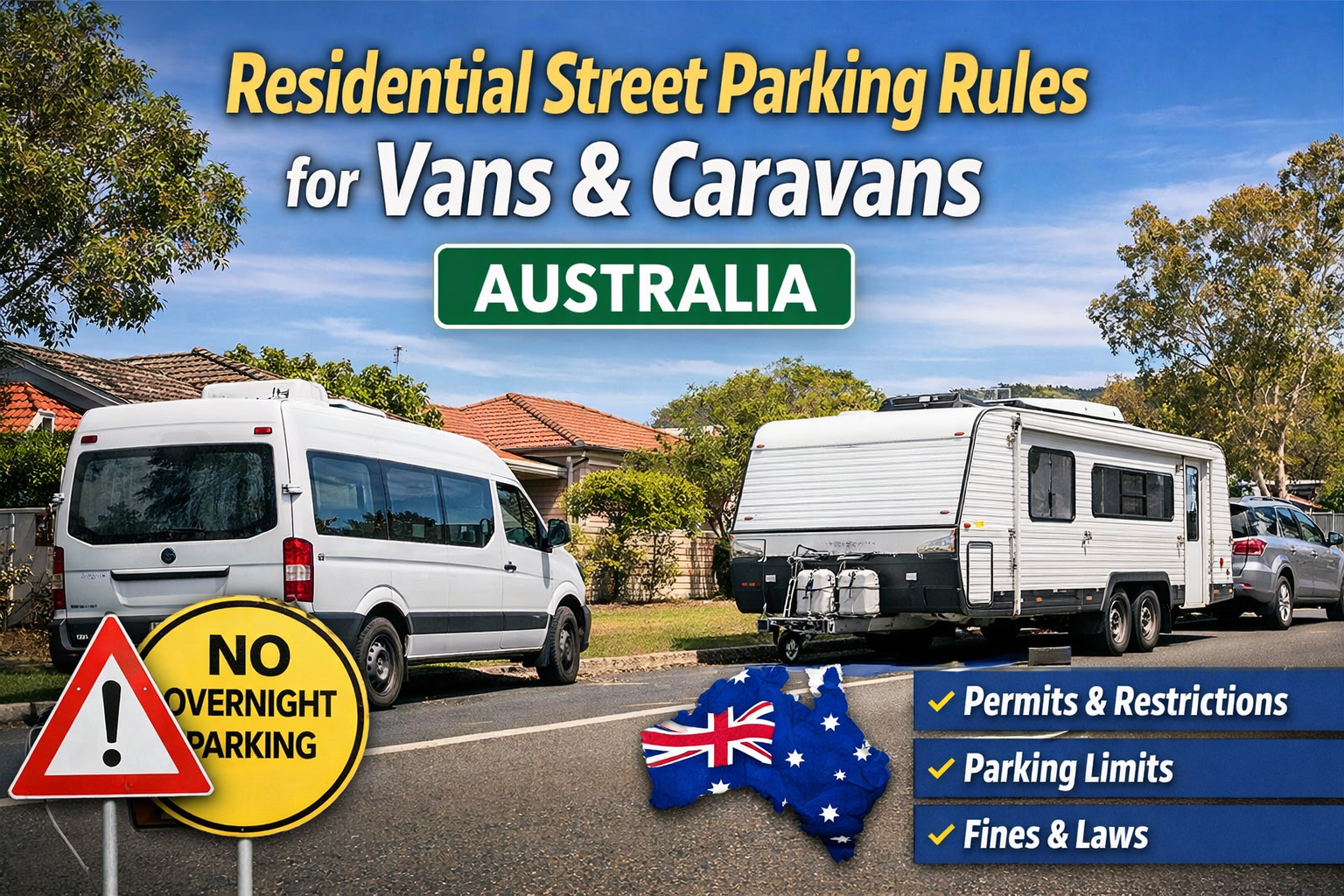
Residential Street Parking Rules For Vans & Caravans In Australia: What You Really Need To Know
If you have ever driven around for 20 minutes looking for a spot in an Australian suburb, you are not alone. Some cities overseas are recording residential street parking occupancy of over 117%, showing just how crowded kerbsides can get. Councils in Australia are tightening rules for vans and caravans, especially in urban areas and popular coastal towns. For over-50 travellers and grey nomads, understanding these rules can save you from fines, complaints, or even having your vehicle towed.
The rise of vanlife and motorhome travel among retirees is significant. In the year ending December 2024, over 15 million Australians took caravan or camping trips, and the over-50 demographic accounted for a growing share of long-term vanlifers. This growth highlights why detailed knowledge of street parking laws, permits, and safety tips is more important than ever. In this guide, we will cover practical examples, state and council regulations, and real-world scenarios to help you stay safe, legal, and stress-free while exploring Australia by van or caravan.
Key Takeaways
| Question | Short Answer |
|---|---|
| What is residential street parking for vans and caravans? | Parking your van or caravan on public streets in neighbourhoods, subject to local street parking laws Australia and council rules. |
| Can I sleep overnight in my van on a residential street? | Sometimes, but many councils restrict urban overnight parking. Check local signs and see our guide Where Can You Park a Van Overnight in Australia?. |
| Do I need a permit for long‑term caravan parking? | In some suburbs, yes, especially if your rig is large or parked more than a few days. Rules vary by council. |
| How far from intersections and driveways should I park? | Keep several metres clear of intersections, driveways, crossings, and bus stops. Exact distances vary by state and territory. |
| What are the main parking restrictions Australia travellers run into? | No stopping zones, time limits, “no camping in vehicle” signs, blocking driveways, and parking on nature strips or footpaths. |
| How can over‑50 travellers prepare before hitting the road? | Know your local rules, plan safe stops, and use checklists like our Vanlife Prep Checklist for Over-50 Travellers. |
| How do parking rules affect my budget? | Fines, metre fees, and last-minute caravan park stays add up. Resources like our Vanlife Insurance Australia Budget Guide and Van Life Cost Calculator help plan. |
| Best apps for planning street parking? | Use WikiCamps, CamperMate, or council-specific apps to check legal parking zones and overnight options. |
| Practical tip for first-time urban vanlifers? | Walk the street before parking, note signs, measure clearances, and plan exit routes to avoid fines or complaints. |
- Park within marked bays; follow local signs and permit rules.
- Keep clear of intersections, driveways, crossings, and bus stops.
- Do not block footpaths, nature strips, or median strips unless explicitly allowed.
- Check time limits: 1P, 2P, 4P, or “Permit Only” zones.
- Always keep your van or caravan roadworthy and registered.
Residential Street Parking Basics For Vans & Caravans
Residential street parking simply means using the public kerb in suburban or town streets to park your van or caravan, instead of a private driveway or paid site. For over‑50 travellers and grey nomads, this can be useful for visiting family, running errands, or taking short urban stopovers between scenic destinations. However, kerb space is considered shared community infrastructure, so councils take the rules seriously.
In Australia, most streets are controlled by local councils under state or territory road rules. This means what’s legal in one suburb might be illegal just a few blocks away, even if the street looks identical. Understanding the basics helps avoid fines and complaints from neighbours.
Why councils care about kerb space
- Shared resource: Kerbsides are intended for resident parking, deliveries, and emergency vehicle access, not long-term storage of large vehicles.
- Visibility and safety: Large vans or caravans can block sight lines at intersections, driveways, or pedestrian crossings.
- Neighbour relations: Long-term street parking of a caravan can annoy residents and create conflicts.
Common rules that usually apply everywhere
- Do not block driveways, pedestrian paths, or fire hydrants.
- Observe “no stopping,” clearway, or bus zone signs.
- Follow all time limits and permit requirements, even if the street looks empty.
Practical examples
Example 1: In Melbourne’s inner suburbs, residents have access to permit zones, and leaving a campervan for two nights without a permit can result in a $200 fine. Walking the street to check signage before parking can prevent this.
Example 2: In regional towns like Daylesford, councils are more lenient, allowing short overnight parking for caravans as long as driveways and intersections remain clear. This provides flexibility for grey nomads stopping for coffee or medical appointments.
Tips for spotting legal zones
- Look for marked bays — vans and caravans often need to fit entirely within a bay to be compliant.
- Check for small-print restrictions on signs, like maximum vehicle length or “motorhomes only.”
- When in doubt, walk around the block and observe how locals park.
By understanding the shared nature of kerb space and practical rules, you can enjoy safe, legal, and stress-free urban street parking during your vanlife adventures.
Street Parking Laws in Australia: How They Apply to Vans & Caravans
When we talk about street parking laws in Australia, there are two layers to understand: state or territory road rules and local council by-laws. Both layers can affect vans, campervans, and caravans, and the details often vary between suburbs, towns, and cities. Knowing these differences is critical for over‑50 travellers who want to avoid fines or conflicts with locals.
National-style rules that affect vanlifers
- Marked bays: Always park within clearly marked bays if they exist. Vans or caravans that overhang can be fined.
- Direction of travel: Some states require vehicles to park facing the flow of traffic.
- No median or traffic islands: Do not park on medians, traffic islands, or nature strips unless signage explicitly allows it.
- Camping behavior: Signs may prohibit setting up chairs, tables, or awnings. Even if parking is legal, “no camping” signs override casual overnight stays.
Local council rules and signage
Local councils can impose additional restrictions such as:
- Time-limited parking zones (1P, 2P, 4P, or “Permit holders only”).
- Vehicle size restrictions — for example, no vans over 7.5 m in certain suburbs.
- Residential permit zones where only locals or visitors with permits can park for extended periods.
Practical examples
Example 1: In Sydney’s eastern suburbs, many streets are 2P permit zones. A grey nomad parking without a permit might get a fine within hours, even if there are empty spaces.
Example 2: In Hobart, Tasmania, signage often includes “no parking for vehicles over 6m” due to narrow streets. Even legally parked campervans must ensure they do not obstruct neighbours’ driveways.
Tips for navigating street parking laws
- Always read signs carefully, including small print specifying vehicle types or times.
- Use council websites or mobile apps (like WikiCamps or CamperMate) to check parking rules before arrival.
- Observe how locals park — this is often the safest indicator of what is accepted.
- Keep your van easily moveable to avoid rangers issuing fines for “long-term storage”.
By combining awareness of state road rules with local council regulations, over‑50 travellers can enjoy safer, legal street parking and reduce the risk of costly penalties.
Legal Requirements & Permits for Residential Street Parking
Understanding legal requirements and permits is one of the trickiest parts of residential street parking for vanlifers and grey nomads. Rules can differ not only by state or territory, but also by council, street, and even time of year. Knowing when a permit is needed—and when it isn’t—can save hundreds in fines and stress on the road.
When permits are usually required
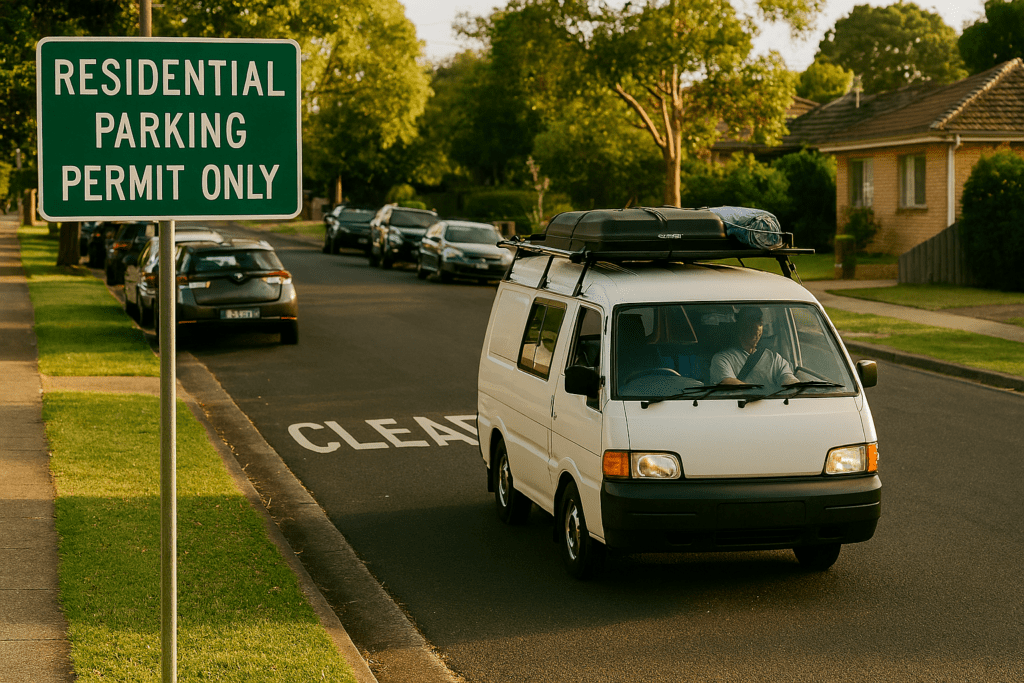
In busy urban areas, especially near city centres, coastal tourist towns, or inner suburbs, councils often enforce resident-only parking zones. Signs may indicate:
- “Permit holders only”: Non-residents must have a valid permit or face fines.
- Visitor permits: Locals can often apply for temporary visitor permits for friends or family. Some councils provide visitor permits specifically for oversized vehicles.
- Time-limited zones: Even with a permit, maximum stay durations often apply.
Special permits for vans and caravans
Some councils have stricter rules for campervans, motorhomes, and caravans due to their size or the perception of “street camping.” Examples include:
- Minimum or maximum vehicle length restrictions (e.g., “No vehicles over 7.5 m”).
- Limits on how long a caravan can be parked unhitched on the street.
- Special residential or temporary permits for oversized vehicles to load, clean, or prepare for trips.
Practical examples
Example 1: In Melbourne’s Bayside suburbs, visitor permits allow a van to park for up to 48 hours. Staying longer without a permit can trigger fines of $100–$150 per day.
Example 2: In Queensland’s Sunshine Coast, caravan parking without a permit in certain inner-city streets is prohibited, even if the caravan is attached to a tow vehicle. Councils monitor streets regularly.
Tips for managing permits
- Check local council websites before parking; many councils offer online applications for visitor or temporary oversized vehicle permits.
- Keep a physical or digital copy of any permit visible in your vehicle.
- Plan your overnight or long-term parking around streets that don’t require permits for your vehicle type.
- When in doubt, call the local council or ask locals — a quick phone call can prevent unnecessary fines.
By understanding and following permit rules, over‑50 travellers can legally park their vans and caravans on residential streets, avoid fines, and enjoy more flexibility during city stopovers or coastal visits.
| Rule / Location | Minimum Distance / Limit | Notes / Fines |
|---|---|---|
| Intersections & Traffic Lights | 20m before / 10m after | Blocks sight lines; fines ~$100–$200 |
| Pedestrian & School Crossings | 20m before / 10m after | Prevents hidden pedestrians; fines ~$100–$200 |
| Driveways & Laneways | Keep clear | Obstructing driveway can lead to fines or towing |
| Bus Stops & Taxi Zones | No stopping in signed area | Can block public transport; fines ~$150–$250 |
| Fire Hydrants & Emergency Access | Do not obstruct | Obstruction can result in heavy fines and liability issues |
| Permit Zones / Resident Parking | Follow posted times / permit requirements | Fines ~$50–$150; visitor permits may be available |
| Overnight / Camping Restrictions | Varies by council | No camping in vehicle signs; fines ~$100–$250 |
Measurements & Parking Distances You Should Know
Even experienced drivers can get caught out by exact legal distances when parking on residential streets. These rules exist to maintain visibility, safety, and access for residents and emergency vehicles. For vans and caravans, the “swing-out” of your vehicle when turning or reversing makes it even more critical to follow these guidelines.
Typical distance rules by feature
| Location / Feature | Common Minimum Distance | Why It Matters |
|---|---|---|
| Intersections with traffic lights | 20 metres before, 10 metres after | Prevents blocking sight lines and turning space for other vehicles. |
| Pedestrian or children’s crossings | 20 metres before, 10 metres after | Ensures pedestrians are visible and can cross safely. |
| Driveways and laneways | Keep clear, buffer if your vehicle is long | Residents must be able to enter and exit without obstruction. |
| Bus stops and taxi zones | No stopping within the signed area | Allows public transport vehicles to access safely. |
| Fire hydrants & emergency access points | Do not obstruct | Emergency services need rapid, unhindered access. |
Practical tips for vans & caravans
- Always leave extra space in front and behind your vehicle to account for swing-out.
- Use your mirrors and take a short walk around the van or caravan after parking.
- In tight areas, consider off-street or paid parking options to avoid accidentally breaching distance rules.
- For over‑50 travellers, a simple tape measure in your van can help quickly check distances at tricky intersections or driveways.
By following these measurements, you reduce the risk of fines, collisions, and neighbour complaints, making urban and suburban street parking safer and stress-free.
Urban vs Regional Residential Street Parking
Residential street parking can feel very different depending on whether you are in a dense city suburb or a quiet regional town. Understanding these differences helps vanlifers, retirees, and grey nomads avoid fines and stay safe.
Urban residential street parking
In cities, kerb space is often at a premium, especially near shopping strips, schools, and apartment blocks. Councils use permit zones, time limits, and “no overnight” or “no camping” signs to manage demand. For example:
- 1P, 2P, or 4P zones are common in suburban streets during the day.
- Beachside or tourist areas often prohibit sleeping in vehicles.
- Rangers patrol frequently, so compliance is crucial.
Practical tip: Walk the length of the street and check all signage before parking. Use apps like WikiCamps or CamperMate to verify legal parking spots.
Regional and small town parking
Small towns often have more relaxed rules, with fewer restrictions and more available street space. However, councils still prioritize resident access and emergency vehicle routes. Examples include:
- Coastal holiday towns may allow short-term caravan parking for loading or day trips.
- Some regional councils offer designated overnight street parking zones or allow caravans temporarily outside of high-season periods.
Practical tip: Treat every town with respect—park like a local, avoid blocking driveways, and assume someone is observing your vehicle. Even in regional areas, unregistered or abandoned-looking vans can attract fines or towing.
Understanding urban vs regional differences ensures you plan stops efficiently, keep legal, and maintain goodwill with locals.
Overnight Parking & Sleeping in Your Van
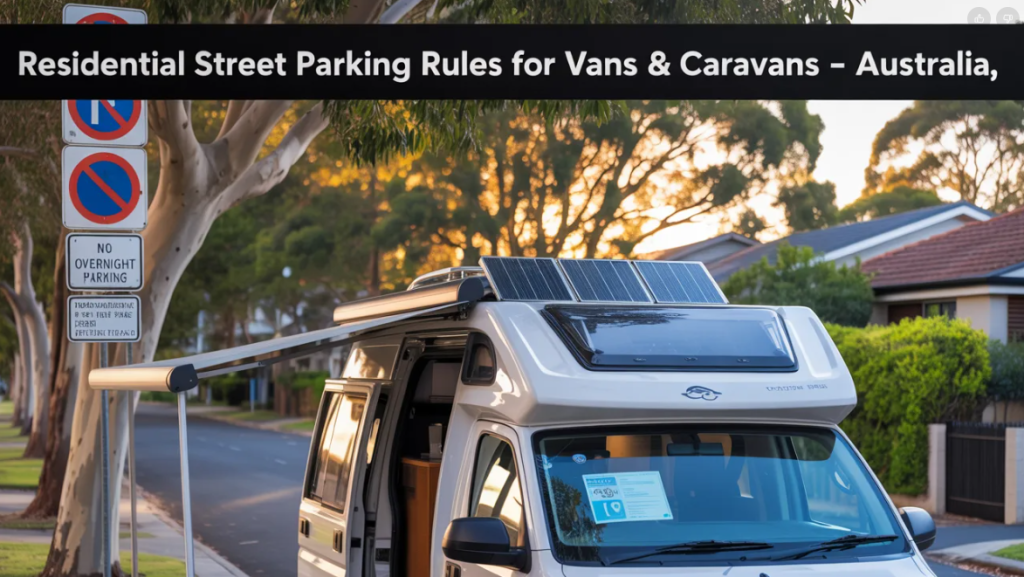
One of the most confusing aspects of residential street parking for vanlifers is the difference between legally parking and being allowed to sleep overnight. In Australia, there is no single national rule banning overnight stays in vehicles, but local councils often introduce their own restrictions.
- Arrive late, leave early; stay on well-lit streets with visible neighbours.
- Keep noise down, lights inside dim, and valuables out of sight.
- Do not set up chairs, awnings, or outdoor kitchens in residential zones.
- Check local council rules: some councils prohibit sleeping in vehicles even if parked legally.
- Have an exit plan and keep your keys handy at all times.
Is it legal to sleep in your van?
Legal overnight parking depends on local council by-laws, state park rules, and private property rights. Even if parking is permitted, “no camping in vehicles” or “no overnight stays” signs can make sleeping illegal. For example:
- Inner-city suburbs often prohibit sleeping in vehicles to protect resident amenity.
- Tourist hotspots, like beachside towns, may enforce strict overnight parking bans during peak season.
- Regional towns may allow overnight stops in designated areas or on quiet streets away from main roads.
Practical tips for safe overnight stops
- Choose wide, well-lit streets with easy exit routes.
- Arrive late and leave early to minimize disturbance.
- Keep noise and interior light to a minimum.
- Avoid setting up outdoor furniture, awnings, or cooking outside the van.
Tools and resources
Apps like WikiCamps and CamperMate can help you find legal overnight parking spots. Always cross-check with council websites for permit zones or seasonal restrictions.
Grey nomad safety considerations
Older travellers should prioritize personal safety and comfort. Park in areas with some residential activity, check surroundings before settling down, and keep valuables out of sight. Lock doors and have keys handy for a quick exit if needed. Treat the street as if it were your own property—courtesy goes a long way in maintaining goodwill with locals and avoiding complaints.
By following local rules and using discretion, overnight parking in vans can be safe, legal, and stress-free for over-50 travellers exploring Australia.
Where Can You Park a Caravan on Residential Streets?
Parking a caravan on residential streets requires more attention than a standard van due to its size, reduced manoeuvrability, and visibility. Over-50 travellers need to plan carefully to avoid fines, complaints, and safety hazards.
Short-term caravan parking
For quick stops, most councils allow caravans to be parked on the street for a few hours as long as you follow basic road rules:
- Do not block driveways, fire hydrants, or pedestrian crossings.
- Keep the caravan attached to the towing vehicle unless unloading or preparing for a trip.
- Respect local time limits and signage, even if the street appears empty.
Example: In a small coastal town, a visitor parking their caravan for 2–3 hours while unloading beach gear is usually acceptable, but leaving it unattended overnight may trigger council action.
Long-term parking and storage
Most councils restrict long-term caravan parking to prevent streets from becoming unofficial storage areas. Typical rules include:
- Maximum consecutive days parked on the street (often 1–3 days).
- Requirement to park off-street after a certain period, even on your property.
- Special permits for oversized or unhitched caravans in some suburbs.
Example: In inner-city Melbourne, a caravan left on a residential street for a week without a permit can be fined or towed. Planning ahead and checking local council rules is essential.
Unhitched caravans and safety
When caravans are unhitched, councils often require them to be secured and braked. Leaving an unhitched caravan in a high-traffic area or where it blocks visibility can lead to complaints or removal. For grey nomads, consider:
- Using storage facilities for extended stays away from your property.
- Keeping caravans attached to the towing vehicle whenever possible.
- Choosing low-traffic, well-lit streets for short-term unhitched parking.
Planning tips for over-50 travellers
Before parking, research council regulations online, use apps like WikiCamps or CamperMate, and have backup options if streets are full. Treat every street as if it is your own property—courtesy, legality, and safety go hand in hand for a smooth vanlife experience.
- Read all council and street signage carefully.
- Overstaying time limits or parking in “No Overnight” zones can cost $100–$500.
- Take a photo of signs and your van’s position for proof if disputed.
- Use apps like WikiCamps or CamperMate to confirm legal overnight options.
- Move your vehicle promptly if a ranger approaches.
Van Parking Legality, Time Limits & Councils
Understanding van parking legality is critical for avoiding fines and keeping your vanlife stress-free. Each council sets its own mix of time limits, permit zones, and restrictions, and these often differ between suburbs and cities.
Common time limits for vans
- 1P, 2P, or 4P zones: Many suburban streets have posted time limits for parking during daytime hours. Always check if the sign specifies hours, e.g., “8am–6pm Mon–Fri.”
- Evening and night limits: Some councils relax daytime limits but enforce restrictions overnight or in busy tourist areas.
- Default rules: If no sign is posted, normal road rules still apply, including not blocking driveways, intersections, or footpaths.
How councils view campervans
Vans with curtains, roof vents, or visible camping gear can attract more attention than standard cars. Rangers may assume the vehicle is being used for camping rather than parking, which can result in fines or requests to move on.
Permit zones and local authority
- Resident-only permit zones restrict non-resident parking beyond a few hours.
- Oversized vehicle permits may be required for vans above certain lengths or weights.
- Visitor permits are sometimes available for short-term stays but rules vary by council.
Budget implications
Ignoring time limits or permit requirements can lead to fines ranging from $50–$250, which quickly add up on extended trips. Planning ahead, using council websites, and apps like WikiCamps can help you stay compliant and avoid unnecessary costs.
Safety Tips & Avoiding Fines
Street parking can be convenient, but poor habits or inattention can lead to fines, unsafe situations, or unhappy neighbours. For over-50 travellers, safety, comfort, and legality are all equally important.
Practical tips to avoid fines
- Check signage carefully: Always read local signs for time limits, permit zones, and vehicle restrictions. Take a photo for reference if unsure.
- Measure your space: Make sure your van or caravan is fully within the legal parking area and not obstructing driveways, crossings, or corners.
- Set reminders: Use a phone alarm or app to track time-limited parking so you don’t overstay.
- Plan backup options: Identify nearby legal parking or rest areas in case your first choice is full or restricted.
Personal safety at night
- Choose streets with good lighting and some nearby activity.
- Park where you can quickly leave if you feel uncomfortable.
- Keep valuables out of sight, doors locked, and keys handy.
- Avoid streets outside pubs, party areas, or dark industrial zones.
Being a good neighbour
- Keep noise low, lights dimmed inside your van, and avoid setting up external camping gear.
- Don’t block footpaths, medians, or nature strips.
- Dispose of waste responsibly; never dump grey water or rubbish on the street.
Following these tips keeps you safe, minimizes conflicts, and helps maintain a positive reputation for vanlife among local residents and councils.
Checking Local Rules & Useful Official Resources
Street parking rules vary widely across Australia. To avoid fines, legal issues, or unpleasant surprises, it’s essential to check both state and local council regulations before parking your van or caravan.
State & Territory Transport Authorities
- NSW: Transport for NSW – Road rules, parking distances, and permits.
- Victoria: VicRoads – Road rules, residential parking schemes.
- Queensland: Queensland Transport – Signage rules, restricted zones.
- Other states/territories: South Australia, Western Australia, Tasmania, Northern Territory, ACT all have transport authority websites with updated parking info.
Local Council Resources
- Check individual council websites for street maps, permit zones, and temporary parking restrictions.
- Look for visitor permits, oversized vehicle permissions, and special caravan regulations.
- Tourist information centres often provide guidance on legal overnight parking and caravan-friendly streets.
Apps and Planning Tools
- Use apps like WikiCamps or CamperMate to check up-to-date parking rules, rest areas, and campgrounds.
- Combine app information with official council and state websites to plan routes and overnight stops confidently.
Doing this homework before each trip ensures you stay legal, avoid fines, and enjoy stress-free vanlife while respecting local communities.
FAQ: Residential Street Parking for Vanlifers & Grey Nomads
| Question | Answer |
|---|---|
| Can I park overnight in a residential street with my van? | Sometimes. If there are no “no camping” or overnight parking restrictions, short stops may be allowed. Always check council signs and local by-laws, and move on if requested by rangers or police. |
| Do I need a permit for my caravan? | Some councils require permits for caravans on residential streets, especially if parked for more than a day or in inner-city areas. Check your local council website for visitor or oversized vehicle permits. |
| What happens if I block a neighbour’s driveway temporarily? | Even brief obstruction can lead to fines or complaints. Always leave enough clearance and consider alternative parking if a driveway is nearby. |
| Are there insurance implications for street parking? | Yes. Some van or caravan insurance policies may not cover vehicles left unattended on public streets for long periods. Confirm your coverage with your insurer. |
| Where can I learn the real costs of overnight parking vs caravan parks? | We break down realistic numbers on our Van Life Costs Guide, including free, low-cost, and paid options. |
| Are there senior-focused guides for vanlife? | Yes. Our Senior Van Life in Australia section focuses on over-55 travellers, including safety, comfort, and practical travel planning. |
| How can I plan safer, legal overnight stops on long trips? | Use a mix of official rest areas, free camps, low-cost caravan parks, and carefully chosen suburban streets. Pair this with our Vanlife Prep Checklist for Over-50 Travellers. |
Conclusion
Residential street parking in Australia can be a convenient tool for vanlifers, grey nomads, and retirees, but only if you understand the mix of state road rules, local council by-laws, and practical safety considerations. Treat every street as if it is outside your own home—respect neighbours, signage, and local restrictions—to avoid fines, towing, or complaints.
Over-50 travellers should plan ahead: research local councils, check overnight parking restrictions, and ensure their van or caravan is roadworthy and legally parked. Using apps like WikiCamps or CamperMate can help identify legal overnight stops, rest areas, and free or low-cost camping options.
Fines, metre fees, and last-minute caravan park stays can add up quickly, so budgeting is important. Tools like our Vanlife Insurance Budget Guide and Van Life Cost Calculator can help plan your trips realistically.
- Check council and state regulations for your planned stops.
- Confirm permit requirements for vans or caravans if parking long-term.
- Review signage carefully and take photos if needed.
- Park respectfully: clear driveways, intersections, and pedestrian crossings.
- Budget for paid or last-minute overnight options when street parking isn’t feasible.
- Use official apps and resources to locate safe, legal stops.
- Keep your van or caravan roadworthy and insured for street parking.
With preparation, knowledge, and courtesy, residential streets can remain friendly, practical, and safe places to pause and rest during your vanlife adventures in Australia. By following these guidelines, over-50 travellers can enjoy freedom on the road without unnecessary stress or legal complications.

As an affiliate, I earn from qualifying purchases at no extra cost to you.
As an affiliate, I earn from qualifying purchases at no extra cost to you.