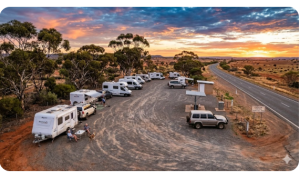
Overnight Parking in Australia: Legal Van & Camper Stay Guide
Overnight parking in Australia can be confusing for van, camper, and motorhome travellers who just want a safe, legal place to sleep. Many assume they can simply pull over anywhere and sleep in their vehicle, but local council rules, camping regulations, and signage often say otherwise.
Planning where to stay overnight is one of the most important — and most misunderstood — parts of travelling Australia by van or camper. There is no single national law banning sleeping in your vehicle, but overnight parking rules are largely controlled at the local council or land manager level. Regulations can vary significantly between towns, regions, and states. Understanding this patchwork of bylaws, restrictions, and rest-area rules helps you avoid fines, reduce stress, and improve safety on the road.
This guide explains where sleeping in your vehicle is generally permitted, where restrictions commonly apply, how to interpret signage, and practical strategies for finding suitable overnight locations. It is designed for vanlife travellers, retirees, and grey nomads who want clear, reliable information about legal overnight stays.
Key Takeaways
| Question | Short Answer |
|---|---|
| Is sleeping in your van always illegal in Australia? | No. There is no nationwide law banning sleeping in vehicles, local councils control it through bylaws and signage. We explain the reality for retirees in our life on the road guide. |
| Where can vanlifers usually park overnight legally? | Authorised campgrounds, free camps, rest areas that permit overnight stays, RV-friendly towns, and some private land options like farm stays or Hipcamp-style sites. |
| How do I avoid overnight parking fines? | Check local council rules, read every sign, arrive before dark, keep a low profile, and stick to our “10-minute scan” method before committing to a spot. We cover common mistakes in ourAustralia vanlife mistakes guide. |
| What is the safest option for older travellers at night? | Well-lit, designated sites with toilets, other rigs nearby, and good mobile reception. Our senior van life resourcesfocus on age-friendly safety. |
| Should retirees try “stealth camping” in cities? | You can, but we rarely recommend it for older travellers. Legal or authorised options are usually less stressful and better for sleep quality and health. |
| How do I prepare my van for comfortable overnight stops? | Plan your layout, power, and ventilation carefully. Our detailed van conversion checklist for boomers walks through setup decisions. |
Safety And Psychology: Feeling Secure When Sleeping In Your Van
We talk to many retirees who are more worried about feeling vulnerable at night than about the legal side of overnight parking. That fear is rational, you are in an unfamiliar place, in a small space, sometimes alone.
The goal is not to pretend there is no risk, it is to manage risk to a level where you can actually sleep. Good overnight decisions come from noticing both your surroundings and your own nervous system.
Safety Signals To Look For
- Other grey nomads or families already settled for the night.
- Lined, level parking bays away from fast traffic.
- Good lighting near amenities but not directly in your face.
- Quiet after dark, not thumping music or frequent car turnover.
If your gut says “this does not feel right”, leave. We have never regretted moving on, but we have regretted pushing through that uneasy feeling “just for one night”.
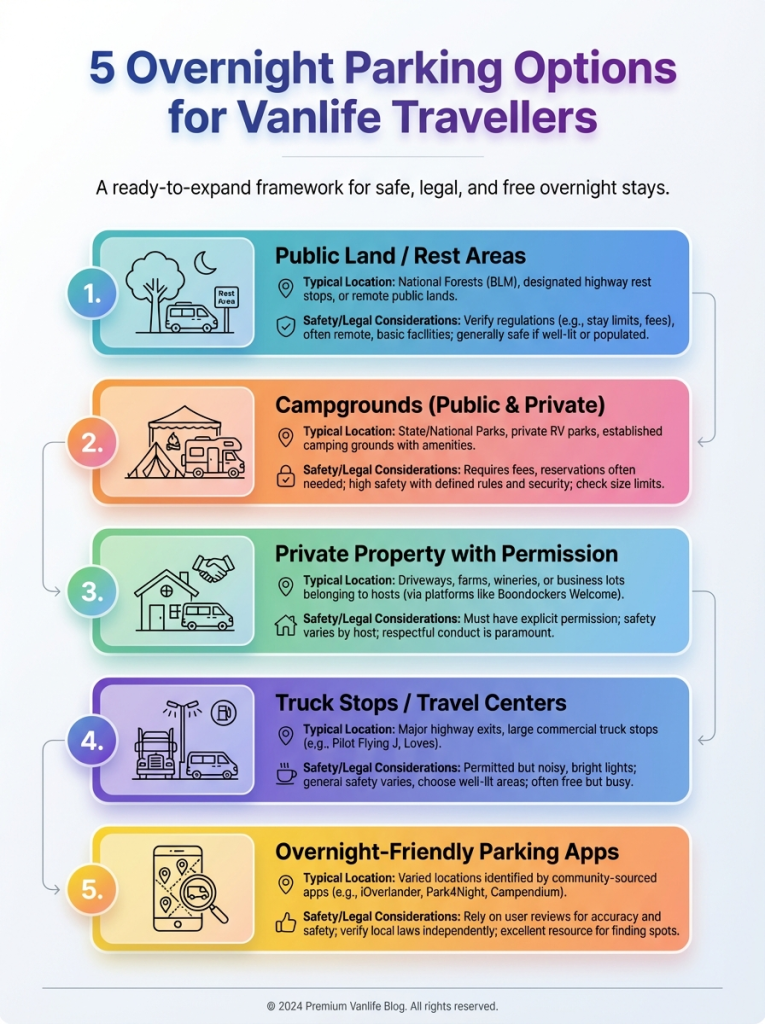
Where You Can Legally Park Overnight
Australia does not have a nationwide law prohibiting sleeping in a vehicle. Instead, parking and camping regulations are managed by local councils and land authorities, creating a patchwork of rules that differ by location.
1. Caravan and Holiday Parks
Commercial caravan and holiday parks offer the most predictable and comfortable overnight solution. They are regulated accommodation providers and usually include:
-
Powered sites and electricity connections
-
Toilets and showers
-
Waste disposal facilities
-
Security or on-site management
Costs: Typically $20–$100 per night depending on location and season.
Best for: Travellers prioritising comfort, longer stays, and reliable amenities.
2. Designated Campsites
Councils and park authorities manage these sites specifically for overnight stays. They are legally sanctioned and often located in:
-
National parks
-
State forests
-
Recreation reserves
Benefits:
-
Legal certainty
-
Scenic environments
-
Lower cost than commercial parks
Considerations:
-
Booking requirements may apply
-
Limited facilities in some locations
-
Vehicle access restrictions possible
3. Free Camps and Rest Areas
Australia has extensive roadside infrastructure for long-distance travellers. These options are ideal for short stays between destinations and include:
-
Highway rest stops
-
Council-approved free camps
-
Community-managed or donation-based sites
Before staying:
-
Check maximum allowed duration
-
Ensure vehicle size is suitable
-
Confirm signage allows overnight stops
4. RV-Friendly Town Initiatives
Some regional towns actively encourage travellers by offering designated overnight parking. Facilities may include:
-
Low-cost or free parking
-
Dump points and water access
-
Local community support for travellers
Benefit: Provides legal overnight stops while supporting local economies.
5. Private Property With Permission
Some travellers stay overnight on private land with the landowner’s explicit permission. Facilities may include:
-
Low-cost or donation-based access
-
Water and power (if offered by the owner)
-
Toilets or other basic amenities, depending on the property
-
Safe and secure parking away from public areas
Benefit:
-
Provides a legal and often peaceful overnight stop while supporting local landowners
Locations to Avoid
Certain areas frequently result in enforcement action due to restrictions or complaints:
-
Residential streets with local restrictions
-
Tourist hotspots or beachfront car parks
-
Commercial shopping centre parking lots
-
Private land without explicit permission
-
Areas clearly marked “No camping”
Even if other vehicles appear to stay overnight, compliance should never be assumed.
Comfort And Gear For Better Overnight Stays (Retiree‑Friendly)
Legal and safe are the base requirements, but long-term vanlife also needs comfort, especially for older joints, health issues, and heat tolerance. Good overnight parking choices combine a decent spot with a van that is set up for reliable sleep.
We see three comfort factors cause the most trouble for retirees: bed quality, temperature control, and bathroom strategy.
Age‑Friendly Overnight Comfort Tips
- Invest in a bed height and mattress that make it easy to get in and out without twisting.
- Plan shade and cooling options, from simple fans to more advanced units like the EcoFlow Wave 3 we reviewed.
- Think through night-time toilet solutions, particularly if you wake often.
Our van conversion checklist for boomers is written precisely for this stage, helping you match your build choices to your body and your preferred style of overnight stops.
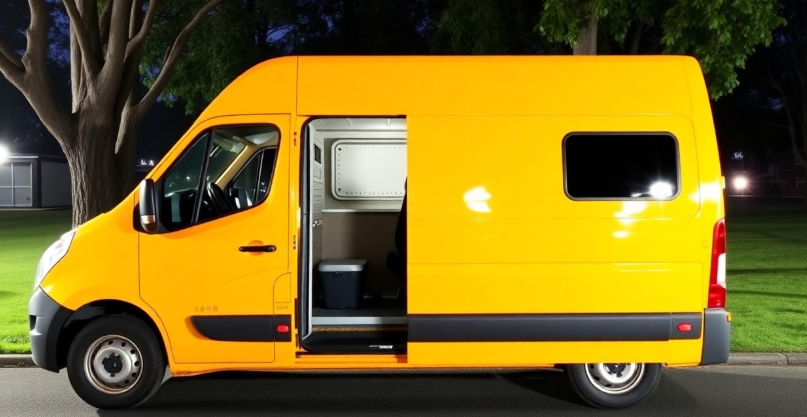
Council Enforcement: How Fines Really Happen On The Road
In our experience, council rangers care about patterns and complaints more than quiet retirees who park once, leave no trace, and move on. Problems arise when areas become informal “van parks” with bins overflowing, noise, and a line of rigs ignoring limits.
Understanding how and when enforcement happens helps you avoid being in the minority that gets fined. It also reduces anxiety, because you know what behaviour stands out and what behaviour blends in.
How Rangers Typically Operate
- They patrol high-demand spots such as beaches, foreshore reserves, and town centres early in the morning.
- They respond to complaints from residents, especially about noise, rubbish, or long-term occupancy.
- They focus on vehicles clearly set up as camps where signs prohibit camping, not on someone discreetly resting in a legal bay.
Retirees have a natural advantage here. You are not usually partying, you are often in bed early, and you tend to respect facilities. Use that advantage, keep outdoor setup minimal in marginal spots, and you lower your risk dramatically.
Understanding Parking Signs
Australian signage dictates whether overnight parking is permitted. Common types include:
| Sign Type | Meaning |
|---|---|
| No Stopping | Vehicles may not stop at any time |
| No Parking | Brief stopping may be allowed, but overnight stays are prohibited |
| Time-Limited Zones | Vehicles must depart within the specified duration |
| Permit Zones | Only authorised vehicles allowed |
Correct interpretation helps avoid fines and ensures confidence when selecting locations.
Accessibility Considerations
Travellers with disabilities need extra planning for overnight stops. Many caravan parks, designated campsites, and RV-friendly towns offer accessible parking bays, ramps, and facilities such as toilets and showers.
Tips:
-
Use apps like WikiCamps or CamperMate to filter for accessible sites
-
Consider portable assistive tools like ramps or grab handles
-
Prioritise hard surfaces, wider spaces, and accessible amenities
Planning for accessibility ensures safer, more comfortable stops across Australia’s diverse landscapes.
State-by-State Overview of Rules
| State/Territory | Key Rules & Considerations | Typical Fines |
|---|---|---|
| NSW | Rest areas allow 24h stays; local council rules apply elsewhere | $100–$200 |
| VIC | Free camping restricted to approved sites; private land requires permission | $100–$300 |
| QLD | Overnight vehicle sleeping outside authorised sites often illegal | $150–$500 |
| WA | Rest areas and caravan parks common; signage critical | $100–$200 |
| SA | Designated free camps and caravan parks; illegal roadside parking enforced | $120–$250 |
| TAS | Parks and council sites only; enforcement in urban areas | $80–$200 |
| NT | Remote camping often tolerated; signage and Aboriginal land rules important | $100–$300 |
Practical takeaway: Always check signage and council regulations before stopping.
Digital Tools to Find Overnight Spots
Several platforms help locate legal, safe overnight options:
-
WikiCamps: Comprehensive listings, GPS directions, and user reviews
-
CamperMate: Local tips, facilities, and community feedback
-
Hipcamp: Booking access to private land campsites
Tip: Always have at least one reliable app for route planning and backup locations.
Practical Strategies for Safe and Comfortable Overnight Parking
-
Plan Ahead: Identify potential stops before reaching them
-
Arrive Before Dark: Evaluate terrain, lighting, and surroundings
-
Maintain Backup Options: Unexpected closures or crowding require alternatives
-
Monitor Local Conditions: Weather and seasonal demand can affect availability
-
Trust Your Instincts: Comfort and safety are as important as legality
Safety Considerations
-
Park on level ground in visible but calm areas
-
Avoid isolated urban locations
-
Keep valuables out of sight and lock doors
-
Have emergency contacts and maps available
Even legal sites can be unsafe without proper precautions.
Comfort Tips for Retirees and Long-Term Travellers
-
Alternate between free and powered sites for convenience
-
Minimise late-night driving to reduce fatigue
-
Choose locations with amenities such as showers or toilets
-
Book ahead during peak seasons
-
Maintain regular rest schedules to sustain energy over long journeys
Quick Decision Checklist Before Overnight Parking
| Question | If Yes | If No |
|---|---|---|
| Are there “No camping / No sleeping in vehicles” signs? | Pick another spot | Move to next question |
| Are other vans or caravans obviously set up for the night? | Good sign, but still do your 10-minute scan | Consider whether you want to be alone |
| Does your gut feel safe? | Stay, keep setup minimal | Leave and go to your backup site |
| Is overnight parking legally allowed here? | Proceed with setup | Find an alternative legal spot |
| Are signs clear and visible? | Safe to proceed, but stay alert | Re-evaluate location or move to backup |
| Is the location safe, well-lit, and comfortable? | Stay, set up minimally | Move to backup location |
| Do I have a backup location if needed? | Good to proceed | Plan backup immediately before setting up |
| Are environmental and accessibility factors suitable? | Proceed with setup | Choose a more suitable site |
A simple checklist prevents surprises and improves the travel experience.
Accessible Overnight Parking for Travellers with Disabilities
Are accessibility and disability needs met (parking, toilets, ramps)?Proceed with setup; site meets mobility & comfort requirements. Use accessible apps like WikiCamps or CamperMate to confirm features. Choose a different site with proper accessible facilities or use portable aids (ramps, grab handles).
Planning overnight stops with accessibility in mind ensures comfort and safety for travellers using mobility aids:
-
Choose caravan parks, designated campsites, or RV-friendly towns with accessible parking bays and ramps.
-
Look for accessible toilets, showers, and hard-surface parking when selecting free camps or rest areas.
-
Use apps like WikiCamps or CamperMate to filter locations by accessibility features.
-
Consider portable aids such as ramps, grab handles, or adjustable beds for added convenience.
FAQs About Overnight Parking For Vanlife Travellers
Can you sleep in your vehicle in Australia?
Yes, but local council regulations determine where overnight stays are permitted.
Are free overnight options widely available?
Availability varies but is generally higher outside major urban or tourist areas.
Do authorities enforce restrictions regularly?
Enforcement intensity varies, with higher monitoring in popular destinations.
Is it legal to sleep in my van anywhere in Australia if I am tired?
No. Fatigue laws encourage you to rest, but that does not overrule council or land rules. Use official rest areas, not random verges or signed “No camping” car parks.
Can I sleep in my campervan on residential streets?
Sometimes, if street parking is legal and there are no local bans on sleeping in vehicles, but neighbours may complain if it becomes regular. We rarely suggest using residential streets as your main option.
What is the safest free overnight option for solo retirees?
Well used highway or regional rest areas where overnight stays are clearly allowed, with other rigs present. Free camps near small towns also rate highly for many of our readers.
Additional FAQs
Are highway service centres good overnight stops?
They can be, especially if they allow 24‑hour parking and you are in a fatigue pinch. Expect noise from trucks and lights, so treat them as emergency or one‑off options rather than your regular plan.
How many nights can I stay in one free camp?
Always check local rules. Some sites allow 24 hours only, others 3 nights, and some remote spots allow longer stays if you are self-contained and respectful.
Do I need to be fully self‑contained to use free camps?
Many councils are tightening rules to favour self-contained vehicles, mainly to protect the environment and manage waste. If you plan to lean heavily on free sites, building in a good toilet solution helps.
Should I tell someone where I am parking each night?
We highly recommend it, especially for solo retirees. Share your rough overnight plan by message with family or friends so someone knows where to start if something goes wrong.
Is it worth paying for caravan parks if there are free camps nearby?
Yes, at least sometimes. Caravan parks give you hot showers, laundry, powered sites, and a social hub. Many retirees settle into a rhythm of a few free nights followed by a reset night at a park.
What are the biggest mistakes new vanlifers make with overnight parking?
Arriving after dark, ignoring signs because “others are doing it”, over‑relying on stealth camping, and staying too long in one free spot. We break these down in our Australia vanlife mistakes article.
Where can I learn more about planning safe, realistic vanlife after 55?
We created Retire To Vanlife specifically for this stage of life. Our senior van life guides focus on safety, comfort, and financial realism instead of Instagram myths.
Is pre-planning essential?
Yes, preparation significantly improves safety, legality, and comfort during travel.
Conclusion
Overnight parking in Australia is fully manageable when travellers understand legal, safety, and comfort considerations. By combining commercial parks, designated campsites, free rest stops, and RV-friendly towns, you can avoid fines, sleep safely, and enjoy stress-free journeys. Tip: See “Petrol Spy” website for Fuel Prices in Australia.
Preparation, flexibility, and awareness of local rules turn overnight stops from a source of anxiety into a smooth, enjoyable part of vanlife adventures.

As an affiliate, I earn from qualifying purchases at no extra cost to you.
As an affiliate, I earn from qualifying purchases at no extra cost to you.