Free Camping vs Overnight Parking in Australia: What Grey Nomads Really Need To Know
With more than 15 million Australians hitting the road for caravanning and camping in 2024, finding safe, legal spots to park overnight is essential. If you’re over 50 and travelling in a van or motorhome, knowing the difference between free camping and overnight stops can help you plan a smoother, stress-free journey.
Key Takeaways
| Question | Short Answer |
|---|---|
| What is the difference between free camping and overnight parking in Australia? | Free camping usually means staying in designated or informal bush or roadside camps, often with basic facilities, while overnight parking is a quick, usually self-contained stop in a car park or RV-friendly stop where camping behaviour may be restricted. |
| Where can I learn the real costs of free camping vs caravan parks? | We break down realistic numbers and budget examples on our van life costs guide. |
| Are there senior-focused guides for free camping Australia wide? | Yes, our Senior Van Life in Australia section focuses on over-55s, including safety, comfort, and simple travel planning. |
| Is overnight parking legal everywhere if I just sleep in my vehicle? | No. Local council by-laws, state park rules, and private property rights all affect where you can legally sleep in your van. |
| How can I avoid fines for illegal overnight parking? | Use council and national park websites, check signage carefully, and use apps like WikiCamps and CamperMate to confirm legal overnight camping options. |
| Where can I read more about our approach and limitations? | See our disclaimer and terms & conditions for how we share information about vanlife. |
| Is vanlife realistic as a housing alternative in retirement? | Yes for some people, and we discuss pros, cons, and planning on our Retire To Vanlife home page. |
Best free camping spots in Australia for vanlifers
When people talk about “free camping Australia”, they usually mean low-cost or no-cost camps away from traditional caravan parks. These can be council-run rest areas, national park sites during special free periods, or informal bush camps where camping is allowed.
For vanlifers over 50, the trick is balancing comfort, safety, and legality, not just chasing the cheapest possible option. Free camping spots often have limited facilities, so you rely heavily on your own water, power, and toilet setup.
Popular free camping areas in New South Wales
New South Wales has plenty of legal overnight camping and free camps if you know where to look. Inland routes like the Newell Highway and the New England region offer many council rest areas that are RV-friendly stops with time limits.
Along the coast, rules are usually stricter, so look for signed free or low-cost council camps instead of trying to “stealth” park near beaches. Apps and council tourism pages will usually list these clearly.
Free camping options in Queensland for vanlifers
Queensland is famous for long drives and great free camps. Many rural towns provide free or gold-coin-donation RV-friendly stops to attract travellers who spend on fuel, groceries, and meals.
Out west and in the tropics, always consider heat, dust, and distance between services when choosing a free campsite. For retirees, being able to reach medical care or mechanical help within a reasonable distance really matters.
Overnight parking locations near Australian highways
Overnight parking near highways is often about fatigue management rather than holiday camping. Highway rest areas, roadhouse car parks, and truck stops can be useful for a quick, safe sleep when you are too tired to keep driving.
The key difference is that many of these spots are not “campsites” at all. You may be allowed to sleep in your vehicle, but setting up chairs, awnings, or a camp kitchen might be prohibited.
Planning a safe overnight stop for Australian road trips
When you plan long driving days, especially across regional Australia, always map out potential overnight parking locations along the highway. You want options in case of fatigue or bad weather.
Use apps like WikiCamps or CamperMate to filter for highway rest areas with toilets, lighting, and clear overnight parking rules. For older travellers, lighting and proximity to other vehicles can feel safer than being totally alone in the bush.
Accessible overnight parking for campervans
If you have mobility issues, think about how far you need to walk to toilets or picnic shelters. Some highway rest areas are large and not very level, which can be tricky for anyone with balance or joint problems.
Look for rest areas described as “suitable for caravans” or “big rig friendly”, because that usually means easier access, flatter ground, and clearer parking bays for campervans.
Affordable camping alternatives to caravan parks
Caravan parks are convenient but can add up, especially in peak season. Many of us look for affordable camping alternatives to caravan parks so we can travel longer on the same retirement income.
Low-cost camping options for retirees
- Council showgrounds with powered and unpowered sites.
- National park sites during discounted seasons, like Victoria’s past free and half-price programs.
- Donation or “pay what you can” camps that support tiny rural communities.
Free and safe overnight stops for campervans
Not every free spot is a good fit for older vanlifers. Free and safe overnight stops for campervans usually have reasonable access roads, level ground, and at least some traffic or other campers nearby.
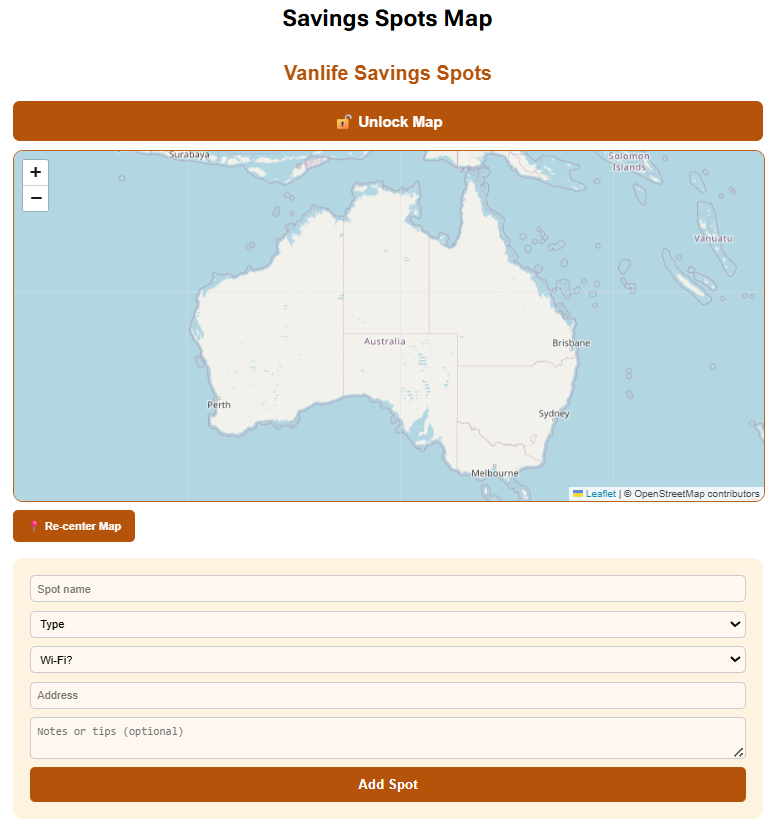
Find cost-saving vanlife destinations across Australia with our interactive Savings Spots Map – unlock to explore and add your own tips.
Balancing costs: free camping vs overnight parking vs caravan parks
From a budget point of view, most long-term vanlifers do a mix of free camping, low-cost sites, and caravan parks. This keeps costs manageable without giving up hot showers and laundry forever.
Comparing typical nightly options
| Option | Typical Cost | Pros | Cons |
|---|---|---|---|
| Highway rest area (overnight parking) | $0 | Good for fatigue, convenient on long drives | Basic, can be noisy, time limits |
| Free bush or council camp | $0–$10 donation | Scenic, relaxed, space to spread out | Limited facilities, sometimes remote |
| Showground or low-cost community site | $10–$30 | Often power, water, and toilets | Can be busy, sometimes time limited |
| Caravan park | $30–$70+ | Full facilities, laundry, powered sites | More expensive, less “bush” feel |
Safety and security at free camps and overnight parking spots
Practical safety habits for free camping Australia wide
- Try to arrive in daylight wherever possible, so you can see the layout and who else is around.
- Let someone at home know your rough route and check in occasionally by message or call, especially in remote regions.
Vehicle security at overnight parking locations
- Good locks, an immobiliser, and being discreet with valuables help deter theft.
- In towns or cities, choose well-lit public car parks or RV-friendly stops, not isolated back streets.
Conclusion
Free camping vs overnight parking in Australia is not an either–or choice. For most of us, especially over 50, the sweet spot is a flexible mix that keeps costs sensible while still feeling safe, comfortable, and legal.
Use free and low-cost camping as a tool, not a rule. Check local overnight parking rules, rely on good apps and council information, and always listen to your instincts about safety. With a bit of planning, a few trusted RV-friendly stops, and a realistic budget, vanlife in Australia can be a relaxed, enjoyable way to spend your retirement on the road.

As an affiliate, I earn from qualifying purchases at no extra cost to you.
As an affiliate, I earn from qualifying purchases at no extra cost to you.