Caravan Maintenance Australia: The Grey Nomad Guide to Keeping Your Rig Rolling (2026)
Real checks. Australian roads. Senior-friendly habits that prevent breakdowns before they happen.
1. You Are in the Right Place
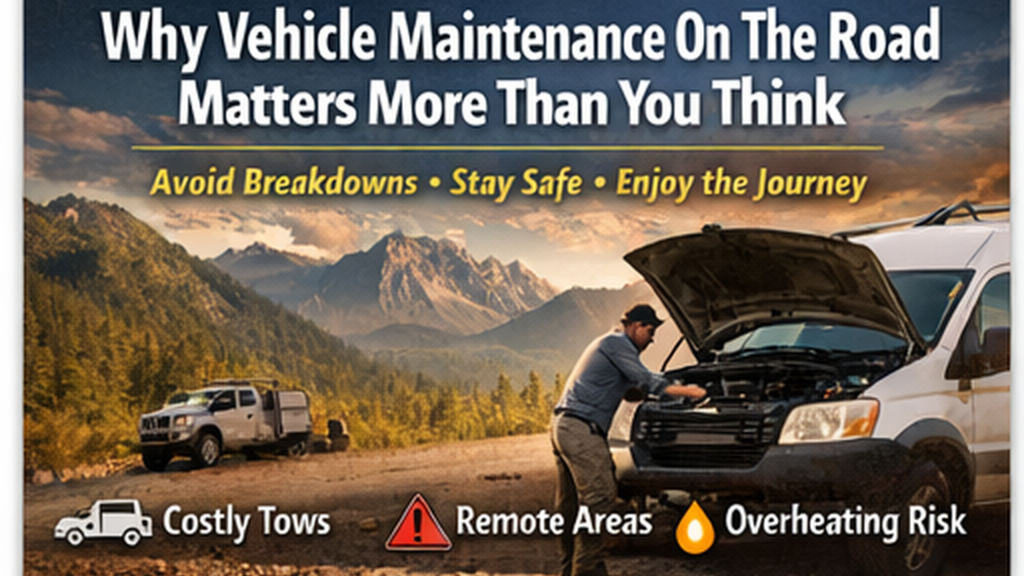
Caravan maintenance Australia style is not the same as a quick oil change in the driveway at home. When you are grey nomading across Queensland in July, towing through the Flinders Ranges in September, or grinding along corrugated outback tracks in the Northern Territory — your tow vehicle and your van are being tested in ways that suburban driving never prepares you for.
The reality for most senior grey nomads is this: you are driving an older rig, often loaded heavier than you think, across roads that are harder on your vehicle than any mechanic at home has prepared you for. The Bruce Highway in summer heat. Corrugated station tracks in outback Queensland. Mountain passes in Tasmania. River crossings in the Top End.
A breakdown at home is an inconvenience. A breakdown 400 kilometres from the nearest Toyota dealer on a remote outback track is a genuine problem — potentially a dangerous one.
This guide covers caravan maintenance Australia specifically for grey nomads and senior travellers. It covers your tow vehicle and your van. It covers pre-trip checks, daily habits on the road, what to carry, how to handle a breakdown, and which roadside assist actually covers your caravan in every state. Every tip in this guide is filtered through the specific conditions Australian grey nomads face — not generic US road trip advice converted with a find-and-replace.
2. Quick Reference: The Grey Nomad Maintenance Schedule at a Glance
| When | Tow Vehicle | Caravan | Priority |
|---|---|---|---|
| 6 weeks before departure | Full service, tyres, brakes, battery | Wheel bearings, brakes, seals, gas | Critical |
| Day before departure | Fluids, tyre pressure, lights, hitch | Water, gas, power, hitch coupling | Critical |
| Every morning on the road | Walk-around, tyres, fluids visual check | Tyre pressure, coupling, lights | Daily habit |
| Every 1,000km | Oil level, coolant, belt check | Wheel bearing temperature check | Weekly |
| Every 5,000km | Oil change if due, air filter check | Brake adjustment, bearing repack | Service interval |
| After corrugated roads | Check all fasteners and underbody | Check all external fittings and coupling | Immediate |
| After river crossings | Brakes, bearings, electrical connections | Brakes, bearings, electrical plugs | Immediate |
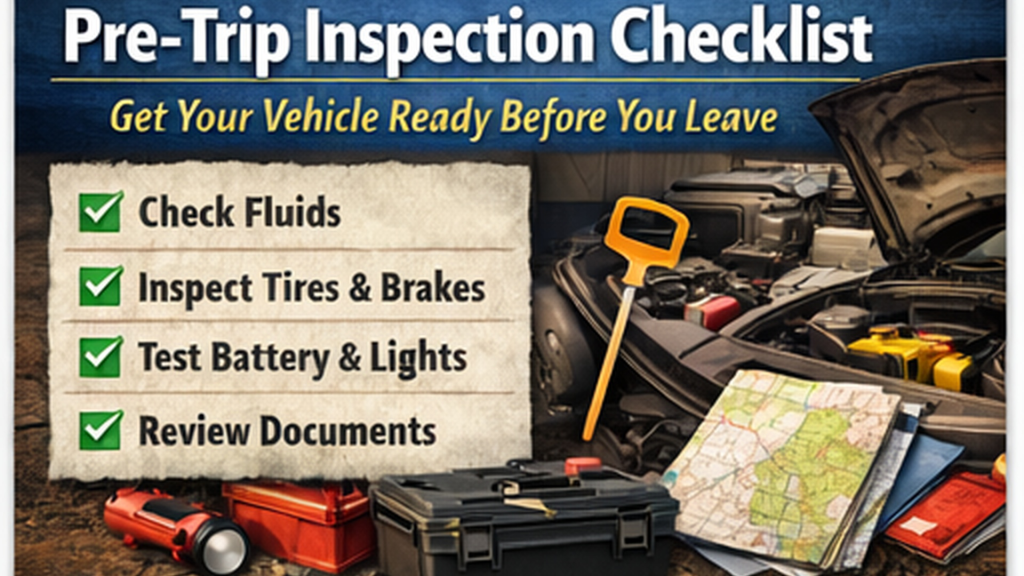
3. Before You Leave Home: The Six-Week Pre-Trip Check
The single most important caravan maintenance decision you make is what you do six weeks before you leave — not what you do when something goes wrong on the road. Six weeks gives you time to find problems, get parts ordered, and fix things properly before you are 800 kilometres from a workshop.
3a. Your Tow Vehicle — Non-Negotiable Checks
Book your tow vehicle in for a full service with a mechanic who understands towing. Not every mechanic does. Tell them specifically that you are about to do a long-distance grey nomad trip towing a caravan. A good mechanic will assess your vehicle differently when they know the load and conditions it is about to face.
Have these checked specifically:
- Transmission fluid: Towing puts extreme heat into your transmission. If the fluid is discoloured or smells burnt — replace it before you leave, not after your transmission fails on a mountain pass.
- Coolant system: Radiator, thermostat, hoses, and coolant condition. Overheating while towing is one of the most common breakdown causes in outback Australia. A cracked hose in 45-degree heat on the Stuart Highway is not the place to discover a problem.
- Brakes: Pad thickness, rotor condition, and brake fluid. Your braking distance increases significantly when towing. Worn brakes that are manageable unloaded become dangerous under tow weight.
- Battery: Age and condition. If your battery is more than three years old, test it properly — not just a visual check. A battery that starts fine in your driveway can fail on a cold outback morning when it is also trying to charge your Anderson plug circuit.
- Tyres: Tread depth, age (check the DOT date code on the sidewall — four digits showing week and year of manufacture), and pressure. Tyres more than five years old should be replaced regardless of tread depth. Heat degrades rubber internally before the tread wears out.
- Tow bar and tow ball: Check the tow ball rating matches your van’s loaded weight. Check the tow bar mounting bolts are tight. Check for any cracking or corrosion around the tow bar mounting points.
- GCM and GVM compliance: Gross Combination Mass is the maximum combined weight of your tow vehicle plus fully loaded caravan. Gross Vehicle Mass is your tow vehicle’s maximum loaded weight. If you are overloaded, your braking, handling, and insurance are all compromised. Use a public weighbridge to check your actual weights before a long trip.
3b. Your Caravan — Six-Week Pre-Trip Checks
Your caravan needs its own pre-trip inspection — separate from your tow vehicle service. Many grey nomads focus entirely on the tow vehicle and overlook the van until something fails on the road.
Wheel bearings: This is the number one caravan roadside breakdown cause in Australia. Wheel bearings should be repacked or replaced every 10,000 kilometres or annually — whichever comes first. A failed wheel bearing can cause a wheel to come off at highway speed. It is not a maintenance item to defer.
Electric brakes: Test your brake controller before departure. Connect the van, drive at 20km/h on a flat sealed road, and manually activate the brake controller. The van brakes should apply firmly and evenly. If the van pushes your tow vehicle forward when you brake — your controller needs adjustment. If nothing happens — your wiring or brake magnets need checking.
Coupling and safety chains: The coupling must click firmly onto the tow ball with no rattling or movement. Safety chains must be crossed under the drawbar and short enough to prevent the drawbar touching the ground if the coupling fails — but long enough to allow turns. This is not optional — it is a legal requirement in every Australian state and territory.
Breakaway cable: This is the cable that applies your caravan’s brakes automatically if the van separates from the tow vehicle. Check it is attached to a solid point on the tow vehicle — not to the safety chain or the tow ball mount. Check the pin it pulls from the van is clean and not corroded.
Gas system: Have your gas system inspected by a licensed gas fitter every two years. Spray all hose connections with soapy water and watch for bubbles — any leak means the connection must be replaced before travel. Check the regulator date — gas regulators have a service life.
Roof and seals: Water ingress through failed roof seals is the most expensive hidden damage in caravans. Check every roof seal, every roof vent seal, every window seal, and the seal around your air conditioner. Press gently on the roof lining from inside — any softness suggests water damage inside the roof structure.
Tyres: Same rules as tow vehicle tyres. Check DOT date codes. Replace any tyre more than five years old. Check spare tyre pressure — it is the one tyre that is never checked until it is needed.
⚠️ The Weighbridge Rule: Before any long grey nomad trip, use a public weighbridge to check your actual combined weight. Most state roads authorities have free or low-cost public weighbridges. You may be surprised how close to — or over — your legal limits you are when the van is fully loaded for a long trip. An overloaded rig is illegal, unsafe, and uninsured in the event of an accident.
4. The Daily 10-Minute Walk-Around: Your Most Important Habit on the Road
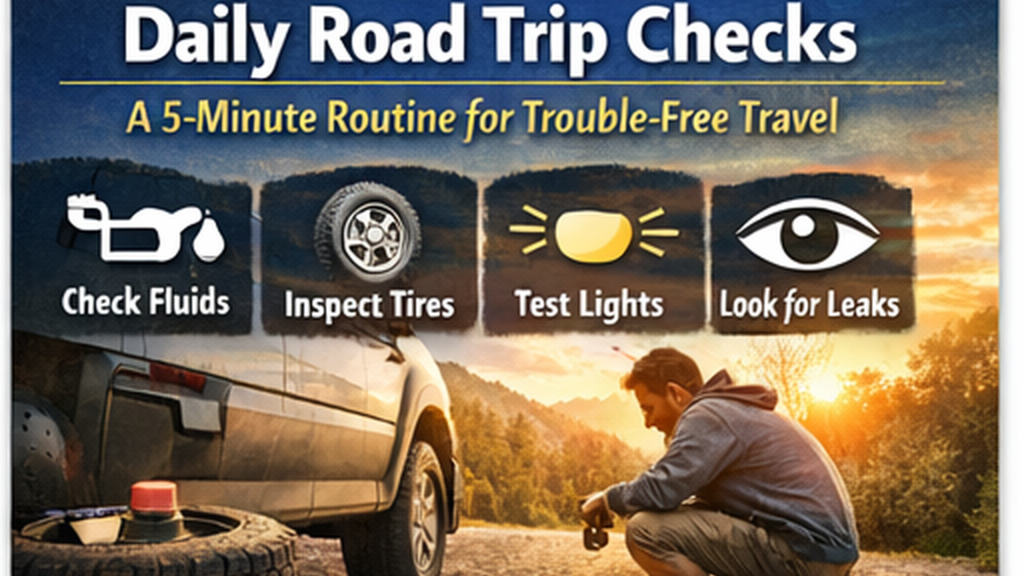
Every experienced grey nomad has a morning walk-around routine. It takes 10 minutes. It catches the problems that towing creates overnight — and it is the single habit that separates grey nomads who have trouble-free trips from those who don’t.
Do this every morning before you hitch up and drive. Work on level ground. Do it before you have packed away your chairs and awning — so you can still access everything easily if you find something that needs attention.
Tow Vehicle Walk-Around
- Check under the vehicle for fresh spots of oil, coolant, or transmission fluid on the ground
- Check tyre pressure visually — a significantly low tyre is visible even without a gauge
- Use a tyre pressure gauge every second day minimum — and always before a long highway run
- Check coolant level through the reservoir — never open the radiator cap when the engine is warm
- Check engine oil with the dipstick — weekly minimum, or before any day with significant climbing
- Start the engine and listen for any new noises — belts, rattles, or fans that were not there yesterday
- Check all lights function — indicators, brake lights, and reversing lights
Caravan Walk-Around
- Walk around the van and check all four tyres visually for pressure loss or sidewall damage
- Check wheel hubs by touching — a hot hub after a short morning drive indicates a bearing problem
- Check the coupling is still seated correctly on the tow ball — vibration can loosen the lock
- Check safety chains are crossed correctly and not dragging on the road
- Check the breakaway cable is attached and the pin is in place
- Check the 7-pin plug connection — a loose or dirty plug causes brake and light failures
- Check that the jockey wheel is fully raised and locked — it will drag on the road and be destroyed if left down even partially
- Check all external hatches, storage lockers, and the water filler cap are latched closed
- Check the TV antenna is retracted and the awning is fully wound in and secured
Senior Tip: Tape a laminated copy of this walk-around checklist to the inside of your van’s entrance door. Look at it every morning before you leave. The items you are most likely to forget are always the ones not written down — the jockey wheel, the breakaway cable, and the TV antenna account for a disproportionate number of avoidable roadside problems.
5. Tyres: The Most Important Caravan Maintenance Item in Australia
Tyre failure is the leading cause of caravan accidents on Australian roads. It is also almost entirely preventable with correct maintenance. The combination of Australian summer heat, long highway distances, and heavy caravan loads creates conditions that are significantly harder on tyres than everyday suburban driving.
Tyre Pressure for Towing
Your tyre pressure when towing should be set to the maximum recommended pressure for your tow vehicle’s tyres — not the standard everyday pressure. When towing a loaded caravan, your rear tyres are carrying significantly more weight than normal. Under-inflated tyres under tow weight generate heat, and heat is what destroys tyres.
Check the sticker on your tow vehicle’s door frame for the manufacturer’s towing pressure recommendation. If it is not there, use the maximum pressure listed on the tyre sidewall. Check cold — before driving, not after.
For your caravan tyres, check the caravan manufacturer’s recommendation. It is often higher than you expect — many caravan tyres are rated for 65–80 PSI fully loaded.
Tyre Age — The Rule Most Grey Nomads Do Not Know
Every tyre has a DOT date code moulded into the sidewall. The last four digits tell you the week and year of manufacture. A tyre made in the 32nd week of 2019 reads 3219.
The Australian standard recommendation is to replace any tyre more than five years old — regardless of remaining tread depth. In Australian conditions — particularly the heat of northern and outback Australia — five years is genuinely the limit. Rubber degrades internally from UV and heat long before the tread wears out. A tyre that looks fine can fail catastrophically if the internal structure has aged.
Check your caravan’s spare tyre date code. It is the tyre most likely to be old and the one you need most when something goes wrong.
Caravan Sway — The Tyre Connection
Caravan sway is one of the most frightening experiences in towing. Under-inflated rear tyres on your tow vehicle are a major contributing cause. They reduce the stability of the rear axle under tow load and make sway more likely to develop. Correct tyre pressure is your first defence against sway.
If sway develops at highway speed: do not brake suddenly. Ease off the accelerator gently. Hold the steering wheel firmly and straight. Apply the manual override on your brake controller if fitted. Let the van straighten itself. If your setup is developing sway regularly, have your weight distribution checked — an overloaded tow ball or incorrectly loaded van is the most common cause.
What to Carry for Tyre Emergencies
- A quality tyre pressure gauge — digital is more reliable than dial type
- A portable 12V tyre inflator that can reach caravan tyre pressures (many cheap inflators cannot)
- A plug-type tyre repair kit for small punctures in the tread area
- A fully inflated spare tyre for both the tow vehicle and the caravan
- A jack, jack stand, and wheel brace that fit both the tow vehicle and the caravan wheels
⚠️ Sidewall Damage Rule: Never attempt to repair a tyre with sidewall damage. A sidewall plug repair is not safe — the structural integrity of the tyre is compromised and it will fail. Replace the tyre. Driving on a repaired sidewall tyre at highway speed with a loaded caravan is genuinely dangerous.
6. Fluids: What to Check, When, and What to Carry
Fluids are the first thing to check and the easiest to manage. They are also the most commonly ignored until something goes wrong. On a long grey nomad trip, checking fluids takes five minutes and can prevent a breakdown that takes five days to sort out.
Engine Oil
Check with the dipstick every 1,000 kilometres when towing — not just when the warning light comes on. Warning lights indicate critically low oil, not just low oil. By the time the light illuminates, potential engine damage has already been occurring.
Towing increases oil consumption. Some engines consume more oil under sustained tow load than their owners expect. Know your engine’s normal consumption rate and check more frequently in the first few thousand kilometres of a long trip until you understand its behaviour under load.
Carry at least two litres of the correct oil for your engine — the same grade and specification as used at your last service. Do not top up with a different grade or brand if you can avoid it.
Coolant
Check the coolant reservoir level every morning. If it is dropping consistently, you have a leak somewhere — do not ignore it and keep topping up. Find the source.
If your temperature gauge climbs above normal while towing — particularly on long uphill grades or in extreme heat — take action immediately. Do not wait for the gauge to reach the red zone. Pull over safely, switch off the air conditioning, and let the engine idle for a few minutes. If the temperature does not drop, switch off the engine and let it cool completely before checking anything. Never open a hot radiator cap.
In Australian outback summer conditions, overheating while towing a heavy caravan is not rare. If you are travelling through remote areas in summer, consider fitting an additional transmission cooler and a larger capacity radiator overflow tank.
Transmission Fluid
Towing puts enormous heat into an automatic transmission. Many vehicles do not have a transmission temperature gauge — which means you can cook your transmission without any warning. If you do not have a transmission temperature gauge, consider having one fitted before a long outback trip. They are inexpensive and potentially save a very expensive repair.
Change transmission fluid at the service intervals specified for towing — not for normal driving. The towing interval is always shorter. Check your owner’s manual specifically for tow vehicle service intervals.
Brake Fluid
Brake fluid absorbs moisture from the air over time. Old brake fluid with high moisture content has a lower boiling point — meaning it can boil under heavy braking on long descents, causing brake fade at exactly the moment you need brakes most. Change brake fluid every two years regardless of distance.
What to Carry
| Fluid | How Much to Carry | Why |
|---|---|---|
| Engine oil | 2 litres minimum — correct grade for your engine | Top up between services; consumption increases under tow load |
| Coolant | 1 litre pre-mixed — correct type for your system | Emergency top-up; do not use water as a permanent solution |
| Windscreen washer fluid | 2 litres | Bug splatter on outback roads depletes this faster than expected |
| Brake fluid | 250ml — correct DOT rating for your vehicle | Emergency top-up only — if you are losing brake fluid, find the leak |
7. Wheel Bearings: The Caravan-Specific Maintenance Item That Grey Nomads Most Often Miss
If you remember one thing from this entire guide, make it this: caravan wheel bearings are the number one cause of caravan roadside breakdowns in Australia. They are also almost entirely preventable.
Unlike your tow vehicle’s wheel bearings — which are sealed for life in most modern vehicles — caravan wheel bearings are serviceable items that need regular repacking with grease. They run hotter than vehicle bearings because caravan axles are unsprung weight and the bearings carry the full caravan weight with no independent suspension to absorb shock.
The Service Interval
Caravan wheel bearings should be inspected, cleaned, and repacked with fresh grease every 10,000 kilometres or at least once a year — whichever comes first. If you travel on corrugated outback roads, increase that frequency. Corrugations vibrate the grease out of bearings faster than smooth sealed roads.
The Warning Signs
- A humming or grinding noise from the caravan wheels that changes with speed
- A wheel hub that is hot to the touch after driving — a correctly serviced bearing should be warm but not hot
- The van pulling to one side while being towed
- Visible wobble in a caravan wheel
If you notice any of these signs — stop. Do not drive further hoping it will sort itself out. A bearing in the final stages of failure will seize, lock the wheel, and potentially cause the tyre to blow and the wheel to come off the axle. This has caused fatal accidents on Australian roads.
The Morning Bearing Check
After your first 20–30 kilometres of driving each morning, pull over and check your caravan wheel hubs by hand. They should be warm — not hot. If a hub is too hot to hold your hand on comfortably for five seconds, that bearing needs attention before you continue driving.
8. Electrical Systems: Caravan-Specific Checks for Grey Nomads
A grey nomad caravan typically has two separate electrical systems: the 240V mains system that runs from shore power at caravan parks, and the 12V system that runs from your battery bank and solar panels for off-grid camping. Both need regular attention.
The Anderson Plug Connection
The Anderson plug is the connection between your tow vehicle’s charging system and your caravan’s 12V battery. It charges your caravan batteries while driving. Check this connection regularly — Anderson plugs corrode and the contact points can become dirty, reducing charging efficiency.
Clean Anderson plug contacts with electrical contact cleaner spray every few months. Check that the cable is not rubbing on any sharp edge where it exits the tow vehicle — cable chafing causes intermittent electrical faults that are frustrating to diagnose.
Solar Panels
Clean your solar panels regularly — particularly after driving through dusty outback conditions. A thin layer of red outback dust can reduce solar output by 30–50%. Clean with water and a soft cloth. Do not use abrasive cleaners on the panel surface.
Check the panel mounting brackets are tight and that the panels have not shifted after corrugated road travel. Check the cable entry points through the roof are sealed — a dried out cable entry gland is a water ingress point waiting to happen.
The 7-Pin Plug
The 7-pin plug connects your caravan’s lights and electric brakes to your tow vehicle. It is subject to vibration, water, and dirt at every connection. Check the plug and socket regularly for corrosion on the pins. Spray with electrical contact cleaner. If pins are bent or corroded — replace the plug before a failure leaves you with no caravan brake lights on a highway.
Battery Health
Caravan house batteries are typically AGM or lithium batteries. Both have specific maintenance requirements:
- AGM batteries: Never discharge below 50% state of charge. Chronic deep discharge shortens AGM battery life significantly. A 100Ah AGM battery should not be drawn below 50Ah before recharging.
- Lithium (LiFePO4) batteries: Can be safely discharged to 20% state of charge. Require a lithium-compatible charger — a standard AGM charger will damage lithium batteries over time.
- Both types: Check terminal connections are clean and tight. A loose battery terminal causes voltage drop across your entire 12V system and can damage sensitive electronics.
9. Corrugated Roads and Outback Tracks: Special Caravan Maintenance Australia Considerations
Corrugated outback tracks are in a completely different category from sealed highway driving when it comes to caravan maintenance. A single day on serious corrugations puts more stress on your rig than weeks of highway travel.
What Corrugations Do to Your Rig
- Vibrate grease out of wheel bearings faster than any other road type
- Loosen bolts, screws, and fasteners throughout the caravan — internal and external
- Stress the caravan chassis at welds and joining points
- Shake loose the coupling on the tow ball if the locking mechanism is worn
- Dislodge items inside the van that were secure enough for highway travel
- Stress the A-frame and drawbar on the caravan
- Accelerate wear on shock absorbers and suspension bushings
After Any Corrugated Road — Do This Immediately
- Check all caravan wheel hub temperatures by hand
- Check the coupling is still locked on the tow ball
- Check all external fittings — TV antenna, solar panel mounts, awning arms, bike rack
- Walk inside the van and check nothing has shifted or fallen
- Check the gas bottle connections and regulator
- Check the 7-pin plug connection has not vibrated loose
The Correct Speed for Corrugated Roads
There is a common grey nomad belief that driving faster on corrugations is better because you skim across the tops. This is partially true for solo 4WD vehicles but it is dangerous with a caravan. The added weight and length of your combination means higher speed on corrugations dramatically increases sway risk and bearing stress. For caravans on corrugated roads, 60–80km/h is the maximum sensible speed — and slower is always better for your rig’s long-term health.
10. Basic Tool Kit for Australian Grey Nomad Travel
You do not need to carry a full workshop. You need to carry enough to handle the most common roadside problems and to make safe temporary repairs until you reach a workshop. This list is specifically tailored for Australian grey nomad conditions — not generic road trip advice.
| Item | Why You Need It |
|---|---|
| Jack, jack stand, and wheel brace — sized for caravan wheels | Standard vehicle jack may not fit under caravan axle. Check before you leave home. |
| Tyre pressure gauge — quality digital type | Caravan tyres run at higher pressures than most cheap gauges read accurately |
| 12V tyre inflator — rated to 120 PSI | Must reach caravan tyre pressures. Many cheap inflators cannot. |
| Tyre plug repair kit | Repairs small tread punctures roadside without removing the wheel |
| Jump starter pack — lithium type | Jumper cables require a second vehicle. A jump starter works alone at any time of day. |
| Socket set and spanner set | Metric sizes to suit your tow vehicle and caravan fittings |
| Electrical contact cleaner spray | 7-pin plugs and Anderson plugs corrode in outback dust and humidity |
| Spare 7-pin plug and socket | A failed 7-pin plug means no caravan lights or brakes — always carry a spare |
| Spare fuses — full set for both vehicles | Know where your fuse boxes are before you need them |
| Wheel bearing grease and basic bearing tool | If a bearing runs dry in a remote area, repacking it can get you to a workshop |
| Duct tape, zip ties, hose clamps | Temporary fixes for a hundred small problems on remote roads |
| Spare radiator hose — top and bottom for your vehicle | A burst hose in remote outback is a tow job if you have no spare |
| Spare drive belt | A snapped belt stops your engine. They are small, light, and cheap insurance. |
| Torch and headlamp with spare batteries | Breakdowns do not wait for daylight |
| Reflective triangles or LED flares | Essential safety equipment for any roadside stop on Australian highways |
11. Roadside Assist in Australia: What Actually Covers Your Caravan
This is where many grey nomads discover a nasty surprise — their roadside assist covers their tow vehicle but not their caravan. Or it covers towing but only to the nearest repairer, not in a direction that helps them. Understanding exactly what your roadside assist covers before you need it is essential caravan maintenance planning.
All Australian state motoring clubs have reciprocal arrangements with each other. If you are a Queensland RACQ member and break down in Victoria, RACV will assist you under RACQ’s cover level. You do not need separate memberships in each state — but you do need to call the national number: 13 11 11 from anywhere in Australia to be connected to the local club.
| Organisation | State | Breakdown Number | Caravan Cover Notes |
|---|---|---|---|
| RACQ | Queensland | 13 11 11 | Ultimate Care covers caravans up to 32ft and 4 tonnes. Plus Care and Ultra Care cover up to 23ft. Check your level before a long trip. |
| NRMA | NSW / ACT | 13 11 22 | Complete Care, Ultimate Care, Premium Care and Traveller Care cover caravans under 2 tonnes when towed by the nominated vehicle. |
| RACV | Victoria | 13 11 11 | Extra Care and Total Care members call 1800 333 300. Caravan cover included at higher tiers — verify your level. |
| RAA | South Australia | 13 11 11 | Premium covers towed units under 2 tonnes. Units over 2 tonnes up to 4 tonnes covered up to $220/year for special towing equipment. |
| RAC | Western Australia | 13 11 11 | Verify caravan towing limits with RAC directly — cover varies by membership level. |
| AANT | Northern Territory | 13 11 11 | AANT covers the person not the vehicle. Hearing impaired SMS: 0427 131 110. |
| RACT | Tasmania | 13 11 11 | Cannot guarantee recovery of vehicles longer than 5.5m, wider than 2.3m, or heavier than 2.5 tonnes. Check if your rig exceeds these limits. |
⚠️ Critical Warning: Many grey nomads assume their roadside assist covers their caravan. It often does not — or covers it only partially. Call your roadside assist provider before your trip and ask specifically: “Does my current level of cover tow my caravan in any direction, or only to the nearest repairer?” The answer to that question matters enormously when you break down 400 kilometres from your next camp.
For remote outback travel: Roadside assist alone is not sufficient if you are travelling in genuinely remote areas — the Northern Territory outback, the Gibb River Road, Cape York, or the Oodnadatta Track. In these areas, carry a registered PLB (personal locator beacon) as a backup emergency communication device. Register it free at beacons.amsa.gov.au.
12. What to Do When Something Goes Wrong
Even with perfect caravan maintenance Australia habits, things still go wrong. How you respond in the first few minutes of a roadside problem determines whether it is a minor inconvenience or a dangerous situation.
The First 60 Seconds
- If you sense a serious problem — a sudden noise, vibration, loss of control, or smoke — ease off the accelerator gently and steer to the left shoulder. Do not brake suddenly with a caravan attached.
- Get as far off the road surface as possible — not just the white line, but well clear of passing traffic.
- Switch on your hazard lights immediately.
- If you are on a highway, do not get out of the vehicle on the traffic side. Exit from the passenger side or the rear if it is safer.
- Place reflective triangles or LED flares 50–100 metres behind your rig — particularly on bends or crests where approaching drivers cannot see you.
Assess Before You Act
- Walk around the entire rig before touching anything.
- Look for obvious causes — flat tyre, fluid leak, overheating steam, smoke, or a dragging component.
- If there is any smell of fuel or smoke from the engine bay — move everyone well away from the vehicle and call 000.
- If it is a tyre, bearing, or electrical issue — call your roadside assist first and then assess whether it is safe to attempt a repair yourself.
Communicating Your Location in Remote Areas
When calling for roadside assist or emergency services in remote areas, your exact location is critical. Use your GPS app to get your precise coordinates and read them out. If you have no phone signal — activate your PLB.
If you have Telstra but no Optus or Vodafone coverage — remember that 000 calls can be routed through any carrier’s network even if you are not a Telstra customer. Try 000 on any phone before concluding you have no signal for emergency services.
13. The Senior Grey Nomad Caravan Maintenance Checklist
Download your free printable checklist below — keep one in your glovebox and one inside your van door.
Six Weeks Before Departure
- ☐ Book tow vehicle full service — tell mechanic you are towing long distance
- ☐ Transmission fluid checked and changed if due for towing interval
- ☐ Coolant system inspected — hoses, thermostat, radiator
- ☐ Brakes inspected — pads, rotors, brake fluid
- ☐ Battery tested — replace if over 3 years old before a long remote trip
- ☐ All tyres checked — tread depth and DOT date code (replace if over 5 years)
- ☐ Tow bar and tow ball inspected — rating matches van weight, mounting bolts tight
- ☐ GCM and GVM checked at a weighbridge
- ☐ Caravan wheel bearings inspected and repacked
- ☐ Caravan electric brakes tested
- ☐ Coupling, safety chains, and breakaway cable checked
- ☐ Gas system inspected by licensed gas fitter
- ☐ All roof and window seals checked for water ingress
- ☐ Caravan spare tyre pressure and DOT date checked
- ☐ Roadside assist level confirmed — caravan specifically covered?
- ☐ PLB registered with AMSA if travelling remote (beacons.amsa.gov.au)
Every Morning on the Road
- ☐ Walk-around — look under tow vehicle for fluid spots
- ☐ Tyre pressure checked — tow vehicle and caravan
- ☐ Coolant level checked through reservoir
- ☐ Caravan coupling locked on tow ball
- ☐ Safety chains crossed and not dragging
- ☐ Breakaway cable attached and pin in place
- ☐ Jockey wheel fully raised and locked
- ☐ 7-pin plug connected firmly
- ☐ All external hatches and lockers latched
- ☐ TV antenna retracted, awning secured
- ☐ All lights working — brake lights and indicators
After Corrugated Roads
- ☐ Caravan wheel hub temperatures checked by hand
- ☐ Coupling re-checked on tow ball
- ☐ All external fittings checked — solar panels, antenna, awning
- ☐ 7-pin plug connection checked
- ☐ Inside van checked for shifted or fallen items
- ☐ Gas bottle connections checked
Roadside Assist Quick Reference
- ☐ National breakdown number (all states): 13 11 11
- ☐ RACQ (QLD): 13 11 11
- ☐ NRMA (NSW/ACT): 13 11 22
- ☐ RACV (VIC): 13 11 11 or 1800 333 300 (Extra/Total Care)
- ☐ RAA (SA): 13 11 11
- ☐ RAC (WA): 13 11 11
- ☐ AANT (NT): 13 11 11
- ☐ RACT (TAS): 13 11 11
- ☐ Emergency (all states): 000
Frequently Asked Questions — Caravan Maintenance Australia
How often should caravan wheel bearings be serviced in Australia?
Every 10,000 kilometres or once a year — whichever comes first. If you travel on corrugated outback roads, increase the frequency. Wheel bearing failure is the leading cause of caravan roadside breakdowns in Australia and is almost entirely preventable with regular servicing.
What tyre pressure should I use when towing a caravan?
Set your tow vehicle’s rear tyres to the maximum recommended pressure for towing — check the sticker inside your driver’s door frame. For caravan tyres, follow the caravan manufacturer’s recommendation which is often 65–80 PSI fully loaded. Always check cold before driving, not after.
Does my roadside assist cover my caravan?
Not necessarily — and this is the most important question to ask before your trip. Call your roadside assist provider and ask specifically whether your caravan is covered for towing in any direction, or only to the nearest repairer. Cover varies significantly between membership levels. RACQ Ultimate Care covers caravans up to 32ft — lower tiers cover less. NRMA covers caravans under 2 tonnes on Complete Care and above. Verify your specific level before you leave.
How do I check if my caravan wheel bearings are failing on the road?
After your first 20–30 kilometres of driving each morning, stop and check your caravan wheel hubs by hand. They should be warm but not hot. If a hub is too hot to hold your hand on for five seconds — that bearing needs attention immediately. Do not continue driving. A humming or grinding noise from the wheels that changes with speed is also a warning sign.
What should I do if my caravan starts swaying at highway speed?
Do not brake suddenly. Ease off the accelerator gently. Hold the steering wheel firmly and straight. Apply the manual override on your brake controller if fitted. Let the van straighten itself before gently pulling over. The most common causes of sway are under-inflated rear tyres on the tow vehicle, an incorrectly loaded van, or excessive speed. Have your weight distribution checked if sway is recurring.
Is it safe to drive on corrugated outback roads with a caravan?
Yes — but at a reduced speed and with increased maintenance awareness. Keep your speed to 60–80km/h maximum on corrugated roads with a caravan. Check wheel bearing temperatures, coupling, and all external fittings after any corrugated road section. Have your bearings repacked more frequently if you travel regularly on corrugated tracks.
What is the best roadside assist for grey nomads towing a caravan across Australia?
RACQ Ultimate Care is widely regarded as one of the best options for Queensland-based grey nomads doing the Big Lap — it covers caravans up to 32ft, provides 200km attendance range, and includes reciprocal benefits in all other states. NRMA Complete Care and above is the equivalent for NSW-based travellers. The key is choosing a level that specifically covers your caravan for towing — not just your tow vehicle.
Article verified: February 2026. Roadside assist details sourced from RACQ, NRMA, RACV, RAA, RAC, AANT and RACT official websites. Tyre and bearing maintenance recommendations based on Caravan Industry Association of Australia guidelines and AllBrand Caravan Services pre-trip inspection standards. Always verify current cover levels directly with your roadside assist provider before departure.

As an affiliate, I earn from qualifying purchases at no extra cost to you.
As an affiliate, I earn from qualifying purchases at no extra cost to you.