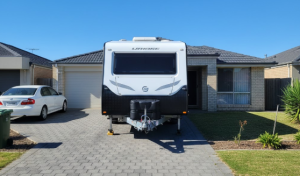
Can You Park a Caravan on Your Own Property? Australian Rules for Over 55s
Quick Scan: Parking a caravan on your own property in Australia is not automatic. Council by-laws, setback distances, size restrictions, and neighbour complaint rules all apply. Know your rights before you park, store, or unhitch your caravan at home.
The Rules Around Parking a Caravan on Your Own Property in Australia
If you have ever pulled into your driveway after a long trip and assumed your caravan is safe right there, you might be surprised. Australia has no single national rule covering caravans on private property. Instead, a patchwork of state legislation, local council by-laws, and neighbourhood rules determines exactly what you can and cannot do in your own driveway or yard.
For over-55 travellers and grey nomads, this matters more than ever. In the year ending December 2024, over 15 million Australians took caravan or camping trips, with the over-50 demographic making up a rapidly growing share of long-term travellers. Many return home between trips and simply want to park their rig safely without receiving a council notice in the mail.
In this guide, we cover every layer of the rules, from state legislation to council enforcement, driveway setbacks to long-term storage, neighbour complaints to insurance implications, so you can park confidently and legally every time you come home.
| Did You Know? |
| In some inner-city Sydney councils, leaving a caravan unhitched on your driveway for more than 28 days without a permit can result in fines of $300 or more — even on your own property. |
Key Takeaways
| Question | Short Answer |
| Can I park a caravan on my own property? | Usually yes, but council by-laws, setback rules, and size limits apply. Always check your local council first. |
| Do I need a permit to park a caravan in my driveway? | Not always. Short-term parking is usually fine. Long-term storage often requires a permit, especially in urban areas. |
| How long can a caravan stay in my driveway? | Typically 28 to 90 days depending on council. Some councils have no time limit; others require permits after 48 hours. |
| Can I park a caravan on the street in front of my property? | Street parking rules still apply. See our Residential Street Parking Rules guide for full details. |
| What are setback distance rules? | Most councils require caravans to be set back from the street boundary, often 1 to 5 metres. Side and rear boundaries also apply. |
| Can my council force me to move my caravan? | Yes. Councils can issue orders, fines, and in extreme cases arrange removal if you breach local by-laws. |
| Does where I park my caravan affect my insurance? | Yes. Some policies require the caravan to be stored in a secure, enclosed space. Always confirm with your insurer. |
| What can I do if a neighbour complains? | Check your council rules first. If you are compliant, a polite conversation and a record of compliance usually resolves the issue. |
| Are there different rules for urban vs regional properties? | Yes. City councils are significantly stricter than regional councils, which often have no specific by-laws for caravans at home. |
| Where can I find the best senior vanlife planning resources? | Start with our Vanlife Prep Checklist for Over-50 Travellers and our Van Life Costs Guide. |
Quick Scan: What You Need to Know Before Parking at Home
- Check your local council by-laws before parking your caravan at home long-term.
- Setback rules apply: most councils require caravans to sit back from street and side boundaries.
- Time limits vary from 28 days to no limit depending on your suburb or region.
- Unhitched caravans often attract stricter rules than hitched ones.
- Neighbour complaints can trigger council inspections even if you believe you are compliant.
- Insurance implications are real: check your policy covers the caravan at your home address.
The Basics: What the Law Actually Says About Caravans on Private Property
In Australia, private property does not automatically mean you can do whatever you like with large vehicles like caravans. Two layers of rules govern what is allowed: state or territory legislation, and local council by-laws. Understanding both layers is essential before you assume your driveway is fair game.
State and territory legislation sets the broad framework. For example, in New South Wales, the Local Government Act gives councils the power to regulate how land is used, including what can be stored or parked on residential properties. In Victoria, Planning Schemes enforced by local councils determine whether outbuildings, structures, or stored vehicles are considered compliant. Queensland has similar provisions under the Local Government Act 2009.
Local council by-laws then apply these frameworks at the street level. This means two properties that look identical on the same road can have completely different rules if they fall under different council boundaries. What is allowed in a regional shire may be prohibited just a few kilometres away in an urban council zone.
Why councils regulate caravans on private property
- Amenity: Large caravans can visually impact neighbourhood character and reduce property values.
- Safety: Poorly positioned caravans can block sight lines from driveways, especially for neighbours with small children.
- Infrastructure: Heavy vehicles can damage nature strips, kerbs, and verges if parked incorrectly.
Common rules that usually apply everywhere
- Caravans must not obstruct sight lines from the street or neighbouring driveways.
- Unhitched caravans must be secured with wheel chocks and brakes applied.
- Caravans parked long-term must remain registered and roadworthy in most states.
Practical examples
Example 1 (Urban): In Melbourne’s Boroondara Council area, residents are required to apply for a permit if a caravan or trailer is to be stored on the property for more than 28 consecutive days. Failure to obtain a permit can result in a warning notice and then fines starting from $200.
Example 2 (Regional): In Dubbo Regional Council in New South Wales, there is no specific by-law prohibiting caravans in driveways, but general nuisance provisions still apply. A caravan blocking a neighbouring driveway’s sight line could still attract a council notice.
Tips for checking your own council rules
- Search your council name plus ‘caravan parking by-law’ or ‘caravan storage on property’.
- Call your council’s planning department directly for a verbal confirmation you can document.
- Download your council’s Development Control Plan or Local Environment Plan if available.
Driveway Parking Rules for Caravans in Australia
Your driveway is often the most convenient spot to park a caravan between trips. However, councils have specific rules about what is allowed in the front driveway area, particularly in relation to the street boundary, neighbour sightlines, and the footpath or nature strip.
In most residential zones, caravans parked in a driveway must sit entirely within the property boundary. Overhanging onto the footpath or verge is generally prohibited. The caravan must not block pedestrian access on the footpath, and in narrower suburban streets, it must not reduce road visibility for other drivers turning into the street.
Common driveway rules by state
- New South Wales: Caravans must be parked on a sealed or stable surface. Parking on grass in the front yard is often prohibited in urban councils.
- Victoria: Many councils require that caravans parked in driveways for more than 28 days are screened from the street by fencing or vegetation.
- Queensland: Some coastal councils have specific restrictions preventing caravans from being visible from the street if parked for extended periods.
Practical examples
Example 1 (City): In Sydney’s Inner West Council, a caravan in the front driveway that overhangs the footpath boundary by even 30cm can attract a council notice. Rangers measure overhangs during routine patrols in complaint-heavy streets.
Example 2 (Regional): In a rural Victorian shire, a caravan parked in a gravel driveway with no setback from the road is generally tolerated as long as it does not obstruct traffic visibility. Local enforcement is minimal unless a neighbour complains.
Tips for driveway parking
- Measure your driveway before you return from a trip to confirm the caravan fits entirely within your boundary.
- Check if your council requires a hard surface under the caravan for long-term parking.
- If your driveway faces a corner block, extra clearance rules for intersection visibility may apply.
- Take photos of your caravan position when you park it as evidence of compliance.
Side Access and Backyard Parking for Caravans
For many over-55 homeowners, side access or rear yard parking is the best option for storing a caravan between trips. This keeps the caravan out of the street view, reduces neighbour friction, and often bypasses stricter front driveway rules. However, even side and rear parking has its own set of requirements.
When side access parking works best
- When the property has a gate at least 3 to 3.5 metres wide to allow the caravan to pass through without damage.
- When the rear yard surface is stable enough to support the weight of a loaded caravan without sinking.
- When there are no easements or drainage infrastructure running under the side access path.
Council rules for side and rear parking
- Many councils still require a minimum setback from side and rear boundaries, often 900mm to 1 metre.
- Drainage rules mean caravans cannot be parked over stormwater pipes or sewer easements.
- In some councils, a caravan stored in the rear yard for more than 90 days may be treated as a ‘structure’ requiring development approval.
Practical examples
Example 1: In Brisbane’s outer suburbs, a grey nomad parks their caravan via side access alongside their home. The caravan sits 1 metre from the side boundary fence. The council has no objection as the caravan is not visible from the street and complies with setback rules.
Example 2: In Adelaide’s inner suburbs, a homeowner attempts to store a caravan in the back yard but discovers their property has a stormwater easement running along the side boundary. The caravan cannot be placed over this easement, forcing them to use a storage facility instead.
Tips for side and rear parking
- Measure your gate width carefully. Many caravans are 2.4 to 2.6 metres wide. Add at least 300mm clearance on each side for safe access.
- Lay a compacted gravel or concrete pad under the caravan to prevent sinking and avoid drainage complaints.
- Ask your council about easements before committing to a parking position.
Legal Requirements and Permits for Caravans on Private Property
Understanding when a permit is required is one of the most important and most overlooked aspects of parking a caravan at home. Many over-55 travellers assume their own property means no red tape. In urban areas especially, that assumption can lead to unexpected fines.
When a permit is usually required
- Long-term storage: If the caravan will remain on the property for more than 28 to 90 days, many councils require a temporary storage permit or exemption application.
- Permit-only zones: In some residential precincts, a development or planning permit is required before any large vehicle can be stored on the property.
- Visible from street: Several councils require a permit specifically when a caravan is visible from the street, even for short periods.
How to apply for a permit
- Visit your council’s website and search for ‘caravan storage permit’ or ‘temporary structure permit’.
- Prepare a simple site plan showing the caravan’s position relative to boundaries, the street, and the house.
- Most permits are low-cost or free and are processed within 5 to 10 business days.
Practical examples
Example 1: In Perth’s City of Stirling, a resident applies for a 12-month caravan storage permit online. The process takes 7 days, costs $45, and allows them to keep their motorhome in the side access for the whole year without neighbour complaints or fines.
Example 2: In Queensland’s Gold Coast, a grey nomad parks their caravan in the front yard without checking permit requirements. After a neighbour complaint, the council issues a notice requiring a permit or the caravan to be moved within 14 days. The permit costs $60 and resolves the issue.
Tips for managing permits
- Apply before you park, not after a complaint is made. Councils look more favourably on proactive applications.
- Keep a digital and physical copy of any permit displayed clearly in the caravan window.
- Note your permit expiry date in your calendar and renew it at least 2 weeks before it lapses.
- If in doubt, call your council’s general enquiries line. A 10-minute phone call can prevent a $300 fine.
Quick Rules Summary: Caravans on Private Property
| Rule / Situation | Typical Limit or Requirement | Fine Range if Breached |
| Front driveway, short-term (under 28 days) | Usually allowed. Must stay within boundary. | Warning or $100–$200 |
| Front driveway, long-term (over 28 days) | Permit often required in urban areas. | $200–$500 per breach |
| Visible from street | Some councils prohibit or require screening. | $150–$400 |
| Side access / rear yard | Setback of 900mm to 1m from boundary. | $100–$300 |
| Unhitched caravan on property | Must be secured with chocks and brakes. | $100–$250 |
| Overhanging footpath or verge | Not permitted. Must remain within boundary. | $100–$300 |
| Parked over easement or drainage pipe | Prohibited. Structural damage liability applies. | Fines + removal costs |
| Visible outdoor camping setup | Not permitted in residential zones. | $150–$300 |
Tip: Always check your specific council website for exact fine amounts. These ranges are indicative and vary by state and council area.
Setback and Distance Measurements for Caravans at Home
Setback rules are some of the most commonly breached rules for caravans on private property, simply because many homeowners do not know they exist. A setback is the minimum distance required between a structure or parked vehicle and a boundary, the street, or another structure on the property.
For over-55 travellers parking a 7-metre caravan at home, getting the setbacks right is critical. A caravan that sits too close to the street boundary can trigger both planning and road safety complaints.
| Location / Boundary | Typical Minimum Distance | Why It Matters |
| Front boundary (street setback) | 1 to 5 metres depending on council | Prevents obstruction of street visibility and maintains neighbourhood character. |
| Side boundary setback | 900mm to 1 metre | Ensures access for emergency services and maintains fire separation. |
| Rear boundary setback | 600mm to 1 metre | Allows drainage and prevents encroachment on neighbouring properties. |
| From house structure | Usually no minimum, but fire safety applies | Check if caravan is near gas lines, hot water units, or electrical meters. |
| Footpath or verge | Must not overhang | Legal footpath access must be maintained at all times. |
Practical tips for getting setbacks right
- Use a tape measure when you park after each trip. Do not rely on eye measurement for a 7+ metre caravan.
- Mark your boundary points with a peg or chalk line so you can park consistently.
- If you are unsure of your exact boundary, check your property title or contact your council for a survey reference.
- For corner blocks, additional road visibility setbacks often apply. Check with your council’s roads department.
Urban vs Regional: How the Rules Differ
One of the most important things over-55 travellers learn quickly is that Australia’s caravan parking rules are not consistent. What is completely acceptable in a regional town can attract a council notice in a suburban street just an hour away.
Urban residential parking
In cities and major coastal towns, councils are typically strict about caravans on private property. High population density means neighbours notice more, complaints are more frequent, and councils have dedicated compliance officers. Common restrictions include time limits, permit requirements, visibility rules, and minimum setbacks enforced aggressively.
- Rangers often patrol complaint-heavy streets within 48 hours of a report.
- Permit applications may take 5 to 14 days, so plan ahead before you return from a trip.
- Use apps like WikiCamps or CamperMate to check if local caravan parks offer short-term storage while permits are processed.
Regional and rural properties
In rural shires and small regional towns, rules are often far more relaxed. Many councils have no specific by-law about caravans on private property beyond the general nuisance provisions. The biggest risk in regional areas is still obstructing a neighbour’s access or blocking a rural road or track.
- Even in relaxed regional areas, securing your caravan with chocks and brakes is legally required in most states.
- Tourism-friendly regional councils often actively support grey nomads and are unlikely to enforce minor caravan parking rules.
- Always check if your regional property has any special overlays, such as bushfire management overlays, that affect what you can store.
Long-Term Storage of a Caravan on Your Property
One of the most contentious areas of caravan parking rules is where ‘parking’ ends and ‘storage’ begins. This distinction matters because many councils apply stricter planning rules to storage than to parking. Once a caravan is treated as a stored vehicle or a temporary structure, development approval rules can come into play.
When parking becomes storage
- Most councils define storage as any period exceeding 28 to 90 consecutive days on the same property.
- An unhitched caravan is more likely to be treated as storage than one kept hitched to a tow vehicle.
- A caravan that has been delisted or unregistered is almost always classified as storage and may require a planning permit.
Council inspections and enforcement
- Councils can inspect properties in response to neighbour complaints without prior notice in most states.
- If a caravan is found to be in breach, councils typically issue a notice giving 14 to 28 days to comply before fines begin.
- Repeated or unresolved breaches can result in escalating fines and, in extreme cases, council-ordered removal at the owner’s cost.
How to stay compliant for long-term storage
- Keep your caravan registered and roadworthy even during storage. Unregistered vehicles attract more scrutiny.
- Apply for a long-term storage permit proactively rather than waiting for a complaint.
- If your property cannot comply with setback or visibility rules, consider a dedicated caravan storage facility nearby. See our Van Life Costs Guide for budget tips on storage options.
Neighbour Complaints and Council Enforcement
For many over-55 homeowners, the practical trigger for a council notice is not a ranger patrol but a neighbour complaint. Understanding what prompts complaints, how councils respond, and how to get ahead of the issue is the most practical skill you can develop as a caravan owner.
What commonly triggers a complaint
- A caravan that is large, visible from the street, or that appears to be lived in (curtains, awning, lighting).
- A caravan that partially blocks a neighbouring driveway’s sight line when reversing out.
- A caravan that has been in the same position for weeks or months without moving.
- Drips or leaks from the caravan that reach neighbouring properties or the footpath.
What councils can do
- Issue an advisory notice explaining the by-law breach and requesting compliance.
- Issue a formal infringement notice with a fine attached (typically $100 to $500 for a first offence).
- Escalate to a court-enforceable order if compliance is not achieved within the stated timeframe.
How to stay ahead of complaints
- Introduce yourself to immediate neighbours before you leave on a trip. A friendly relationship is your best protection.
- Let neighbours know when you plan to return and how long the caravan will be parked at home.
- Keep your caravan clean and maintained. A well-kept caravan rarely attracts complaints; a dirty or sagging one does.
- If a neighbour raises a concern, address it calmly and document your compliance with photos and council correspondence.
| Avoid Fines: Caravan Parking on Your Own Property |
| Check your council by-law before your caravan arrives home from a trip. |
| Apply for a permit proactively if your caravan will stay longer than 28 days. |
| Take photos of your parked caravan position as evidence of compliance with setback rules. |
| Keep your caravan registered, roadworthy, and maintained during storage. |
| Talk to neighbours before parking long-term. Goodwill prevents most complaints. |
| Fine ranges: $100 to $500 for a first breach, escalating for repeat non-compliance. |
Insurance Implications of Parking a Caravan at Home
Most caravan owners focus on travel insurance but overlook one important question: does your caravan insurance actually cover the van while it is parked at your home address? The answer varies significantly between insurers and policy types.
Common policy conditions to check
- Some policies require the caravan to be stored in a locked, enclosed structure such as a garage or carport to qualify for full cover against theft or malicious damage.
- Policies may require the caravan to be parked on a hard, sealed surface. Parking on grass or gravel can affect claims for storm or water damage.
- Leaving a caravan unhitched on a driveway for an extended period may affect the ‘in transit’ vs ‘in storage’ classification in your policy.
What to tell your insurer
- Notify your insurer of your home parking arrangement before you park the caravan at home for an extended period.
- If you move the caravan from street to driveway to side access, let your insurer know the primary storage location.
- Ask specifically about cover for theft, fire, storm damage, and accidental damage while the caravan is parked at home.
For a full breakdown of caravan and vanlife insurance costs, see our Vanlife Insurance Australia Hidden Costs and Budget guide.
Checking Local Rules and Official Resources
Because caravan parking rules vary so significantly across Australia, checking your specific state and council is not optional. It is the most important step before parking at home long-term.
State and territory transport and planning authorities
- NSW: NSW Planning Portal and your local council Development Control Plan.
- Victoria: Planning Schemes Online (DELWP) and your local council’s Municipal Planning Scheme.
- Queensland: Queensland Development Code and your local council website.
- South Australia, Western Australia, Tasmania, Northern Territory, ACT: Each has a state planning authority website with local council links.
Local council resources
- Search your council name plus ‘caravan’, ‘trailer’, or ‘vehicle storage’ in the by-laws section of their website.
- Call the council planning or compliance team directly for verbal advice.
- Ask your council whether visitor permits or temporary permits are available for caravans stored at home.
Apps and planning tools
- WikiCamps and CamperMate are useful for finding nearby caravan storage options or short-term parking if your home situation is complicated.
- Your council’s interactive mapping tool can show overlays, easements, and zones that affect your property.
FAQ: Parking a Caravan on Your Own Property in Australia
| Question | Answer |
| Can I park a caravan in my front yard? | Usually yes for short periods, but most urban councils restrict long-term front yard parking, especially if the caravan is visible from the street. Check your council’s by-laws before parking for more than a week. |
| Do I need council approval for a caravan in my backyard? | Not usually for short stays. For storage of 28 days or more, many councils require a permit or exemption. Check your local rules. |
| Can my neighbour force me to move my caravan? | Not directly. However, a neighbour can make a council complaint, and if the council finds a breach, they can issue a notice requiring you to move the caravan. |
| What is the maximum time I can park a caravan on my property without a permit? | It varies. Most urban councils allow 28 to 90 days. Some have no time limit. Regional councils are generally more flexible. |
| Does my home insurance cover a caravan parked in the driveway? | Possibly. Check your home and contents policy and your separate caravan insurance policy. They may overlap or leave gaps. |
| Can I live in my caravan parked in my own driveway? | In most residential zones, living in a caravan on your property is either prohibited or requires a temporary dwelling permit. Check your council. |
| What resources help me plan safe and legal vanlife in Australia? | Our Vanlife Prep Checklist for Over-50 Travellers, Residential Street Parking Rules guide, and Van Life Costs Guide are all designed for over-55 Australian travellers. |
Conclusion
Parking a caravan on your own property in Australia is possible in almost every situation, but only if you understand the mix of state planning law, local council by-laws, setback rules, and permit requirements that apply to your specific address. Treat every parking decision at home the way you would treat parking on a public street: with respect for the rules, your neighbours, and your own long-term peace of mind.
For over-55 travellers and grey nomads, the best approach is always to check before you park. A quick call to your council or a ten-minute search of their website can prevent a $300 fine, a neighbour dispute, and a stressful compliance process that takes weeks to resolve.
Keep your caravan registered, maintain it well between trips, apply for permits proactively, and document your compliance with photos. This simple routine protects you from complaints, keeps your insurance valid, and ensures you are ready to hit the road again without drama.
Quick Planning Checklist
- Check your local council by-law for caravan storage and parking rules before you park at home.
- Confirm permit requirements if your caravan will stay for more than 28 days.
- Measure your setbacks from street, side, and rear boundaries before parking.
- Check your caravan insurance policy covers the vehicle at your home address.
- Keep your caravan registered and roadworthy during all home storage periods.
- Introduce yourself to neighbours and keep them informed of your plans.
- Document your parking position with dated photos each time you return from a trip.
With preparation, knowledge, and courtesy, your own property can be the safest and most convenient place to store your caravan between Australian adventures. By following these guidelines, over-55 travellers can enjoy true freedom on the road, knowing their home base is always ready and compliant when they return.

As an affiliate, I earn from qualifying purchases at no extra cost to you.
As an affiliate, I earn from qualifying purchases at no extra cost to you.