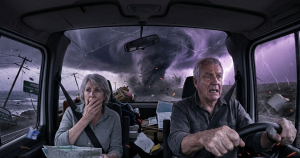
When It’s Safer Not to Stay in Your Van: The Grey Nomad Guide to Knowing When to Leave
For grey nomads travelling Australia solo or as a couple. Covers cyclones, heat emergencies, unsafe locations, medical situations, and breakdowns — and how to find accommodation fast when you need it.
- Why Knowing When It’s Safer Not to Stay in Your Van Could Save Your Life
- Scenario 1 — Heat Emergency: When Your Van Becomes a Health Hazard
- Scenario 2 — Cyclone or Extreme Weather: The Non-Negotiable Decision
- Scenario 3 — Medical Emergency at Camp: When the Van Is Too Far From Help
- Scenario 4 — Unsafe or Isolated Location at Night
- Scenario 5 — Mechanical Breakdown Far From Help
- The Myths Grey Nomads Tell Themselves About Staying Put
- How to Find and Book Accommodation Fast in an Emergency
- What to Take When You Leave the Van in a Hurry
- Solo Grey Nomad Safety: A Separate Set of Rules
- Warning Systems Every Grey Nomad Must Have Active
- Leaving Your Van Behind Safely: Securing It Before You Go
- Your Emergency Decision Checklist — Print and Keep in the Glovebox
1. Why Knowing When It’s Safer Not to Stay in Your Van Could Save Your Life
Knowing when it is safer not to stay in your van is one of the most important skills a grey nomad can develop — and almost nobody talks about it. Travel guides cover where to go. Camping apps help you find a spot. But the question of when your van is actively the wrong place to be? That one gets skipped.
Grey nomads invest enormous energy into their van or caravan. It is their home. It represents freedom, planning, and years of preparation. That emotional attachment is exactly what makes it hard to leave when leaving is the right call. The van feels safe because it is familiar. But familiarity is not the same as safety.
Australia’s conditions can change without much warning. Heatwaves and extreme heat cause more deaths in Australia than any other natural disaster. The 2024–25 cyclone season was above average, producing 12 tropical cyclones and 8 severe tropical cyclones — the highest number since the 2005–06 season. Breakdowns happen far from towns. Some campsites feel wrong the moment you pull in after dark.
This article walks through five specific scenarios where leaving the van is the smart, safe call. For each one, you will find clear decision triggers, what to do, and how to find a bed fast. The Expedia affiliate link in this article is there for exactly that reason — when you need a room tonight, not next week, you need to be able to book one in under three minutes.
2. Scenario 1 — Heat Emergency: When Your Van Becomes a Health Hazard
A van or caravan parked in direct sun in 40°C heat is not shelter. It is an oven. Vans and caravans have minimal insulation compared to a house. Interior temperatures can exceed the outside air temperature by 10–20°C within minutes of parking in direct sun. A van interior at 50–55°C is a life-threatening environment for an older person without functioning air conditioning.
Researchers found that the first few days of a heatwave had a raised mortality rate in older Australian people, with an average death increase of 28 percent. People aged 65 and over have a higher mortality rate during heatwaves, and people over the age of 75 are most vulnerable to extreme weather conditions.
The real danger is not simply overheating — it is the strain heat puts on the cardiovascular system. During hot weather, the heart works significantly harder. It diverts blood to the skin to shed excess heat, while still trying to satisfy the oxygen demands of other vital organs. For grey nomads with existing heart, lung, kidney, or diabetes conditions, this strain becomes dangerous faster than it would for a younger person.
The Triggers: Leave the Van When You Observe Any of These
| Trigger | What It Means | Action |
|---|---|---|
| Air conditioner cannot keep interior below 30°C | Van is losing the battle. The unit is overwhelmed or failing. | Leave immediately. Find an air-conditioned building — pub, library, servo, shopping centre. |
| Air conditioner fails or power goes out | Van interior will reach dangerous heat within 20–30 minutes in sun. | Exit van. Do not wait for a repair. Book accommodation now. |
| Outside temperature forecast above 40°C for 2+ days | Multi-day heatwave. Van cooling will be stretched continuously. | Plan ahead. Book accommodation before the heat arrives, not during it. |
| You or your partner feel dizzy, confused, nauseous, or stop sweating | These are heat exhaustion or heat stroke symptoms. Medical emergency. | Call 000 immediately. Move to coolest available space. Do not drive. |
| No shade available at your camp site | Direct sun on van dramatically increases interior temperature. | Move the van to shade or move to accommodation. Exposed camps in full sun are not safe in 40°C+ heat. |
Book air-conditioned accommodation before conditions deteriorate. Prices and availability change fast during heatwave warnings.
3. Scenario 2 — Cyclone or Extreme Weather: The Non-Negotiable Decision
A caravan or campervan is not a cyclone shelter. This is not an opinion — it is the official position of every state emergency service in Australia. No van, motorhome, or caravan — regardless of age, quality, or tie-down system — provides adequate protection in a tropical cyclone or severe storm with wind gusts above 90km/h.
The 2024–25 season was the most active for Western Australia in 41 years. Eleven of 12 tropical cyclones that formed during the season were in the Western Region. Severe Tropical Cyclone Zelia crossed the coast as a category 4 system just east of Port Hedland in February 2025. Grey nomads travelling the Pilbara, Kimberley, Top End, or Queensland coast between November and April are in active cyclone country.
Cyclone Watch vs Warning vs Emergency Warning — What Each Means for You
| Alert Level | What It Means | Action for Grey Nomads | Time Available |
|---|---|---|---|
| Cyclone Watch | Cyclone may affect the area within 48 hours | Book accommodation NOW. Pack a go-bag. Know your evacuation route. | Up to 48 hours — use it all |
| Cyclone Warning | Cyclone expected within 24 hours | Leave the van. Go to your booked accommodation or an official evacuation centre NOW. | Hours — do not delay |
| Emergency Warning | Cyclone is imminent or already crossing | Do NOT drive. Take shelter in the nearest solid building immediately. | Minutes — act now |
Severe Thunderstorm and Flash Flood: The Underestimated Threat
Cyclones get the headlines. But severe thunderstorms and flash floods are a more frequent threat to grey nomads and can develop within hours. A van parked in a dry creek bed, a floodplain, or a low-lying rest area can be under water within 30 minutes of a storm cell forming 50km inland.
The rule is simple: if you are in a low-lying area and a thunderstorm warning has been issued for your region, move to higher ground or leave for accommodation. Do not wait to see if the rain arrives. Flash floods give almost no warning.
Accommodation fills within hours of a Cyclone Watch. Booking at Watch stage gives you options. Booking at Warning stage often gives you nothing.
4. Scenario 3 — Medical Emergency at Camp: When the Van Is Too Far From Help
A medical event at a remote camp is not just a health problem. It is a logistics problem. If your nearest hospital is 300km away and your partner has chest pain, the question is not whether to go to hospital. The question is whether to drive through the night or call the RFDS – Royal Flying Doctor Service and wait for evacuation — and where to stay if the situation is serious but not immediately life-threatening.
The van is the wrong place to manage a prolonged health issue. A motel or hotel in the nearest town gives you: a proper bed at the right height, a bathroom within a few steps, air conditioning, the ability to order food, proximity to a medical centre, and the ability to call for help quickly if the situation deteriorates.
When to Leave Camp for Accommodation Due to Health
| Health Situation | Why the Van Is Inadequate | What to Do |
|---|---|---|
| Chest pain, breathlessness, or left arm pain | Potential cardiac event. Van is not a medical facility. | Call 000. Activate PLB if no signal. Do not drive. RFDS will come to you. |
| Stroke symptoms (face drooping, arm weakness, slurred speech) | Time-critical. Every minute matters. | Call 000 immediately. Do not wait to see if symptoms improve. |
| Severe fall with possible fracture | Van floor is cramped. Moving an injured person is dangerous. | Call 000. Do not attempt to move the person into the van. Wait for paramedics. |
| Illness requiring monitoring (infection, high fever, vomiting) | Dehydration risk is higher in a hot van. Toilet access is difficult when unwell. | Drive or be driven to the nearest town. Book a motel near the medical centre. |
| Medication emergency (running out, lost, needs refrigeration) | Remote camp has no pharmacy access. Some medications cannot be interrupted. | Drive to nearest pharmacy town. Call HealthDirect on 1800 022 222 for advice en route. |
5. Scenario 4 — Unsafe or Isolated Location at Night
Most grey nomads have had the feeling. You pulled into a site as dusk was falling. Something did not feel right. The other vehicles parked nearby looked rough. Someone walked past twice and looked in your window. There was no mobile signal. You told yourself it would be fine and went to sleep anyway.
Your instincts are a safety system. They are not perfect, but they are not random either. An uncomfortable feeling about a campsite at night is worth acting on — even if you cannot articulate exactly why. The cost of leaving and paying for a motel is trivial. The cost of staying when you should have left is potentially much higher.
Situations That Warrant Leaving — Even After You Have Set Up
- You have no mobile signal and no PLB. If you cannot call for help and you cannot activate a beacon, you are entirely dependent on chance if something goes wrong overnight. This is not acceptable risk management.
- People approach your van after dark uninvited. A knock on your van door at 10pm from a stranger is not normal. You are not obliged to open the door or explain yourself. You are entitled to start your engine and leave.
- The site is isolated and you are alone. Solo travellers — especially solo women — should apply a stricter standard to site selection at night. An isolated site with no other travellers visible and no signal is a high-risk environment.
- Intoxicated or aggressive individuals are present. Caravan parks and free camps occasionally attract people who are not there for camping. Your safety is not worth the sunk cost of having already set up camp.
- The site is on a flood plain and rain is forecast. Dry creek beds and low-lying camps that were safe at arrival can become flooded overnight. If weather is closing in and the site is low, move before you sleep.
Last-minute accommodation is available at most Australian towns. Search while you still have signal — before you leave camp.
6. Scenario 5 — Mechanical Breakdown Far From Help
A breakdown in a remote location is one of the most stressful experiences a grey nomad can face. It is also one of the most predictable. Vehicles driven long distances in Australian heat, on corrugated roads, covering thousands of kilometres per season, will develop mechanical problems. Planning for it before it happens is the difference between a manageable inconvenience and a genuine crisis.
The key question after a breakdown is: how long will the repair take? If the answer is more than a few hours, staying in the van beside the road — especially in heat — is not the safe option. It is the familiar option.
The Breakdown Decision Framework
| Situation | Stay or Go? | Action |
|---|---|---|
| Roadside breakdown. Repair under 2 hours. Temperature under 30°C. | Stay with vehicle | Stay in shade. Keep hydrated. Use hazard lights. Call roadside assist. |
| Repair will take overnight or longer. Mechanic in next town. | Go to accommodation | Arrange tow to town. Book motel near the mechanic. Leave van with mechanic. |
| Remote breakdown. No signal. Temperature above 35°C. | Do NOT leave on foot | Stay with vehicle. Activate PLB. Use shade side of van. Signal passing traffic. Do not walk for help. |
| Breakdown in a town or near a roadhouse. Part needs to be ordered. | Book accommodation | Parts can take 1–5 days in remote towns. Book locally. Use the time to rest. |
| Tyre blowout with no spare or spare already used. | Call for help immediately | Call roadside assist. Do not drive on a flat or damaged tyre. Arrange tow. |
7. The Myths Grey Nomads Tell Themselves About Staying Put
These are the rationalisations that keep grey nomads in unsafe situations longer than they should be. Recognising them is the first step to overriding them.
Myth 1: “It will probably pass.”
Weather, heat, and difficult people do not always pass. And if the situation does not pass, you have lost the safest window to act. Act on the early signs, not after the situation has developed.
Myth 2: “We can handle it. We’ve dealt with worse.”
Experience gives confidence. But the body at 70 is not the body at 55. Heat tolerance, physical resilience, and recovery speed all decline with age. What you handled at 60 may be genuinely dangerous at 72.
Myth 3: “A motel will cost too much.”
A night in a regional Australian motel costs $80–$160. An RFDS evacuation, a hospital stay, or a vehicle recovery from a flooded creek costs thousands. The motel is not an indulgence. It is insurance.
Myth 4: “We haven’t done anything wrong — we shouldn’t have to leave.”
Correct. And irrelevant. You do not owe anyone your safety. You are allowed to leave any campsite at any time for any reason. Being right about where you are entitled to be is cold comfort if the situation deteriorates.
Myth 5: “If it was really dangerous, someone would warn us.”
At remote camps with no signal, no one will warn you. The Bureau of Meteorology warning that was issued two hours ago is sitting unread on your phone because you have been out of range since lunch. Warning systems only work if you receive them. More on this in Section 11.
8. How to Find and Book Accommodation Fast in an Emergency
When you need a room in a hurry, searching 15 different websites is not practical. One source with broad coverage and real-time availability is what you need. The Expedia affiliate link on this site gives you access to a wide range of accommodation across Australia — from budget motels in small towns to hotels in regional centres — searchable by location and available tonight.
The 5-Step Emergency Accommodation Process
| Step | Action | Notes |
|---|---|---|
| 1 | Decide the nearest town you can reach safely | Do not aim for a specific town if driving conditions are deteriorating. Aim for the nearest town. |
| 2 | Search accommodation while you still have signal | Do this before you drive, not during. Passenger searches, driver drives. |
| 3 | Filter for “tonight” availability and confirm it accepts same-day bookings | Most regional motels accept same-day. Call ahead if you are arriving after 9pm. |
| 4 | Book and confirm — get the booking reference number | Screenshot the confirmation. You may lose signal before you arrive. |
| 5 | Text your location change to your emergency contact | Tell them where you were, where you are going, and why you moved. One text takes 30 seconds. |
Search by town name for same-day availability. Regional motels, hotels, and serviced apartments. No spreadsheets. No phone calls. Book in under 3 minutes.
9. What to Take When You Leave the Van in a Hurry
If you leave in a rush, you will forget something. Everyone does. The goal is to make sure what you forget is replaceable — not your medications, not your documents, not your money. Keep the following items in one bag or container that you can grab in under 60 seconds.
| Item | Why It Cannot Be Left Behind | Where to Keep It |
|---|---|---|
| All prescription medications (minimum 5-day supply) | Cannot be replaced quickly in remote areas | Dedicated toiletry bag — always in same location |
| Medicare card and health insurance card | Required for hospital admission and bulk billing | Wallet — on your person at all times |
| Phone and charger | Communication and navigation | Charger always plugged in near the door |
| PLB (Personal Locator Beacon) | Emergency rescue signal if all other systems fail | Clip to your bag — never in the van’s storage |
| Cash (minimum $200) | Remote town ATMs frequently out of service | Travel wallet — in the go-bag |
| Vehicle keys and roadside assist card | Obvious but forgotten more often than you would think | Hook by the door |
| Water (2 litres minimum) | Driving in heat without water is dangerous | Permanent spot in the vehicle cab — not the van |
| A change of clothes and basic toiletries | You may be in accommodation for several days | Small overnight bag — prepacked and by the door |
10. Solo Grey Nomad Safety: A Separate Set of Rules
Solo grey nomads — and in particular solo women — face a different risk calculus than couples. When something goes wrong for a couple, one person can act while the other manages. When you are alone, you manage everything. This requires a higher standard of preparation and a lower threshold for leaving a situation you are not comfortable with.
The following rules apply specifically to solo travellers and are worth treating as non-negotiable rather than suggestions.
- Always text your location and departure plan to a contact before 7pm each day. This is your check-in system. If your contact does not hear from you by an agreed time, they can start enquiries.
- Never camp somewhere you could not leave in the dark. If your exit requires manoeuvring a rig in the dark, you are not safely positioned.
- Apply a stricter threshold to site selection. A site that a couple might find acceptable — slightly isolated, weak signal, unfamiliar people nearby — may not be appropriate for a solo traveller.
- Keep your PLB on your person, not in the van. If you fall outside, become unwell at a distance from the van, or are locked out, the PLB on a lanyard around your neck or clipped to your belt is accessible. The PLB in a van drawer is not.
- Have your emergency contact call you — not the other way around — if you miss a check-in. Agree this protocol before you leave. If they cannot reach you, they call 000 and report your last known location. This is the correct sequence.
11. Warning Systems Every Grey Nomad Must Have Active
Warning systems only work if they reach you. Most grey nomads assume they will hear about an emergency — a cyclone, a flood, an extreme heat warning — when it is issued. In remote Australia, this assumption is wrong. These are the systems you need active, not just installed.
| System | What It Does | How to Set It Up | Works Without Signal? |
|---|---|---|---|
| AusAlert | Australia’s national emergency warning system. Sends alerts to your phone based on your location. | Enable on your phone at nema.gov.au/ausAlert. No app needed — uses phone broadcast system. | Works on Telstra where signal present. No signal = no alert. |
| Bureau of Meteorology App | Weather warnings, cyclone tracking, heatwave alerts, flood watches. | Download the BOM Weather app. Enable notifications. Add your current location daily. | No. Requires data connection to update. |
| PLB (Personal Locator Beacon) | Sends your GPS location to search and rescue via satellite. Works anywhere in Australia. | Register free at beaconregistration.amsa.gov.au. Keep on your person, not in the van. | Yes. Satellite-based. Works anywhere. |
| Main Roads WA / State Road Apps | Road closures, flood warnings, road conditions ahead. | Check mainroads.wa.gov.au/travelmaps before each day’s drive. | No. Check while in signal range. |
| Satellite Communicator (e.g., Garmin inReach) | Two-way messaging and tracking via satellite. More capable than a PLB. | Subscription required (~$50/month). Worth it for extended remote travel. | Yes. Satellite-based. |
12. Leaving Your Van Behind Safely: Securing It Before You Go
When you leave the van in a non-emergency situation — such as during a cyclone watch, extended breakdown, or a multi-day medical stay — you need to leave it secured. A van left at a free camp or roadside for several days is a potential target. These steps take under 15 minutes and significantly reduce the risk of theft or vandalism.
- Lock all doors and windows. Check every hatch and ventilation panel. A hatch left on latch for ventilation is an open invitation.
- Remove or conceal valuables. Laptops, cameras, spare cash, and medication should come with you. Leave nothing visible that suggests the van is worth breaking into.
- Leave a note inside the windscreen. Write: “Owner away temporarily. Return expected [date]. Contact: [phone number].” This discourages assumptions that the van is abandoned and reduces the risk of a well-meaning person reporting it to police.
- Photograph the van’s surroundings. Take a photo showing the van’s position relative to landmarks before you leave. If you return and something has changed, you have a record of the original position.
- Notify the local council or caravan park management. If you are leaving a van at a council free camp for more than 48 hours, advise the shire office. This protects you from having the van towed for exceeding the time limit.
- In a cyclone — secure or remove external items. Awnings, chairs, tables, decorations, and anything not secured can become projectiles in high winds. Retract the awning. Pack or secure everything loose.
13. Your Emergency Decision Checklist — Print and Keep in the Glovebox
Print this checklist. Laminate it if you can. Keep it in the glovebox or clipped to the sun visor. When you are stressed, tired, or in a deteriorating situation, a printed checklist removes the need to think and remember simultaneously.
Ctrl+P (Windows) or Cmd+P (Mac) to print. Or screenshot this section and save to your phone Photos for offline access.
| Should I Leave My Van? — Emergency Decision Checklist | |
|---|---|
| 🌡️ HEAT — Leave immediately if: | Air con fails OR interior above 30°C OR forecast 40°C+ for 2+ days OR dizziness / confusion / stopped sweating |
| 🌀 CYCLONE — Leave immediately if: | Cyclone Watch issued → Book accommodation NOW. Cyclone Warning issued → Leave NOW. Emergency Warning → Take shelter in nearest solid building. Do NOT drive. |
| 🏥 MEDICAL — Leave immediately if: | Chest pain / breathlessness / stroke symptoms → Call 000. Serious illness / fall → Drive to town + book motel near medical centre. Medication emergency → Drive to nearest pharmacy town. |
| 😟 UNSAFE LOCATION — Leave if: | No signal AND no PLB OR uninvited approach after dark OR gut feeling is strong OR flood risk present |
| 🔧 BREAKDOWN — Leave the roadside if: | Repair over 2 hours OR overnight wait required → Arrange tow + book motel in next town. Remote breakdown with no signal → Stay with vehicle + activate PLB. |
| 📋 BEFORE YOU LEAVE — always: | Grab medications + Medicare card + phone + PLB + cash + water. Lock van. Leave windscreen note. Text location change to emergency contact. |
| 🏨 BOOK ACCOMMODATION: | Search available accommodation now → |
| 🆘 KEY EMERGENCY NUMBERS: | Emergency: 000 | RFDS: 1800 625 800 | HealthDirect: 1800 022 222 | Roadside Assist: Your membership number here |
Disclaimer: This article provides general safety guidance for grey nomads and senior travellers. It does not constitute medical, legal, or emergency management advice. In any life-threatening situation, call 000 immediately. Bureau of Meteorology warnings, cyclone classifications, and emergency protocols are subject to change — always follow the most current official advice from your state emergency service. Heat stroke symptoms described in this article are sourced from publicly available health guidance and should not replace advice from a qualified medical professional.

As an affiliate, I earn from qualifying purchases at no extra cost to you.
Search Available Accommodation Tonight
As an affiliate, I earn from qualifying purchases at no extra cost to you.
As an affiliate, I earn from qualifying purchases at no extra cost to you.