Quick Scan: Choosing the right van for vanlife in Australia after 55 is one of the most important decisions you will make. The wrong van costs you money, comfort, and independence. The right van gives you freedom for years. This guide covers every factor that matters for over-55 travellers, including mobility needs, chronic health conditions, disability modifications, and what to look for before you buy.
How to Choose the Right Van for Vanlife in Australia: What Every Over-55 Traveller Needs to Know
If you have ever stood in a dealership looking at three different vans and had no idea which one was right for you, you are not alone. Choosing a van for vanlife after 55 is completely different from choosing one at 30. Your priorities have shifted. Comfort matters more than cool. Accessibility matters more than aesthetics. Reliability matters more than speed.
In the year ending December 2024, over 15 million Australians took caravan or camping trips, with the over-55 demographic making up the fastest-growing share of long-term vanlifers. Many of those travellers are managing arthritis, heart conditions, diabetes, mobility challenges, or disabilities that directly affect which van works for them and which van will leave them stranded, frustrated, or in pain.
This guide covers everything you need to know to choose the right van for your specific needs, body, budget, and travel style. We include dedicated sections for travellers with mobility challenges and disabilities, because for many over-55 Australians, the right van is not just a lifestyle choice but a tool for maintaining independence and quality of life on the road.
Did You Know? The Australian Government’s NDIS (National Disability Insurance Scheme) may fund vehicle modifications for eligible participants, including hand controls, wheelchair hoists, and raised roof conversions. If you have an NDIS plan, speak to your planner before purchasing a van.
Key Takeaways
| Question | Short Answer |
|---|---|
| What is the best van for vanlife over 55 in Australia? | There is no single best van. The right choice depends on your health, mobility, budget, travel style, and whether you need modifications. |
| How much should I budget for a vanlife van? | Entry-level converted vans start from around $30,000. Purpose-built accessible vans with modifications can range from $60,000 to $150,000 or more. |
| What van is best for someone with limited mobility? | High-roof vans like the Mercedes Sprinter or Toyota HiAce allow you to stand upright. Wheelchair-accessible conversions are available for both. |
| Can I get NDIS funding for a van or van modifications? | Possibly. NDIS may fund vehicle modifications for eligible participants. Speak to your planner and an approved vehicle modifier before buying. |
| What engine and drivetrain should I choose for Australian conditions? | Diesel engines are preferred for long-distance travel. Four-wheel drive is recommended if you plan to leave sealed roads. |
| How important is the van’s height for over-55 travellers? | Very important. A high-roof van allows you to stand, move, and change without bending or crouching, which reduces joint strain significantly. |
| What should I look for in terms of safety features? | Autonomous emergency braking, reversing cameras, lane keep assist, and blind spot monitoring are all important for older drivers. |
| Are automatic transmissions better for over-55 vanlifers? | Yes. Automatic transmissions reduce fatigue on long drives and are essential for travellers with joint or mobility issues. |
| What is the best van for a solo over-55 traveller? | A mid-size high-roof van with automatic transmission, reversing camera, and a pre-built conversion is generally the safest and most practical choice. |
| Where can I find budget planning help for buying and running a van? | See our Van Life Costs Guide and Vanlife Insurance Australia guide for full cost breakdowns. |
Quick Scan: What to Look for in a Van for Over-55 Vanlife
- Choose a high-roof van so you can stand upright without crouching or straining your back.
- Automatic transmission is strongly recommended for long-distance driving comfort.
- Diesel engines offer better range and fuel efficiency for extended Australian travel.
- Modern safety features including reversing cameras and emergency braking are essential.
- If you have mobility challenges, consider purpose-built wheelchair-accessible or modified vans.
- Budget for the van, the conversion, insurance, registration, and ongoing maintenance as separate costs.
Understanding What You Need Before You Buy
The single biggest mistake over-55 Australians make when buying a vanlife van is falling in love with the look before they have thought about the function. A beautiful van that hurts your back every time you get in, or one you cannot safely reverse in a tight caravan park, is a mistake that costs thousands to fix.
Before you visit a single dealership, spend time honestly answering these questions. What is your primary health consideration? Do you have joint pain, mobility limitations, heart or lung conditions, vision changes, or diabetes? Each of these directly affects which van features matter most. Are you travelling solo or with a partner? How many months of the year do you plan to travel? Do you want to stay mainly on sealed roads or explore remote areas?
Your health and your van choice are directly connected
For over-55 travellers, the body you have now is the body you are choosing a van for. Not the body you had at 40. Arthritis in the hands means door handles, tap fittings, and storage latches need to be easy to grip. A bad knee means step height into the van matters enormously. A heart condition means you need a van that does not require physical effort just to manage day to day. Chronic fatigue means simplicity in the layout is not a luxury but a necessity.
Practical examples
Example 1: A 67-year-old woman with rheumatoid arthritis test drives three vans before realising the one she loved online has a high step-in height that aggravates her knees every time she boards. She switches to a van with a lower floor and a fold-out step, which she uses comfortably for three years.
Example 2: A retired couple where one partner uses a walking frame chooses a high-roof Mercedes Sprinter conversion with a lowered floor and grab handles at the entrance. The modification costs an additional $8,000 but allows both partners to travel independently and safely.
Tips before you buy
- Write down your three most important physical requirements before visiting any dealership.
- Test the step height, door handles, internal head clearance, and bed access in every van you consider.
- Take someone with you who will ask the practical questions you might forget in the excitement of looking.
- Always test drive with the van fully loaded, not empty. A loaded van handles very differently.
The Main Van Types: Which Is Right for You
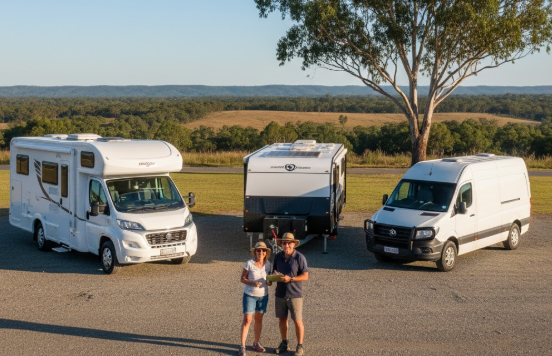
Australia’s vanlife market offers four main types of vehicles that over-55 travellers consider. Understanding the practical differences is the starting point for every buying decision.
High-roof panel vans (most popular for over-55 vanlife)
Vans like the Mercedes Sprinter, Toyota HiAce, Ford Transit, and Volkswagen Crafter offer the most practical living space for older travellers. The high roof means you can stand upright throughout the van, which is a significant quality-of-life factor for anyone with back, hip, or knee conditions. These vans can be purchased pre-converted or as a bare shell for a custom build.
Pros: Standing headroom, large living space, widely available parts and servicing, strong resale value, wide choice of conversions.
Cons: Higher purchase price, more expensive to run than smaller vans, can be challenging to park in tight urban areas.
Mid-size vans (good for solo travellers or couples on a tighter budget)
Vans like the Toyota HiAce standard roof, Volkswagen Transporter, and Renault Trafic offer a compromise between space and manageability. They are easier to park and cheaper to run, but the lower roof means most people cannot stand upright, which can be a significant issue for extended daily living.
Pros: Easier to drive and park, lower purchase price, better fuel economy in urban areas.
Cons: Low roof limits standing, less living space, less suitable for travellers with back or joint issues.
Motorhomes and campervans (purpose-built comfort)
Purpose-built motorhomes offer the most comfort and are popular with over-55 travellers who want a true home on the road. They come with fixed beds, proper kitchens, bathrooms, and often solar and water systems pre-installed. The trade-off is cost and the complexity of driving a large vehicle.
Pros: Maximum comfort and amenity, purpose-built for living, wide range of accessible and modified options available.
Cons: High purchase price, expensive to insure and maintain, harder to drive and park, less flexible for urban stops.
4WD-based campervans (for travellers wanting to leave the highway)
Vehicles like the Toyota LandCruiser, Mitsubishi Pajero, and Toyota HiLux with camper conversions are popular with grey nomads who want to access remote areas. These offer genuine off-road capability but at the cost of interior living space and comfort.
Pros: Off-road capability, access to free camping areas not accessible in larger vans, strong resale value.
Cons: Much smaller living space, rough ride on corrugated roads (hard on joints), higher fuel consumption.
Van Comparison Table
| Van Type | Best For | Headroom | Approx. Entry Price | Accessibility Rating |
|---|---|---|---|---|
| High-roof panel van (Sprinter, Transit, HiAce) | Couples, extended travel, mobility needs | Full standing | $45,000–$120,000 converted | Excellent |
| Mid-size van (Transporter, Trafic) | Solo travellers, budget-conscious | Seated only | $30,000–$70,000 converted | Moderate |
| Motorhome / campervan | Maximum comfort, long-term living | Full standing | $80,000–$300,000+ | Excellent to Outstanding |
| 4WD camper (LandCruiser, HiLux) | Remote travel, off-road access | Seated only | $50,000–$150,000 | Poor to Moderate |
Choosing the Right Van for Mobility Challenges and Disabilities
This section is for over-55 travellers who use a wheelchair, walking frame, or mobility aid, or who have a disability or chronic condition that affects how they move, drive, or live in a van. This is one of the most important and most underserved areas of vanlife planning in Australia, and it deserves its own detailed attention.
Standing and moving inside the van
For any traveller with hip replacements, knee replacements, arthritis, spinal conditions, or balance issues, the ability to stand upright inside the van is not optional. It is the difference between a van that protects your body and one that gradually damages it. A high-roof van is non-negotiable for anyone in this category. The Mercedes Sprinter with a factory high roof offers approximately 1.9 metres of internal headroom. The Toyota HiAce high-roof offers approximately 1.85 metres. Both allow most adults to stand fully upright.
Wheelchair-accessible van conversions
Full wheelchair-accessible conversions are available for the Mercedes Sprinter, Toyota HiAce, and Ford Transit. These conversions typically include a lowered floor, a rear or side ramp or electric hoist, restraint systems for the wheelchair inside the vehicle, and modified cabinetry to allow wheelchair access throughout the van. The cost of a full wheelchair-accessible conversion on top of a base van typically ranges from $30,000 to $80,000 depending on the level of modification required.
Hand controls and driving modifications
For travellers who cannot operate standard foot pedals due to lower limb conditions, hand controls are available for most van models. These allow full acceleration and braking to be managed by hand. Spinner knobs for the steering wheel assist drivers with limited grip or shoulder mobility. These modifications must be installed by an approved vehicle modifier and noted on your driver’s licence in Australia.
NDIS funding for van modifications
The National Disability Insurance Scheme may fund vehicle modifications for eligible participants under the Improved Daily Living or Improved Living Arrangements support categories. Modifications that may be funded include hand controls, wheelchair hoists and ramps, swivel seats, and other accessibility aids. To access this funding, speak to your NDIS planner, obtain quotes from an approved vehicle modifier, and ensure the modification is included in your NDIS plan before purchase. NDIS does not typically fund the purchase of the van itself, only the modifications.
Chronic health conditions and van design
Beyond mobility aids and wheelchairs, many over-55 travellers are managing chronic conditions that affect their daily life in the van. Here is what to consider for the most common conditions.
Arthritis: Look for lever-style door handles rather than round knobs, push-button taps, wide door openings for easy entry, and storage at hip height rather than at floor or ceiling level.
Heart and lung conditions: Prioritise vans with efficient heating and cooling systems. Avoid vans that require physical exertion to set up awnings, connect power, or manage water tanks. A van with simple, low-effort systems is safer and less fatiguing.
Diabetes: Ensure the van has reliable refrigeration for insulin and medications. Check that your chosen conversion includes a quality 12V or 240V fridge that maintains a consistent temperature even in extreme Australian summer heat.
Vision changes: Choose a van with large, clear mirrors, a high-quality reversing camera, and parking sensors front and rear. Avoid vans with dark or complex interiors that make it difficult to find items quickly.
Practical examples
Example 1: A 71-year-old man with a below-knee amputation and a prosthetic leg works with an approved NDIS vehicle modifier to install hand controls and a swivel seat in a Mercedes Sprinter. His NDIS plan covers $22,000 of the modification costs. He travels independently for four months each year, covering the east coast of Australia.
Example 2: A couple where one partner uses a motorised wheelchair purchases a Toyota HiAce with a rear electric hoist conversion. The modification allows the wheelchair to be loaded and secured safely without physical lifting. They spend six months each year travelling Queensland and New South Wales, staying mainly in caravan parks with accessible amenities.
Tips for travellers with mobility challenges or disabilities
- Contact the Australian Disability Parking Scheme before your trip to ensure you have the correct permits for accessible parking at caravan parks and rest areas.
- Always call ahead to caravan parks to confirm accessible amenities including bathrooms, showers, and site access.
- Join online communities such as Disabled Travellers Australia or Accessible Grey Nomads Facebook groups for real-world advice from other travellers with similar needs.
- Work with an Occupational Therapist who specialises in vehicle modifications. They can assess your needs and recommend the right modifications before you spend any money.
Engine, Transmission, and Drivetrain: What Over-55s Should Know
For many over-55 buyers, engine and mechanical specifications feel overwhelming. Here is a simple breakdown of what actually matters for long-distance vanlife in Australia.
Diesel vs petrol
Diesel is the clear choice for long-distance Australian vanlife. Diesel engines produce more torque at lower revs, which matters when you are driving a loaded van on long flat highways or climbing mountain passes. Diesel fuel is also more energy-dense than petrol, meaning you travel further per tank, which matters significantly in remote Australia where fuel stations can be hundreds of kilometres apart. Most high-roof panel vans sold in Australia for vanlife purposes come in diesel only.
Automatic vs manual transmission
Automatic transmission is strongly recommended for over-55 vanlifers. Constant gear changing on long drives increases fatigue and physical strain, particularly for travellers with shoulder, elbow, or wrist conditions. Automatic transmissions also make reversing into tight caravan park sites significantly easier, which is one of the most stressful driving tasks for older travellers. For anyone with joint conditions, hand mobility issues, or fatigue-related health conditions, automatic transmission is not a preference but a necessity.
Two-wheel drive vs four-wheel drive
If you plan to stay on sealed roads and well-maintained gravel tracks, two-wheel drive is perfectly adequate. Two-wheel drive vans are lighter, cheaper to run, cheaper to maintain, and easier to drive. If you want to access remote free camping areas, national park tracks, or coastal beaches, four-wheel drive capability becomes important. Be honest about where you actually plan to travel before paying the premium for four-wheel drive.
Safety Features: What Every Over-55 Buyer Should Insist On
Modern vans come with a wide range of safety features that are particularly important for older drivers. Do not compromise on these.
| Safety Feature | Why It Matters for Over-55 Drivers |
|---|---|
| Autonomous Emergency Braking (AEB) | Reaction times slow with age. AEB provides a critical safety backup. |
| Reversing camera | Essential for safely manoeuvring a large van in tight caravan parks. |
| Blind spot monitoring | Large vans have significant blind spots. This feature reduces accident risk significantly. |
| Lane keep assist | Reduces the risk of drifting during long highway drives when fatigue sets in. |
| Adaptive cruise control | Reduces driver workload on long flat Australian highways. |
| Parking sensors front and rear | Essential for parking in tight urban spaces without a spotter. |
| Tyre pressure monitoring | Important for remote travel where a blowout is a serious safety issue. |
Budget: What Does a Vanlife Van Actually Cost for Over-55 Australians
Understanding the real total cost of a vanlife van requires looking beyond the purchase price. The conversion, insurance, registration, and ongoing maintenance all add significantly to the total outlay.
Purchase price ranges
A bare second-hand high-roof panel van in good condition typically starts from around $30,000 to $50,000 for models with 150,000 to 250,000 kilometres. A new high-roof panel van starts from approximately $60,000 to $85,000 depending on the model. A purpose-built motorhome starts from around $80,000 for a basic model and can exceed $300,000 for a premium fully-equipped unit.
Conversion costs
A basic DIY conversion of a bare van with a bed, storage, and basic electrics costs approximately $5,000 to $15,000 in materials. A professionally built conversion with a fixed bed, full kitchen, solar, water system, and quality fittings costs approximately $30,000 to $60,000 on top of the base van price. An accessible or modified conversion for a traveller with mobility needs or a disability adds approximately $15,000 to $80,000 depending on the complexity of modifications required.
For a full breakdown of vanlife running costs including fuel, insurance, caravan park fees, and maintenance, see our Van Life Costs Guide. For insurance-specific guidance, see our Vanlife Insurance Australia Hidden Costs and Budget guide.
Checking Your Van Before You Buy: A Pre-Purchase Inspection Checklist
Never buy a used van for vanlife without a pre-purchase mechanical inspection by an independent mechanic. Here is what to check yourself before you pay for the inspection.
- Check the roof for rust, leaks, or poorly repaired damage, particularly around skylights and roof vents.
- Check the floor for soft spots, rust, or water damage, particularly in the rear corners and around the wheel arches.
- Check all doors open, close, and seal properly. Misaligned doors indicate prior accident damage.
- Start the engine cold and listen for unusual noises during the first few minutes of running.
- Check all electrical systems including lights, charging points, and any fitted solar or battery systems.
- Test the air conditioning and heating systems fully, not just briefly.
- Check service history records. A van with no service records is a significant risk for a long-distance traveller.
- For modified or converted vans, ask to see compliance certificates for any modifications, particularly for gas systems, electrical systems, and structural changes.
Avoid Costly Mistakes: Quick Tips for Over-55 Van Buyers
- Never buy a van you have not personally tested at highway speed with a full load.
- Do not assume a pre-built conversion suits your specific body and health needs. Always check bed height, step height, and interior movement before buying.
- Get a pre-purchase inspection from an independent mechanic, not one recommended by the seller.
- Check that your chosen van model has good parts availability and servicing network across regional Australia.
- Confirm your van insurance covers the vehicle for vanlife use, not just standard personal use. Standard policies often exclude long-term travel use.
- For disability or mobility modifications, always use an approved vehicle modifier to ensure compliance with Australian standards.
Checking Resources and Getting Expert Help
Organisations and resources for over-55 van buyers
- Caravan Industry Association of Australia (CIAA): Industry body with accredited dealer and modifier listings.
- NDIS: For eligible participants seeking funding for vehicle modifications.
- Occupational Therapists Australia: For assessments and recommendations on vehicle modifications for health conditions.
- Your state’s transport authority: For information on modified vehicle compliance and driver licence conditions for hand controls or other modifications.
Apps and online communities
- WikiCamps and CamperMate for researching accessible caravan parks and planning routes.
- Accessible Grey Nomads and similar Facebook communities for real-world advice from over-55 travellers with mobility needs.
- Our Vanlife Prep Checklist for Over-50 Travellers covers health planning, medication management, and pre-trip preparation in detail.
FAQ: Choosing the Right Van for Vanlife Over 55 in Australia
| Question | Answer |
|---|---|
| What is the most popular van for grey nomads in Australia? | The Mercedes Sprinter and Toyota HiAce high-roof are the most popular choices due to their standing headroom, reliability, and wide availability of conversions. |
| Can I convert a van myself at 60 or 65? | Yes, if you are physically capable and have the time and skills. However, a professional conversion is often safer, faster, and better suited to the specific needs of older travellers. |
| What is the best van for two people with mobility issues? | A high-roof Mercedes Sprinter or Toyota HiAce with a professional conversion that includes a fixed bed, seated work area, and accessible storage is generally the best choice. |
| How do I find an approved NDIS vehicle modifier? | Search the NDIS provider finder on the NDIS website for registered vehicle modification providers in your state. |
| Does my van need special insurance for vanlife use? | Yes. Standard vehicle insurance often does not cover full-time or long-term vanlife travel. See our Vanlife Insurance Australia guide for what to look for. |
| How long do vanlife vans typically last in Australian conditions? | A well-maintained diesel high-roof van can reliably cover 400,000 to 600,000 kilometres with proper servicing. Regular maintenance is the single biggest factor in longevity. |
| Where can I find out what other over-55 Australians are paying for vanlife? | Our Van Life Costs Guide and Vanlife Savings Spots tool provide real-world cost data specifically for Australian over-55 travellers. |
Conclusion
Choosing the right van for vanlife in Australia after 55 is one of the most important and most personal decisions you will make. The right van gives you freedom, comfort, independence, and the ability to travel safely for years. The wrong van gives you pain, regret, and an expensive lesson in hindsight.
Treat every van you consider the way you would treat a new home: walk through it, live in it mentally for a day, check every feature against your actual daily needs, and do not let enthusiasm override practicality. For over-55 travellers with mobility challenges or disabilities, this process is even more important. The right van, properly modified, is not just a travel vehicle but a tool for maintaining independence and quality of life.
Quick Planning Checklist
- Write down your three most important physical requirements before looking at any van.
- Test step height, internal headroom, bed access, and door handles in every van you consider.
- Choose automatic transmission and a diesel engine for long-distance Australian travel.
- Insist on a modern safety features including reversing camera, AEB, and blind spot monitoring.
- If you have mobility challenges, contact an Occupational Therapist and an NDIS planner before purchasing.
- Budget separately for the van, conversion, modifications, insurance, and maintenance.
- Get a pre-purchase mechanical inspection from an independent mechanic before committing.
With the right preparation, the right van, and the right modifications for your body and your needs, the road ahead is open, comfortable, and entirely yours to enjoy. By following these guidelines, over-55 travellers, including those with disabilities and mobility challenges, can find genuine freedom and independence on the road across Australia.

As an affiliate, I earn from qualifying purchases at no extra cost to you.
As an affiliate, I earn from qualifying purchases at no extra cost to you.